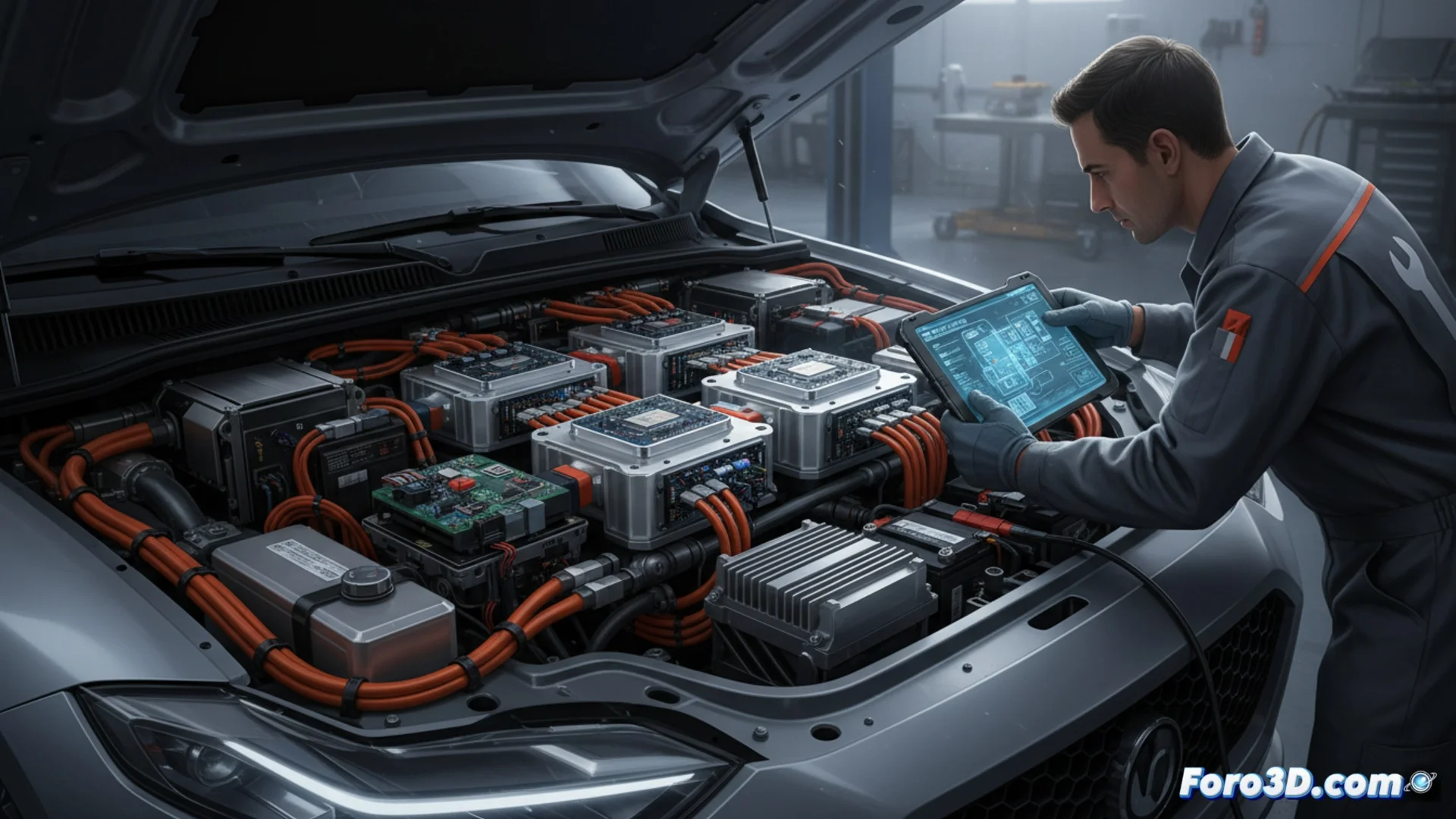
Technical Complexity Increases the Cost of Repairing Hybrid Cars
Hybrid automobiles combine a gasoline or diesel engine with one or more electric motors. This dual architecture relies on an intricate network of electronic controllers, sensors, and power units to manage energy efficiently. When any of these systems fails, identifying the problem and replacing parts requires specific tools and personnel with very specific knowledge. The workshop bill usually faithfully reflects this technical sophistication. 🔧
Elements Most Prone to Failure
The high-voltage battery is the most famous component for its price, but it doesn't act alone. The inverter that converts direct current to alternating current, the DC-DC converter that supplies power to the 12V circuits, and the powertrain control unit are critical points. A failure in any of them can leave the vehicle completely immobilized. Normally, these modules are not repaired but replaced with complete new units, which skyrockets the cost.
Critical Components in a Hybrid:- Traction Battery: Stores high-voltage energy. Its replacement is the most expensive intervention.
- Inverter: Manages the current flow between the battery and the electric motor. A failure here paralyzes electric propulsion.
- Powertrain Control Module: It is the brain that decides when to use each motor. Its diagnosis is complex.
The technology that promises to save on fuel can end up requiring a considerable investment in specialized maintenance.
The Challenge of Precise Diagnosis
Connecting the car to a diagnostic machine does not guarantee pinpointing the faulty component accurately. On numerous occasions, the error code only points to a general area of the system, forcing the mechanic to perform more manual checks. This procedure consumes hours, which are then billed as labor. Additionally, physically accessing these components often requires disassembling other parts of the automobile, adding more layers of complexity and time to the repair. ⏳
Challenges in the Workshop:- Ambiguous Diagnosis: Generic codes force additional tests that increase the cost of labor hours.
- Complicated Access: Key components are usually in hard-to-reach locations, requiring more disassembly time.
- Lack of Standardization: Each manufacturer has its own architecture, requiring constant training.
The Paradox of Efficiency
It seems that the savings achieved at the gas station can, over time, translate into having to invest in workshops with high-end equipment. This is the irony of a technology designed to be efficient: its inherent complexity transfers part of the vehicle's life cycle cost from fuel to maintenance. Choosing a hybrid therefore implies considering not only the purchase price, but also the potential repair cost of its most advanced systems.