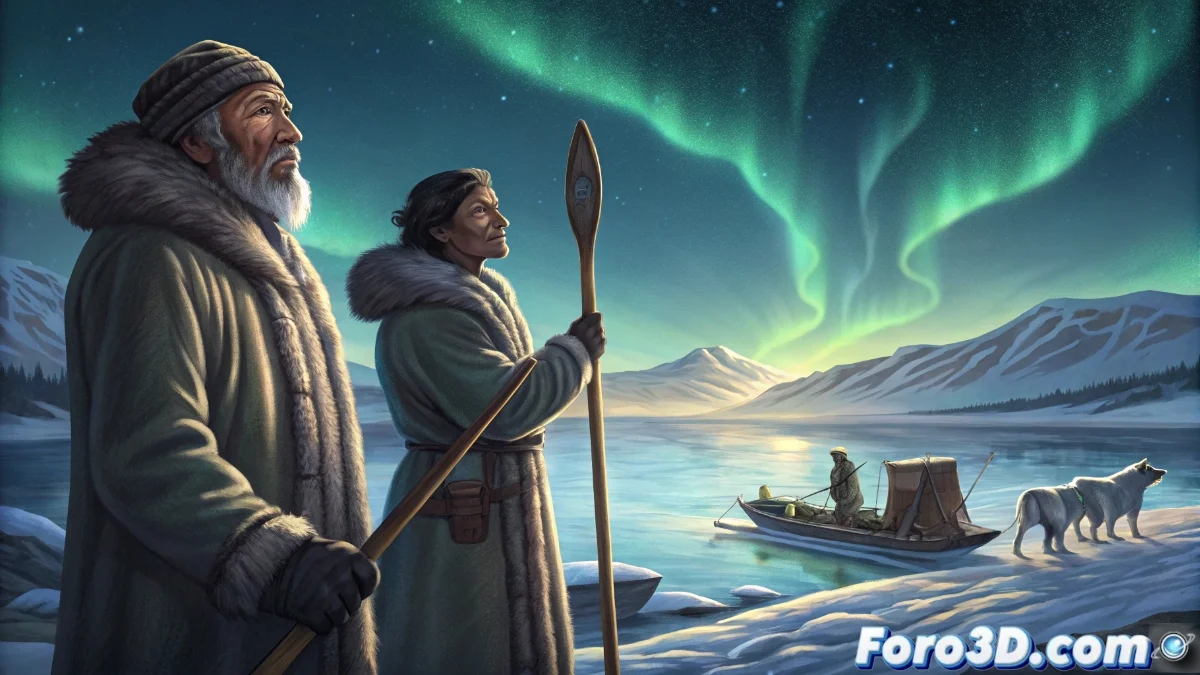
The Synergy Between Western Science and Indigenous Wisdom in the Arctic
In the Arctic ecosystem, where environmental changes are accelerating at unprecedented rates, a transformative collaboration is emerging between two seemingly distant systems of knowledge. Western science and indigenous ancestral wisdom complement each other to offer comprehensive solutions to complex problems that neither perspective could solve alone 🌍.
Two Visions That Enrich Each Other Mutually
Contemporary scientific research brings advanced technologies and standardized methodologies to measure large-scale phenomena, such as glacial melting or alterations in ocean currents. On the other hand, indigenous peoples contribute detailed observations accumulated over generations, understanding seasonal patterns and ecological relationships that technological instruments often overlook. This epistemological complementarity creates a more robust interpretive framework for understanding Arctic transformations.
Specific Contributions from Each System of Knowledge:- Advanced Technology: Satellites, remote sensors, and computational models for large-scale measurements
- Traditional Observation: Detection of subtle signals in animal behavior and local environmental changes
- Temporal Perspective: Scientific historical data combined with multigenerational ancestral knowledge
"The historical irony is palpable: what was once considered traditional folklore is now revealed as crucial information for understanding a planet in accelerated transformation"
Concrete Applications in Arctic Territory Management
This intercultural collaboration is already generating tangible results in multiple areas of environmental management. In local climate prediction, indigenous hunters identify subtle indicators of imminent changes that escape conventional meteorological models. In fisheries management, combining satellite tracking with traditional knowledge of migration routes has optimized conservation practices.
Examples of Successful Implementation:- Community Monitoring Programs: Generate valuable data on wildlife health
- Early Warning Systems: Combine modern technology with traditional indicators to protect communities
- Resource Management: Strategies that integrate scientific data with sustainable ancestral practices
Towards a Future of Integrated Knowledge
The convergence of knowledges represents a paradigm shift in how we address global environmental challenges. What emerges is a holistic approach where scientific precision and cultural contextualization enhance each other. This synergistic collaboration not only improves our response capacity to the climate crisis but also validates and preserves systems of knowledge that were underestimated for centuries, demonstrating that the future of the Arctic depends on our ability to integrate all available forms of understanding 🤝.