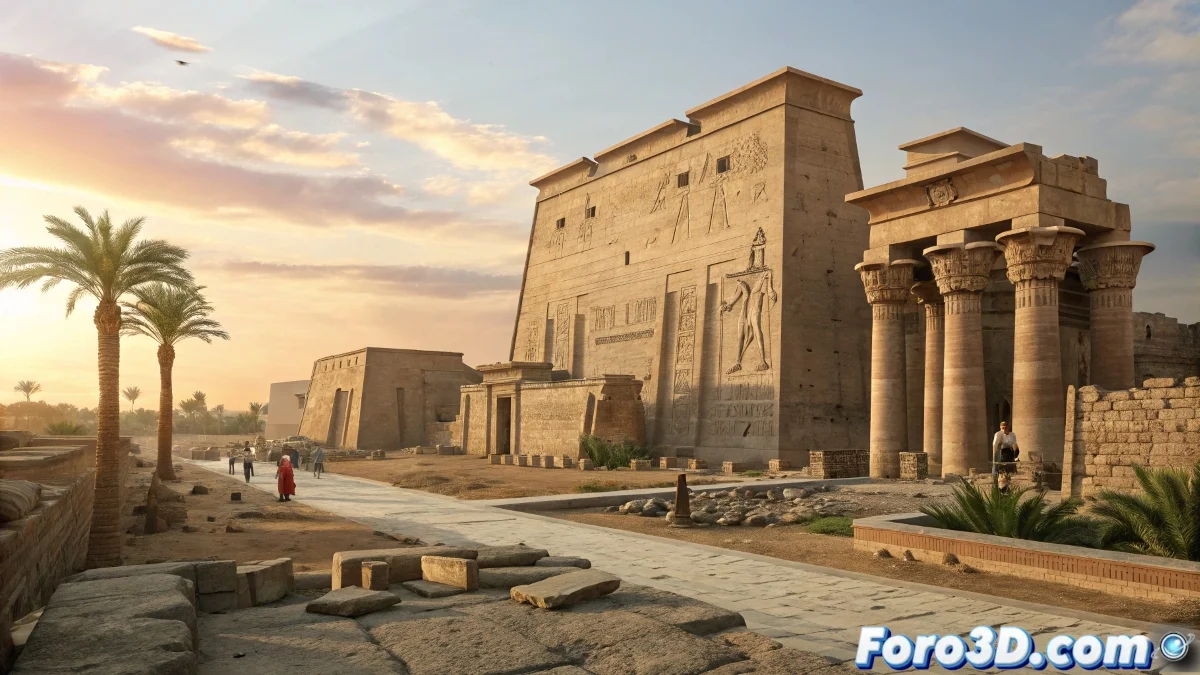
When the Sand Reveals a Legendary Palace
In Kom Ombo, Egypt, a team of archaeologists has unearthed the remains of the legendary Sun Palace of Pharaoh Ramses II, a potential center of power and rituals located next to the famous temple dedicated to Sobek and Horus. This exceptional discovery promises to offer new perspectives on the life and rule of one of the most influential pharaohs in Egyptian history. For digital artists, this discovery represents a fascinating opportunity to digitally recreate a lost chapter of pharaonic architecture. 🌅
Recreating Pharaonic Splendor in Houdini
Houdini offers the perfect tools to reconstruct this legendary palace, allowing you to combine archaeological precision with visual creativity. The ability to generate procedural geometry and simulate natural effects like sand and dust makes this platform ideal for representing both the original majesty of the complex and its current state as a buried ruin.
Key Elements for an Authentic Recreation
Achieving a convincing representation of this archaeological site requires attention to multiple technical and historical aspects.
- Ramesside Architecture: Characteristic style of the reign of Ramses II.
- Landscape Integration: Relationship with the Kom Ombo temple and the Nile.
- Temporal Erosion: Effects of three millennia of exposure to the desert.
- Desert Atmosphere: Intense light and airborne sand particles.
Every archaeological discovery in Egypt partially rewrites our understanding of this ancient civilization.
Step-by-Step Technical Guide in Houdini
Begin by meticulously organizing the project in Houdini. Save the file as sun_palace_ramses.hip and configure the appropriate scale units to maintain realistic proportions. Set up node networks for each element: Terrain, Palace, Temple, Sand, Lighting. This modular structure will be crucial for managing the complexity. 🏺
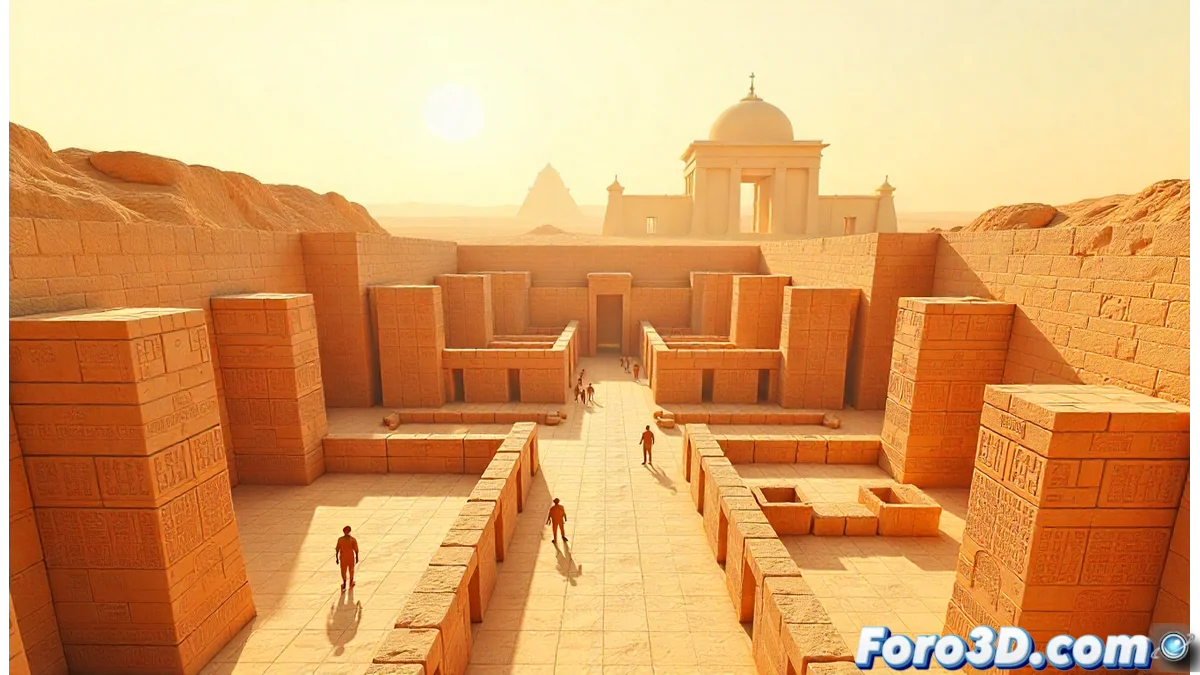
Creating the Archaeological Terrain
Use the Houdini HeightField system to generate the characteristic topography of the Nile Valley around Kom Ombo. Sculpt dunes and excavated areas that reflect an active archaeological dig. The transition between natural terrain and excavation areas should be gradual and geologically credible.
Procedural Modeling of the Palace
Develop a procedural system to generate the characteristic architecture of the Ramesside period. Use instancing techniques to create columns, capitals, and hieroglyphic reliefs that can be replicated while maintaining natural variations. The palace should reflect the grandeur associated with Ramses II, known for his colossal architectural projects.
Sand and Erosion Simulation
Implement particle simulations to represent sand accumulated over centuries and the processes of archaeological excavation. Use wind forces to create realistic eolian drift patterns around the structures. Newly excavated areas should show clear transitions between loose sand and uncovered structures. 🌪️
Historical Materials and Textures
Create shaders that simulate the eroded sandstone typical of Egyptian architecture, combining base color maps with layers of dust and deterioration. Decorative elements like hieroglyphs and reliefs require materials with greater detail and reflectivity to suggest their original ceremonial importance.
Dramatic Desert Lighting
Set up a lighting system that captures the unique intensity of Egyptian light