Animation Style and Production
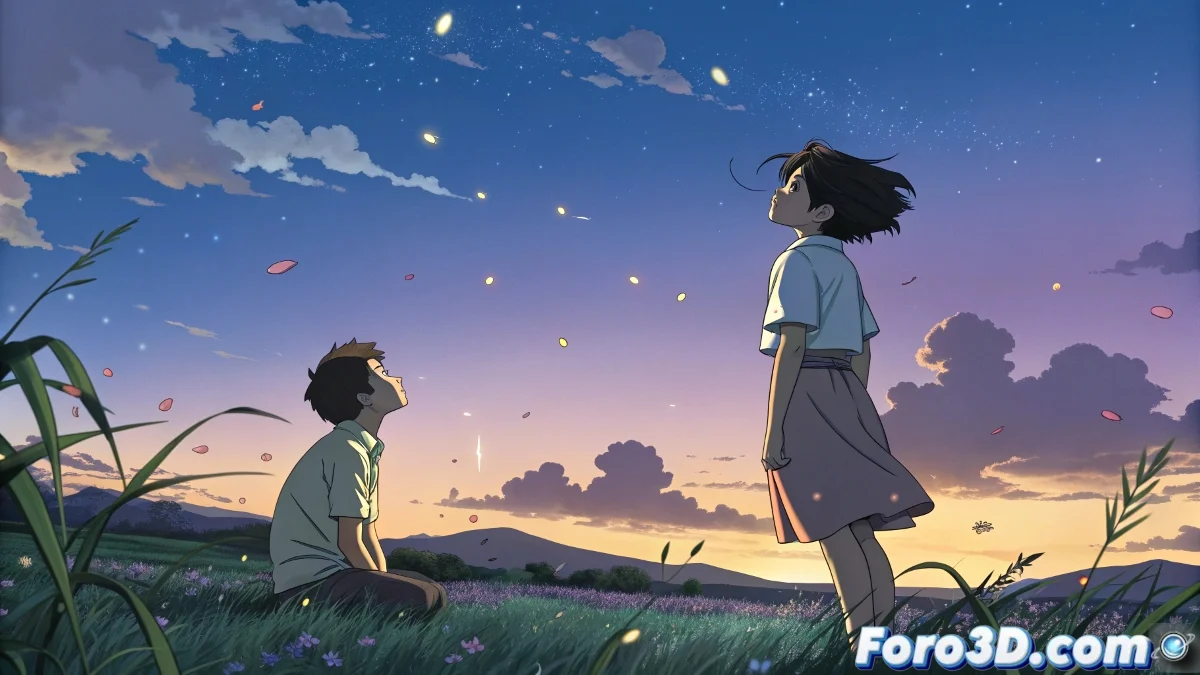
The visual language of this cinematic production represents a sophisticated evolution within contemporary Japanese animation. 🎨 The film employs two-dimensional animation techniques enriched with modern digital tools, achieving a fluidity of movement that enhances the expressiveness of each character. The art direction prioritizes a pictorial approach where each frame could be considered an independent work of art. The color palette functions as a silent narrator, guiding the viewer through the emotional states of the story with subtle transitions between melancholy and hope. The interplay of light and shadow not only defines the visual atmosphere but also operates as metaphors for the grieving process experienced by the protagonists.
Themes and Narrative
The thematic depth of this work transcends simple plot description to become a meditation on loss and emotional resilience. Although Hikaru has physically disappeared, his presence permeates every scene through the memories he activates in his surviving friends. The narrative demonstrates a masterful balance between moments of contemplative stillness and sequences of dramatic intensity, utilizing the unique potential of animation to communicate complex emotions without relying exclusively on dialogue. This visual approach allows for the transmission of emotional nuances that verbal language could hardly capture with equal potency.
Hikaru, though physically absent, becomes the axis of reflection and connection between the protagonists
Production and Team
Behind this moving cinematic experience is the unifying vision of Ryohei Takeshita, whose track record in anime series has provided him with exceptional mastery of visual narrative rhythm. The production team brings together talents specialized in traditional storyboarding alongside expert technicians in digital animation, creating a perfect symbiosis between artisanal art and contemporary technology. The soundtrack and audio design function as an emotional counterpoint to the images, deepening the viewer's immersion in the inner world of the characters. The digitally painted backgrounds deserve special mention for their ability to evoke specific atmospheres with poetic precision and exquisite detail.
Expressive Animation Techniques
The visual methodology implemented in the film represents a significant evolution within current Japanese animation. Every technical decision finds its justification in its ability to serve the central emotional narrative.
- Digital 2D Animation: Preservation of traditional Japanese aesthetics with the flexibility of modern digital tools
- Gestural Expressiveness: Meticulous attention to body language and facial microexpressions of the characters
- Digital Painting: Creation of backgrounds with pictorial qualities that evoke melancholy and nostalgia
- Chromatic Art Direction: Strategic use of color palettes that reflect emotional states and temporal transitions
Narrative Analysis and Symbolism
The film transcends the simple story about grief to become a visual meditation on memory and identity. Symbolic elements operate on multiple levels of meaning that enrich the interpretive experience.
- Summer as a metaphor for the culminating moment before inevitable change
- Light as a representation of Hikaru's persistent presence in collective memory
- Natural spaces as a reflection of the characters' internal emotional landscape
- Everyday objects as triggers for memories and cathartic processes
Context within Japanese Animation
This production fits into a tradition of animated cinema that explores existential themes with unique sensitivity. Its particularities distinguish it within the current landscape of dramatic anime.
- Continuation of the line of dramatic anime that prioritizes character development over action
- Evolution of the visual style associated with studios like Studio Ghibli but with contemporary sensitivity
- Fusion of television animation techniques with cinematic ambition in narrative and production
- Mature approach to universal themes from a culturally specific perspective
While Hikaru remains physically absent in the story, his emotional impact demonstrates that some characters achieve greater vitality in the viewer's memory than others with artificial breathing on screen. 🍃 Because, in the end, what better defines life than the mark we leave on those who remember us?