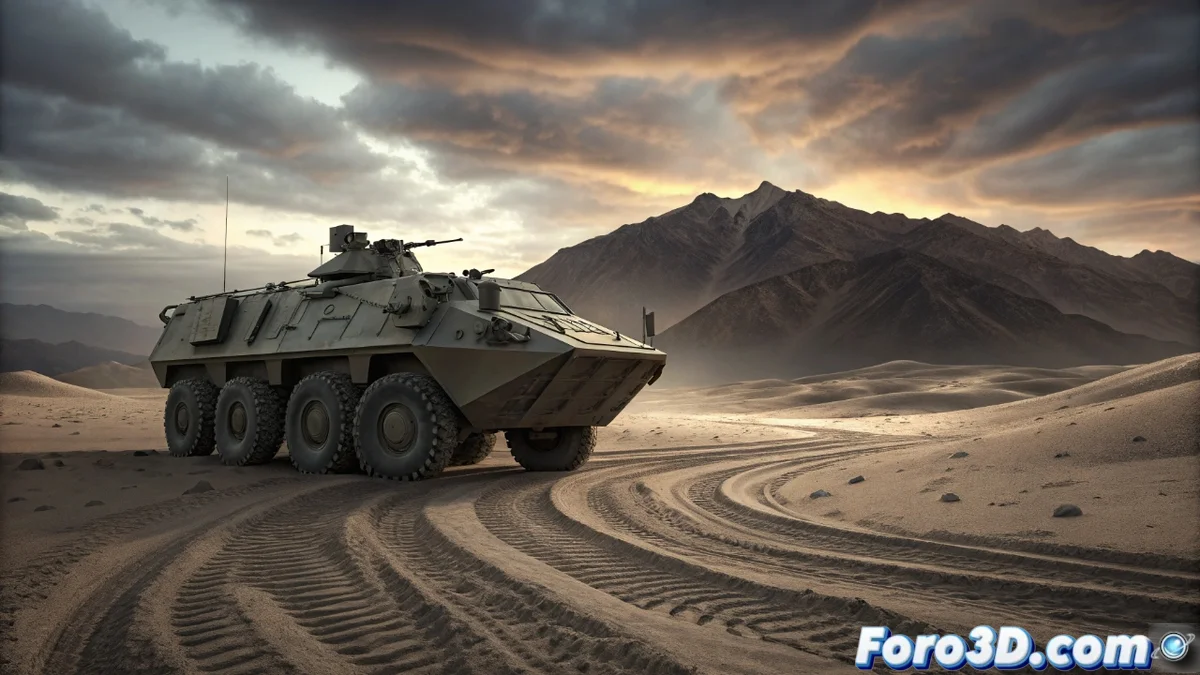
The Stryker: 8x8 American Combat Armored Vehicle
The Stryker represents one of the most versatile military mobility systems developed by the United States, standing out for its modular configuration and ability to operate in multiple tactical scenarios. With dimensions of 6.95 m long, 2.72 m wide, and 2.64 m high, this armored vehicle inherits features from the Canadian LAV III design, optimized for contemporary missions 🛡️.
Operational Configurations and Specialized Variants
The structural flexibility of the Stryker allows it to be adapted to specific roles through predefined variants, ensuring comprehensive logistical support on the battlefield. Its 8x8 traction ensures robust performance in urban, rural, and semi-desert environments, facilitating rapid deployments and prolonged operations.
Main Stryker variants:- Infantry carrier: capacity for up to nine equipped soldiers
- Medical ambulance: equipped for evacuation and stabilization of wounded
- Command post: advanced communication and coordination systems
- Reconnaissance: specialized sensors and surveillance equipment
- Fire support: configuration with heavy armament and missiles
- Engineer vehicle: tools for obstacle clearance
The modularity of the Stryker makes it a transformable system, capable of evolving according to the demands of the theater of operations.
Weapons Systems and Advanced Protections
The scalable armament of the Stryker includes options ranging from 12.7 mm M2 machine guns to Mk 19 grenade launchers and TOW anti-tank missiles, allowing it to face asymmetric and conventional threats. Its base armor protects against portable weapons and improvised explosive devices, although in high-intensity scenarios it requires additional reinforcements.
Key defensive capabilities:- Ballistic protection: resistant to projectiles up to 14.5 mm
- Reactive armor: optional for intense combat scenarios
- Countermeasures systems: anti-missile defense and laser warning
- Evacuation mobility: capacity for tactical withdrawal under fire
- Active self-protection: systems for intercepting incoming threats
- Survivability kit: equipment for operations in CBRN environments
Operational Evaluation and Future Prospects
Considered the «multi-purpose vehicle» par excellence of the US Army, the Stryker combines tactical adaptability with modular technology, although its development continues to integrate improvements in protection and mobility. The possible incorporation of unconventional variants (including logistical support equipment) reflects its evolution toward even more versatile platforms 🎯.