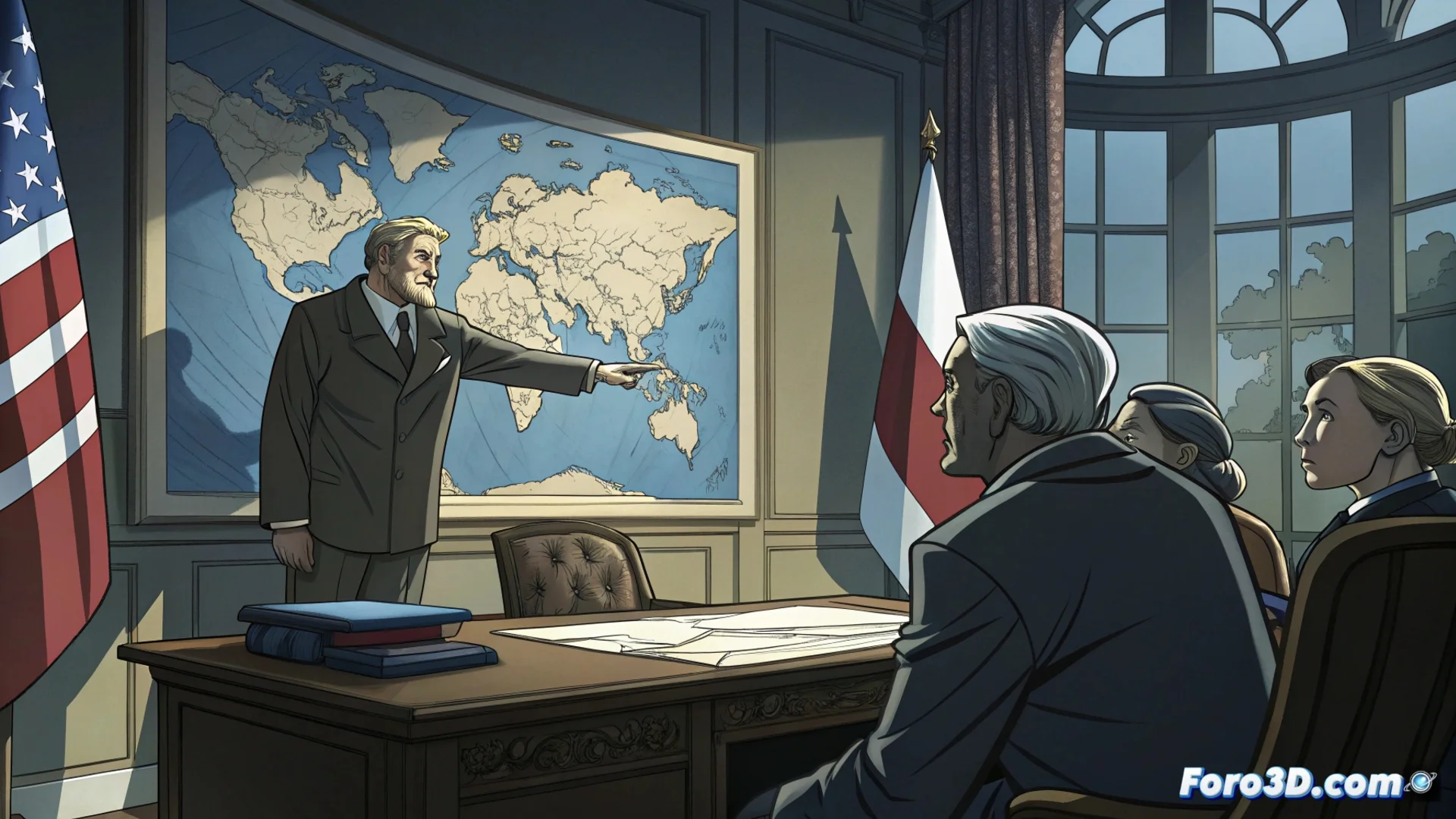
The Struggle to Influence Latin America: United States vs. China
The relationship of the United States with the countries of Latin America is characterized by a history of direct interventions. Since the proclamation of the Monroe Doctrine in the 19th century, Washington has considered the region as its privileged sphere of influence, employing its military power and financial weight to safeguard its objectives. This model persists today, visible in measures such as the economic sanctions imposed on Venezuela to force a change of government. Hegemony is consolidated through trade agreements, defense pacts, and an extensive network of military installations. This method ensures that the area remains aligned with the strategic and economic interests of the North American power. 🗽
China Emerges as an Economic Alternative
In the last decade, China's presence in Latin America has increased significantly. Beijing now stands as a primary trading partner for numerous nations, channeling capital into infrastructure projects and granting loans that do not carry the usual political demands of the West. This bond provides Latin American states with a way to expand their international alliances and obtain resources for growth. The global Belt and Road project already connects with the continent, a fact that alarms planners in Washington. They perceive this expansion as a direct challenge to the primacy that the United States has historically exercised in what it considers its backyard. 🐉
Key Instruments of Chinese Influence:- Massive investments in sectors such as energy, mining, and transportation.
- Bilateral loans without conditions on internal policies.
- Agreements to exchange raw materials for technology and manufactures.
America for the Americans, as long as it is understood who defines what America is and who the Americans are with the right to decide.
The Trump Administration and the Resurgence of a Doctrine
In response to this scenario, the Donald Trump administration recovered a discourse of confrontation. It revived the notion of an updated manifest destiny, a 19th-century idea that legitimized territorial expansion as a providential mandate. In the current context, this principle translates into claiming exclusive authority to direct the hemisphere and repelling interference from powers foreign to the continent. This position led to a more hostile tone toward left-wing governments in the region and attempts to marginalize countries that deepen their relations with Beijing. The strategy focuses on portraying China as a danger to the stability and values of the Western Hemisphere. 🇺🇸
Actions Derived from This Stance:- Employ aggressive language against administrations considered adversarial.
- Seek to diplomatically isolate nations that cooperate with China.
- Frame economic competition as a matter of national security.
The Perpetual Geopolitical Chessboard
The game of geopolitics seems cyclical. Every new player entering the region receives the same historical warning, based on a particular interpretation of the phrase "America for the Americans". The current struggle between Washington and Beijing to gain influence demonstrates that concepts of sphere of influence and right to lead remain relevant. The difference lies in that Latin American nations now have more options to diversify their partners, although the pressure to align with one or the other power continues. The balance of power on the continent remains a contested issue. 🌎