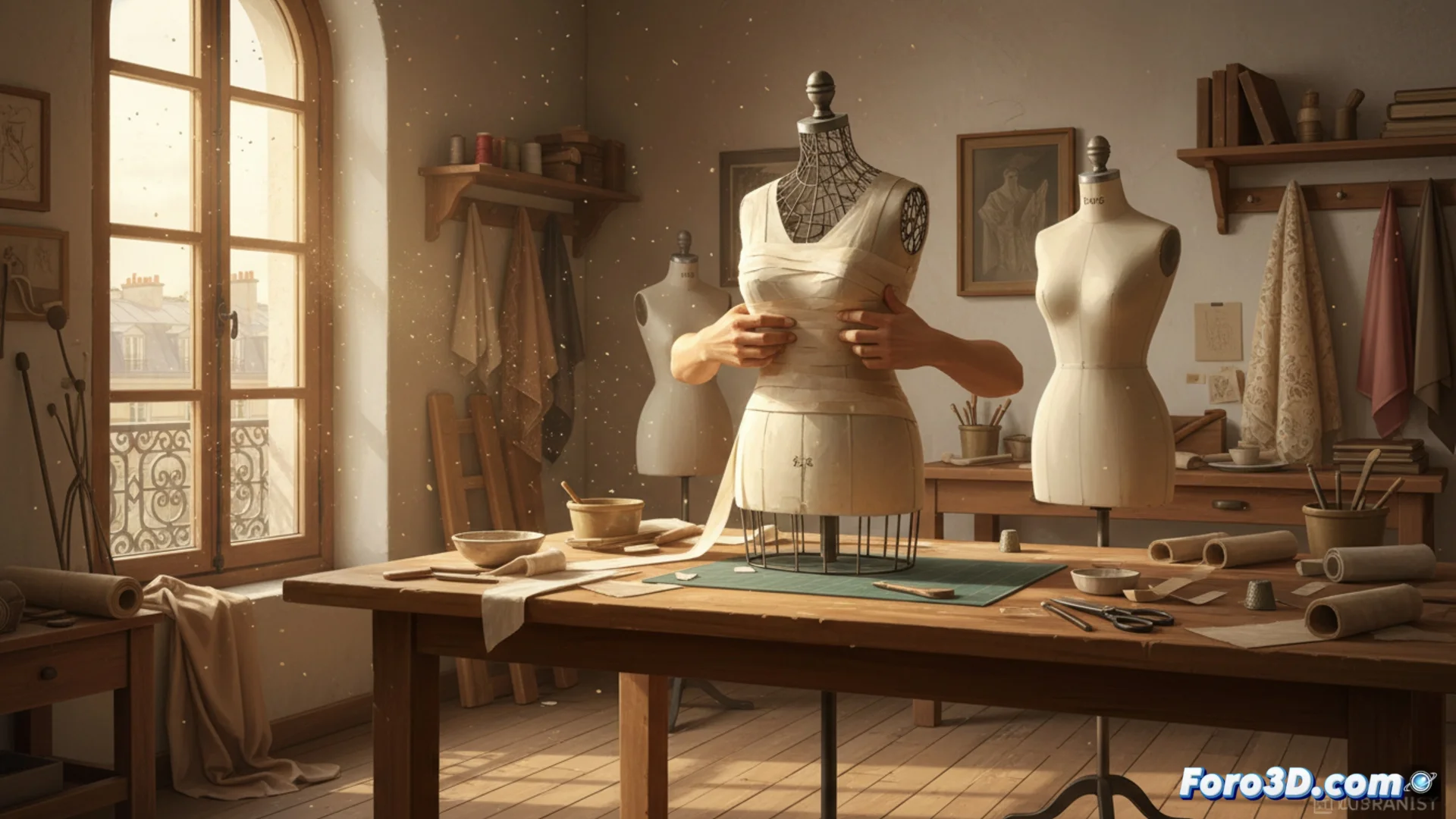
The Stockman Workshop Manufactures Fashion Forms Using Handcrafted Methods
In a workspace in Gennevilliers, on the outskirts of Paris, a centuries-old craft remains alive. Here, the forms used by dressmakers and costume creators are made entirely by hand, following an method that has withstood the test of time since the second half of the 19th century. 🧵
A Manual Process That Endures
The basis of production is an initial plaster form. Over this structure, the artisans layer papier-mâché, which they then bake in an oven. After this step, they precisely cut the pieces and cover them with fabrics, which they select and adjust according to the specific requirements of each order. This workflow defines the essence of their production.
Clients who trust in this craftsmanship:- Prestigious international fashion houses.
- Independent craftsmen and specialized workshops.
- Prestigious institutions and design schools.
To progress in the world of fashion, sometimes it is necessary to look back to ancestral techniques... and bake papier-mâché.
Design Icons and Constant Adaptation
Among their most emblematic references is the B406 model, a silhouette that pays homage to the iconic Christian Dior New Look. The catalog covers a wide spectrum of sizes and modification possibilities, allowing them to adapt their products to various morphologies and tastes that change according to geographic area. Although their core is traditional craftsmanship, the workshop also explores and tests prototypes with new approaches.
Key features of their offering:- Inspiration from historical silhouettes of haute couture.
- Wide range of sizes and customizable options.
- Balance between tradition and innovation in prototypes.
A Craft with Demand in the Modern Era
The workshop's activity is intense, providing hundreds of forms annually. This demand intensifies during key periods in the fashion calendar, such as Paris Fashion Week. This pace demonstrates how a know-how of more than 150 years continues to be a fundamental piece for the contemporary industry, creating a bridge between historical knowledge and current demands for designing and producing. ✨