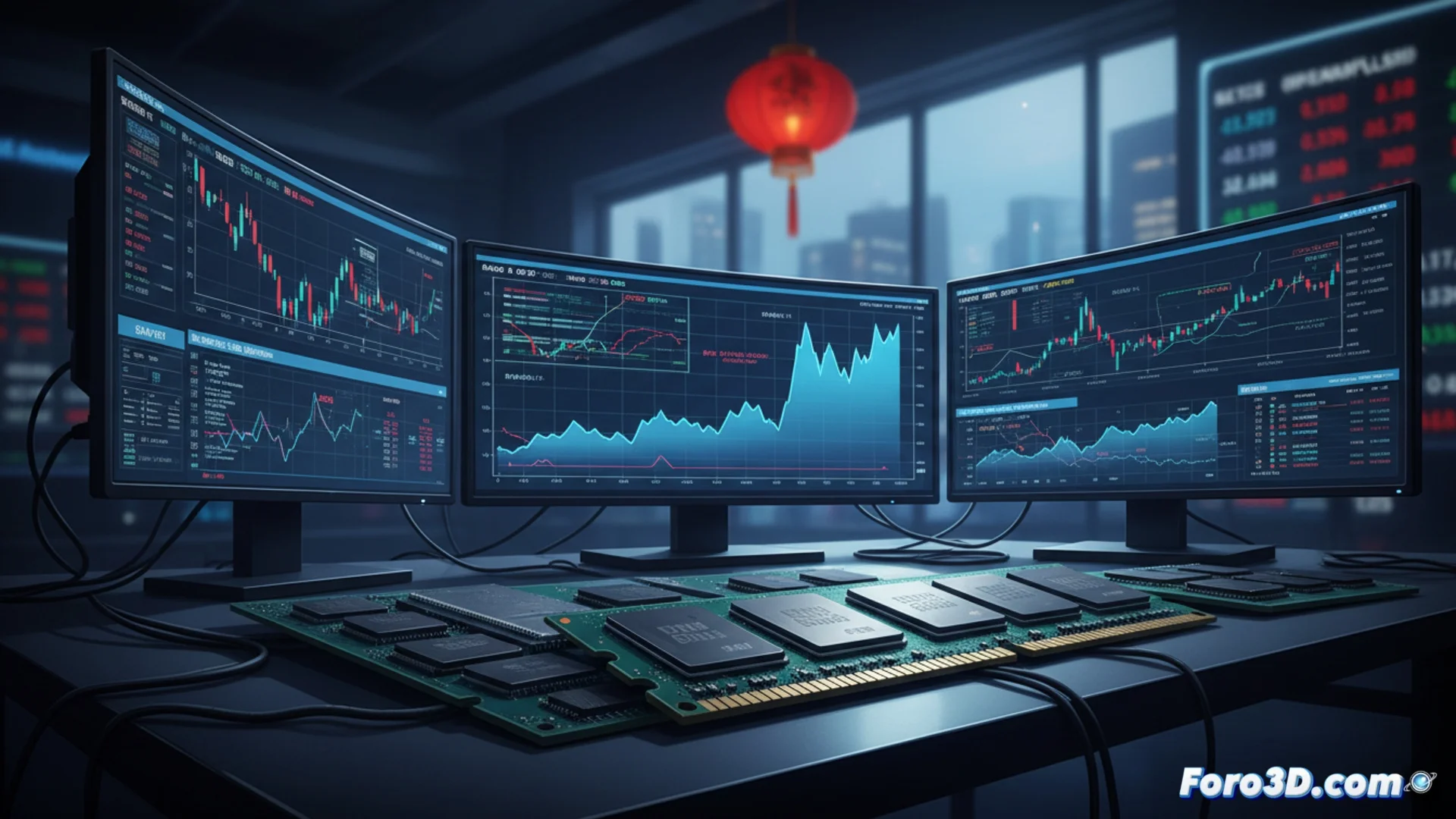
The DRAM spot market reaches a temporary peak
According to data published by TrendForce analysts, the spot market sector for DRAM memory chips experienced a significant surge in its quotations during the last days of January 🚀. This increase, centered mainly on DDR5 and DDR4 modules, drove a notable movement in the market, which however lost momentum just before the start of Lunar New Year celebrations in Asia, a usual time of commercial pause.
Divergent behavior among memory technologies
The price increase was not uniform. While DDR4 and DDR5 values settled after their initial rise, DDR3 memory, used in legacy systems and niche applications, continued its steady upward path. In parallel, the NAND Flash market, a fundamental technology for manufacturing solid-state drives (SSDs), also maintained its positive trend. This divergence shows that supply and demand drivers operate differently for each type of semiconductor.
Key factors in price dynamics:- Seasonal event: The pause for Lunar New Year allowed the sector to absorb recent adjustments and evaluate existing inventory levels.
- Specific demand: DDR3 technology, being less influenced by the cycles of newer mass consumer products, responds to different market factors.
- Supply context: The production capacity of major chip manufacturers is a crucial element that participants watch closely.
TrendForce's report serves as a clear reference on a specific period of volatility in the memory market.
Outlook after the Asian holiday
Commercial activity is expected to normalize once vacations in the region conclude. Sector players are watching how orders from end-device assemblers will behave and the capacity of semiconductor factories to respond. The future course of quotations will depend on the balance between these elements and the overall health of global electronics demand.
Elements to watch in the short term:- The reactivation of OEM (original equipment manufacturers) orders after the holiday break.
- Production decisions and inventory management by major memory foundries.
- The evolution of global demand for technology products, which directly impacts chip needs.
A nuanced breather
It seems the memory market also took a break during the holidays, although some components, like the resilient DDR3 chips, were reluctant to stop and continued their price climb. This moment of relative calm serves for the industry to prepare its next move in an always dynamic and complex scenario 📈.