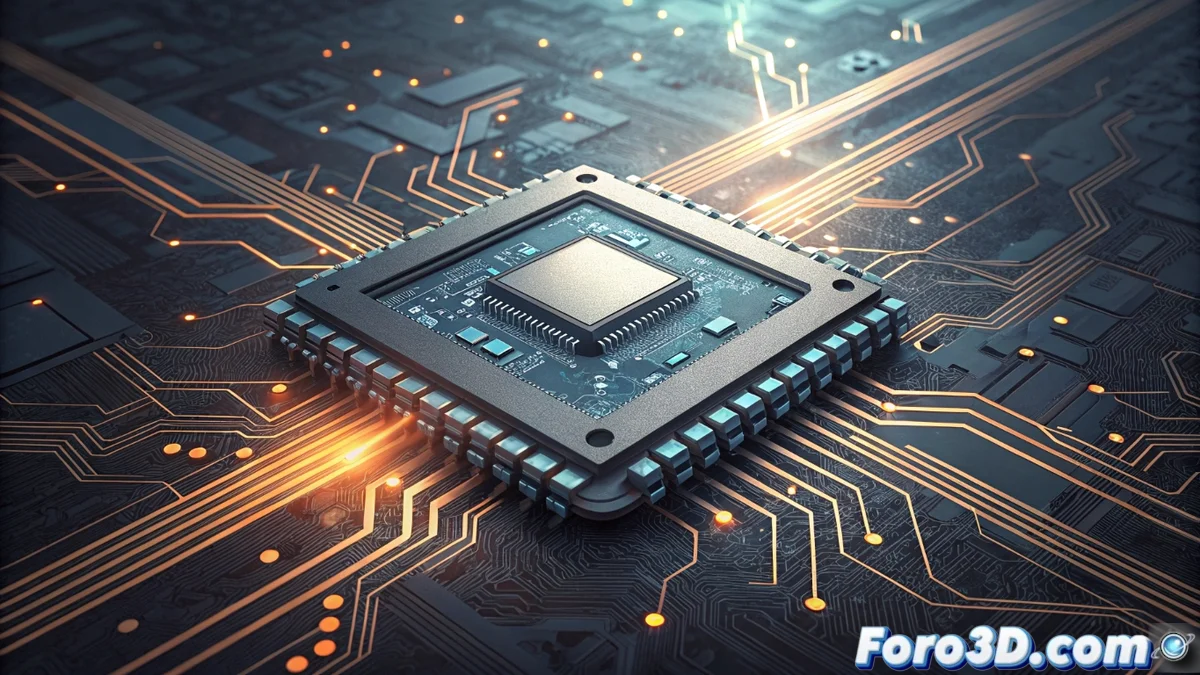
The Achronix Speedster7t Series for AI and High-Speed Networking
In the field of hardware acceleration, Achronix FPGAs emerge as a powerful option. The Speedster7t family is specifically designed to address the extreme demands of artificial intelligence and modern connectivity infrastructures. These devices combine programmable logic with highly optimized digital signal processing (DSP) units. This combination provides a flexible platform for those seeking efficiency without losing reconfiguration capability, positioning itself as a serious rival to ASICs. 🚀
Internal Architecture Based on a 2D Array
The heart of its performance is not just the logic, but an advanced interconnection system. A two-dimensional network node array (2D NoC) acts as the backbone, linking all the chip's resources. This design efficiently connects the RAM memory blocks, the DSP units, and the high-speed I/O interfaces. By organizing data paths in this way, bottlenecks are minimized and internal bandwidth is maximized, which is essential for moving large datasets without delays.
Integrated High-Speed Interfaces:- GDDR6 Ports: Provide extremely high memory bandwidth to feed the processing cores.
- Ethernet Connectivity: Essential for integrating the device into networking equipment and telecommunications applications.
- PCIe Gen5: Doubles the bandwidth of the previous generation, accelerating communication with the server CPU.
The promise of hardware flexibility sometimes means your project never ends, it just finds new ways to consume resources and time.
Applications in Data-Intensive Environments
These FPGAs find their niche where data volume and speed are critical. Their ability to process in parallel makes them ideal for resource-intensive tasks. Developers can implement and then modify specific functions directly in the silicon, allowing the hardware to adapt to evolving algorithms without the need to physically redesign the integrated circuit. This shortens innovation cycles.
Main Fields of Use:- AI and ML Inference: Execute trained neural network models with low latency and high energy efficiency.
- Network Packet Processing: Accelerate security, routing, and monitoring functions in switches and routers.
- Cloud Computing and HPC: Accelerate scientific workloads and financial analysis in data centers.
Key Advantage: Adaptability vs. Fixed Solutions
The main advantage of the Speedster7t series lies in its programmable nature. While an ASIC or GPU has a fixed function, these FPGAs can be reconfigured to adapt to new tasks or optimize existing ones. This is invaluable in fields like AI, where models advance rapidly. They offer a unique balance between near-dedicated hardware performance and software flexibility, allowing companies to protect their investments in the long term against technological changes. 💡