When the Stained Glass Gains Its Own Eternal Guardian
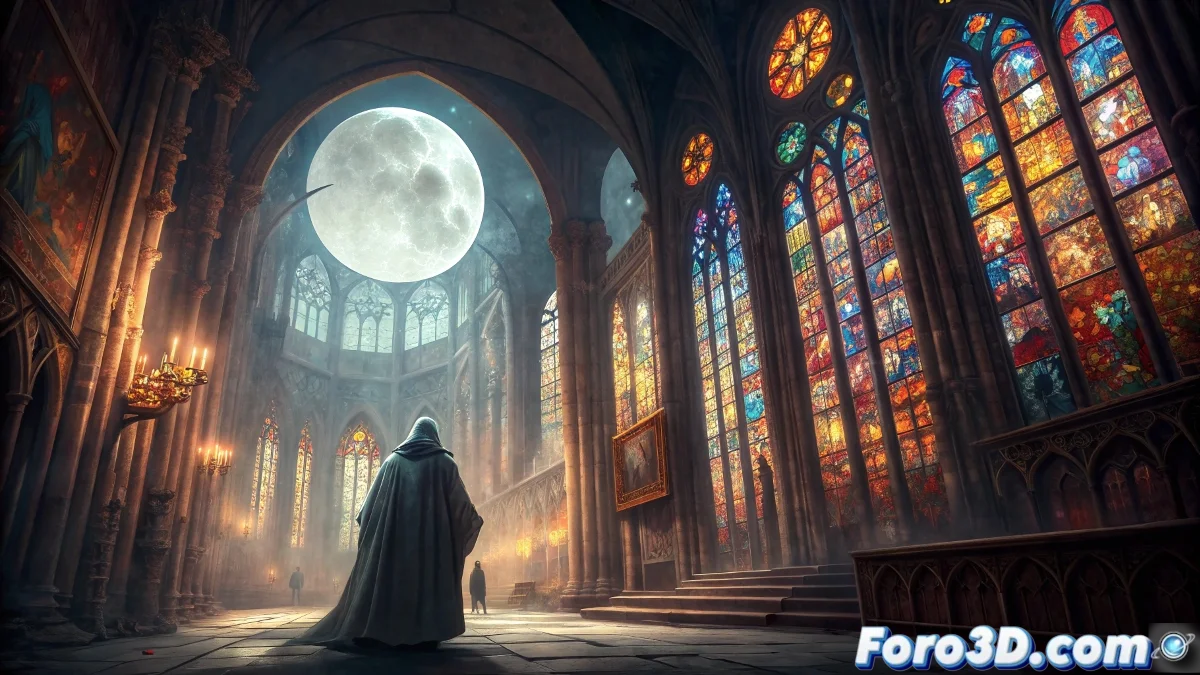
Among the majestic stained glass windows of León Cathedral prowls a presence that has transcended time: the specter of a monk who, according to legend, has protected the stained glass for centuries. This ethereal figure, who belonged to the temple's custodial order during the 15th and 16th centuries, continues his vigil beyond death. 🕯?Accounts speak of whispering footsteps in the darkness, shadows slipping between Gothic columns, and on full moon nights, the projection of his silhouette through the very stained glass he swore to protect. For 3D artists, this legend offers the perfect opportunity to explore advanced techniques in lighting, transparency, and atmosphere in Autodesk Maya.
Between History and Mystery: The Origins of the Guardian
Historical records suggest that this monk was part of the group tasked with guarding one of the most valuable collections of Spanish Gothic stained glass. His tragic death during one of his nighttime rounds would have been the trigger for a presence that refuses to abandon its post. 📜 What's fascinating is how the legend intertwines with real architectural elements: certain stained glass windows do indeed project shadows and reflections that, under the right lighting conditions, could explain the reported sightings. This blend of optical phenomenon and oral tradition creates the perfect breeding ground for one of the cathedral's most persistent ghost stories.
Key Elements of the Legend:- Spectral figure roaming the aisles and central nave
- Specific protection of the historic stained glass windows
- Sightings on full moon nights
- Sounds of footsteps and murmurs without a visible source
Recreation in Maya: When the Ethereal Takes Digital Form
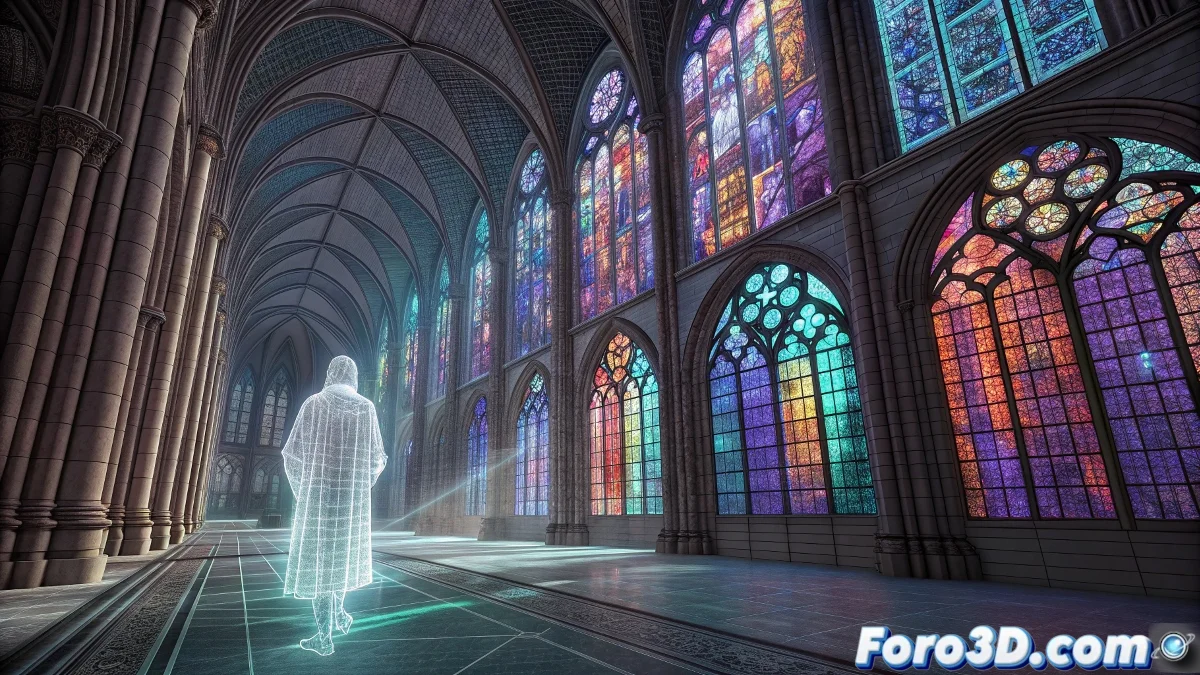
Recreating this legend in Autodesk Maya requires an approach that balances architectural realism with the supernatural nature of the phenomenon. The key is to treat the monk's figure not as a solid object, but as a visual presence composed of light, shadow, and memory. 👻 Transparency techniques, volumetric lighting, and organic animation must work together to create the illusion that we are witnessing something that exists between the material and spiritual worlds. Every element, from the smallest fold of the robe to the play of light through the stained glass, contributes to this visual narrative.
Practical Guide: From the Empty Cathedral to the Haunted Specter
The process in Maya begins with the meticulous construction of the cathedral space, where architectural precision is crucial to establish credibility. Modeling the stained glass requires special attention, as they are not mere decorative elements but protagonists of the legend. 🏰 Creating the monk involves not only basic anatomy, but also that floating, ethereal quality that distinguishes him from a normal human figure. Translucent materials and light effects must work together to transform a conventional 3D model into a convincing apparition.
Essential Workflow in Maya:- Precise architectural modeling of the cathedral
- Creation and texturing of stained glass with transmission properties
- Development of the spectral character with specialized shaders
- Setup of atmospheric and volumetric lighting
Lighting: The Soul of the Spectral Scene
The lighting in this recreation does much more than make the scene visible; it is the main tool for telling the story. Lights that simulate the passage of moonlight through the stained glass create not only color, but also emotion and narrative. 💡 Volumetric effects add that tangible quality to the air that so characterizes ancient sacred spaces. The shadows cast by the monk must be subtle but significant, suggesting presence without being completely solid. The goal is to create an atmosphere where the visible and the invisible deliberately blend.
Animation of the Specter: The Art of Supernatural Movement
Animating the spectral monk requires a different approach from conventional character animation. The movements must be fluid but not human, with that floating quality suggesting absence of gravity and corporeality. 💫 The use of tools like nCloth to simulate the robe's movement adds organic realism, while rigging controls allow for creating poses and transitions that convey intentionality without being completely earthly. Each keyframe must serve the illusion that we are observing a memory in motion rather than a physical being.
Advanced Techniques for Spectral Effects:- Transmission shaders with variable roughness maps
- Global illumination with high sampling for clean transparencies
- Particle systems for atmospheric dust effects
- Non-linear deformers for organic movements
Stained Glass: When Color Becomes a Character
The stained glass in this recreation is not merely background elements; they are active participants in the legend. Their modeling must capture the irregularity of ancient glass, with its bubbles, inclusions, and thickness variations. 🎨 The materials must accurately simulate light transmission through the colored crystal, creating those light and color patterns that bring the monk's silhouette to life. The interaction between light, color, and architecture is what transforms a common 3D scene into an evocative visual experience.
Render and Post-Production: Capturing the Intangible
The Arnold render phase must carefully preserve all the subtle qualities that make the specter believable. Sample management for complex transparencies, handling of volumetric lights, and preservation of details in deep shadows are crucial. 🎭 Post-processing can add those final adjustments that make the difference: slight chromatic aberrations on the edges of the stained glass, vignetting that directs the gaze, or subtle flare effects that suggest the almost dreamlike nature of the scene.
Some stories refuse to die, finding in the collective memory the fuel to transcend generations
Conclusion: When Technology Preserves Tradition
The recreation of the spectral monk of León Cathedral in Autodesk Maya demonstrates how digital tools can serve to explore and preserve not only our architectural heritage, but also the immaterial legends that give it meaning. 🔮 This guide not only teaches specific modeling and animation techniques, but also invites reflection on how sacred spaces accumulate layers of meaning over the centuries. After all, what better way to honor a centuries-old legend than by giving it visual form so that new generations can experience its mystery. And who knows, perhaps after animating a ghost, we'll understand why some stories prefer not to stay still in history books. 😉