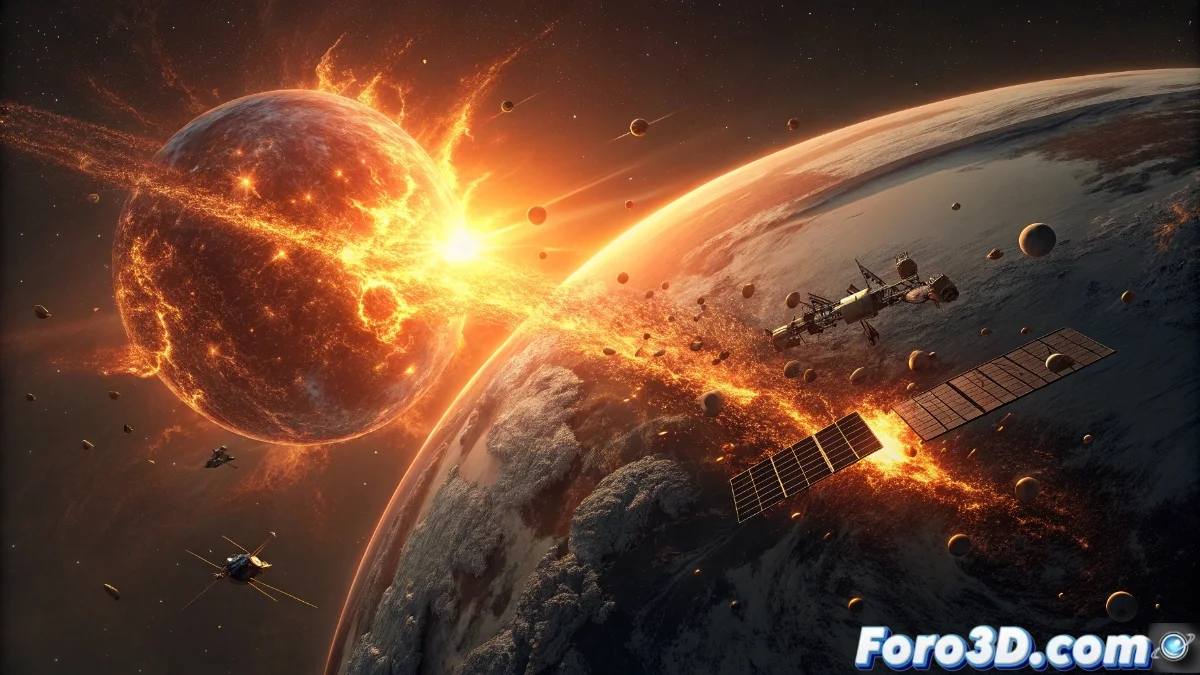
The Solar Maximum Threatens Low-Earth Orbit Satellites
Our star is approaching the peak maximum of its eleven-year cycle, triggering a notable increase in solar flares and coronal mass ejections. These astronomical events release charged particles that, upon colliding with our atmosphere, significantly increase air density in the orbital layers where thousands of artificial satellites operate. 🌞
Critical Orbital Consequences
The resulting higher atmospheric density generates high friction that disrupts satellite trajectories, reduces their lifespan, and can cause premature atmospheric reentries. This situation represents an unprecedented challenge for contemporary space infrastructure.
Documented Effects on Satellite Systems:- SpaceX has recorded specific losses in its Starlink constellation during previous solar storms
- Earth observation and telecommunications satellites face increasing operational risks
- Urgent need to develop more effective mitigation strategies
The scientific community warns that this threat will intensify in the coming months, compromising essential services that depend on low-Earth orbit satellites.
Technological and Operational Impact
Satellite operators are forced to perform more frequent corrective maneuvers, consuming limited fuel and reducing the operational life of their orbital assets. In extreme scenarios, orbital destabilization can lead to uncontrolled reentries, generating additional hazards. 🛰️
Exposed Vulnerabilities:- Critical dependence on technology in low Earth orbit
- Current limitations in space weather predictive models
- Fragility of space infrastructures against extreme solar phenomena
Final Reflection on Cosmic Domains
It seems that the king star is reclaiming its authority in the cosmic neighborhood, reminding us that satellite light pollution has unexpected consequences. This episode underscores the inherent vulnerability of our growing orbital technological dependence and the pressing need to improve our prediction and resilience capabilities against solar events. 🌌