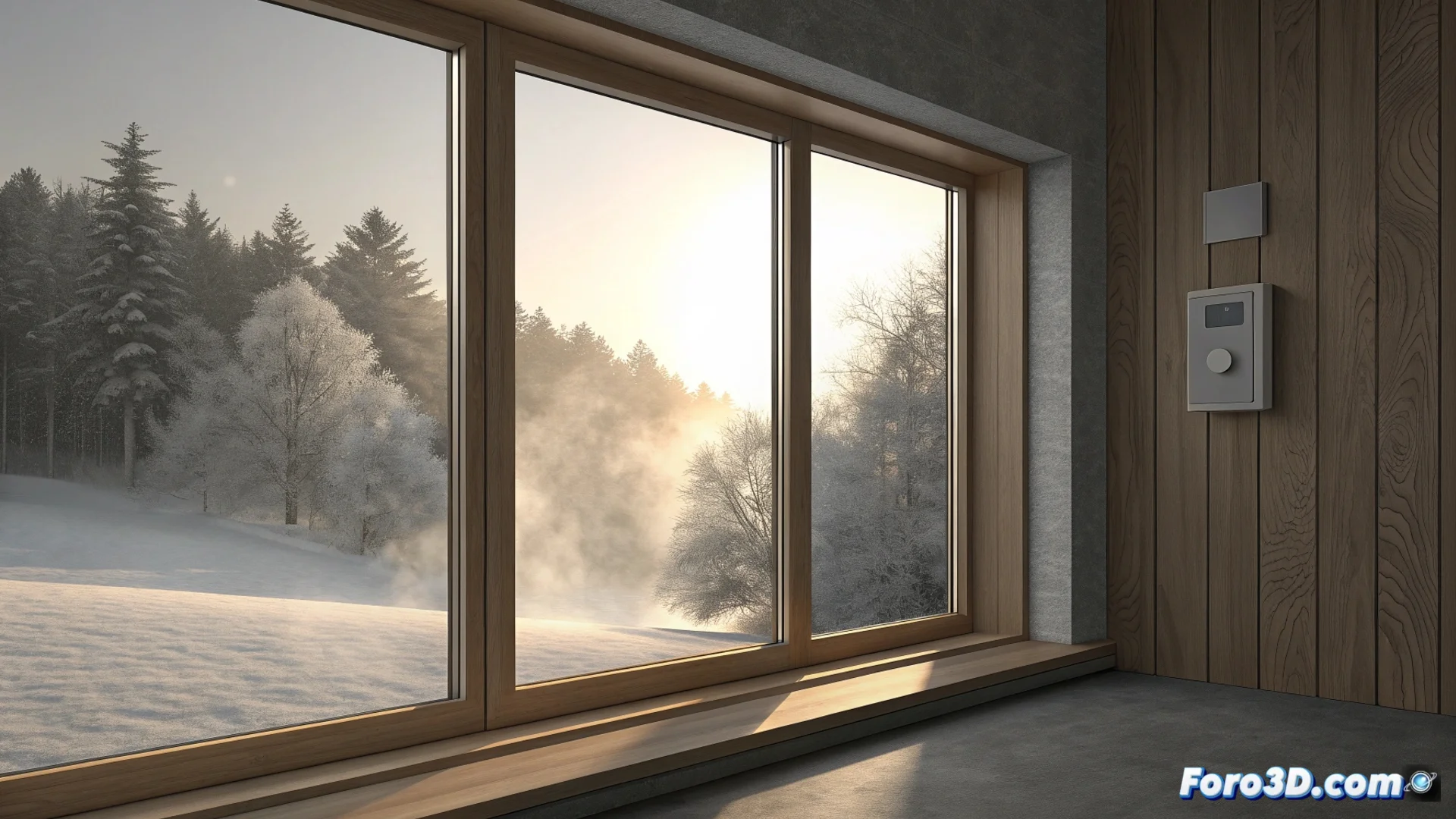
Smart Transparent Wood That Changes Windows
A group of researchers in South Korea develops a revolutionary compound from natural wood. This material, with remarkable transparency, adapts its opacity level autonomously by detecting changes in ambient temperature. Additionally, it completely blocks ultraviolet radiation, protecting interiors from solar damage. 🪟
A Thermal Insulator Superior to Glass
One of the most significant advantages of this new compound is its performance as a thermal insulator. Laboratory tests demonstrate that it retains heat with five times greater efficiency than conventional window glass. This property allows buildings to optimize their energy consumption throughout the year.
Key Benefits of Insulation:- In winter: Preserves the heat generated indoors, reducing the need for heating.
- In summer: Blocks a significant portion of external heat, decreasing air conditioning demand.
- UV Protection: Prevents furniture and textiles in the home from fading or deteriorating.
The future of windows is not only clearer, but also smarter; perhaps soon we'll discuss whether wood 'senses' the thermometer better than we do.
How They Transform Wood into a Smart Material
The process to create this innovative compound involves two main stages. First, the wood is treated with a chemical method that removes lignin, the component that gives it its characteristic color and opacity.
Manufacturing Process Steps:- Remove Lignin: This polymer is extracted, leaving a porous structure of cellulose that is practically colorless.
- Infuse Polymer: The cellulose substrate is impregnated with a special polymer that has thermochromic properties.
- Integrate Functions: This fusion is what gives the final material its ability to change from clear to translucent and its high efficiency as an insulator.
The Horizon of Smart Construction
This material breakthrough could transform how windows are conceived and built in future homes. By combining adaptable transparency, complete UV filtering, and exceptional thermal insulation, it positions itself as a sustainable and efficient alternative to traditional glass. The integration of modified natural materials marks a promising path for saving