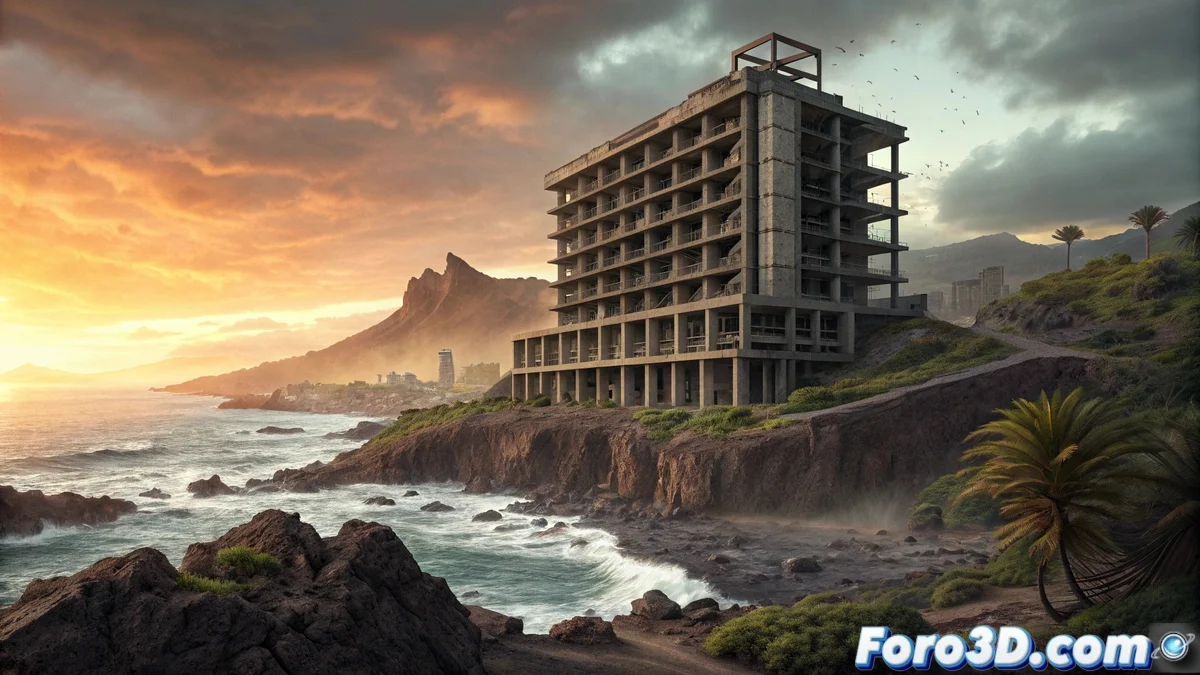
The Skeleton of the Añaza Hotel in Tenerife: An Abandoned Project Defying Time
On the Tenerife coast stands the skeleton of the Añaza Hotel, a structure that began construction in 1973 by a German company with the vision of creating a massive tourist complex of 22 floors and 740 apartments. However, the works were halted just two years later, leaving a concrete skeleton that has withstood decades of erosion and abandonment. This colossal remnant has become a tangible reminder of thwarted ambitions and has permanently altered the coastal landscape. 🏗️
Visual Impact and Community Controversy
The presence of this unfinished monstrosity has generated intense debate over the years, as its gray and bare appearance clashes brutally with the natural surroundings of the coast. While some residents and tourists see it as an eyesore on the landscape, others interpret it as a symbol of uncontrolled tourist speculation. Despite multiple proposals for demolition or reactivation, the structure persists, fueling discussions on managing failed projects in sensitive areas. 🌊
Key aspects of the impact:- Visual contrast between the gray structure and the coastal natural environment
- Division of opinions among residents and visitors on its aesthetic and symbolic value
- Failure of demolition or reuse attempts over the decades
The Añaza Hotel stands as a silent testament to the risks of undertaking without proper planning, defying both corrosion and the logic of development.
Historical Legacy and Lessons Not Learned
This project represents one of the oldest examples of abandoned tourist developments in Spain, serving as a warning about the dangers of starting large-scale projects without a solid strategy. Its trajectory reflects recurring problems such as lack of financing, changes in regulations, and overestimation of tourist demand. Although various ideas have emerged to transform the site, none have materialized, leaving the structure as a testament to lost opportunities. 💡
Factors that contributed to the failure:- Insufficient funds and resources during construction
- Changes in urban planning regulations that affected viability
- Erroneous assessment of the area's real tourist potential
Uncertain Future and Final Reflections
After nearly half a century of abandonment, the skeleton of the Añaza Hotel remains standing, defying not only the natural elements but also the rationality of development. It seems to await someone to finally decide whether it deserves a definitive funeral or a second chance, while tourists take selfies with the backdrop of what could have been and never materialized. This structure remains a raw reminder of the high costs of errors in coastal planning. 🏢