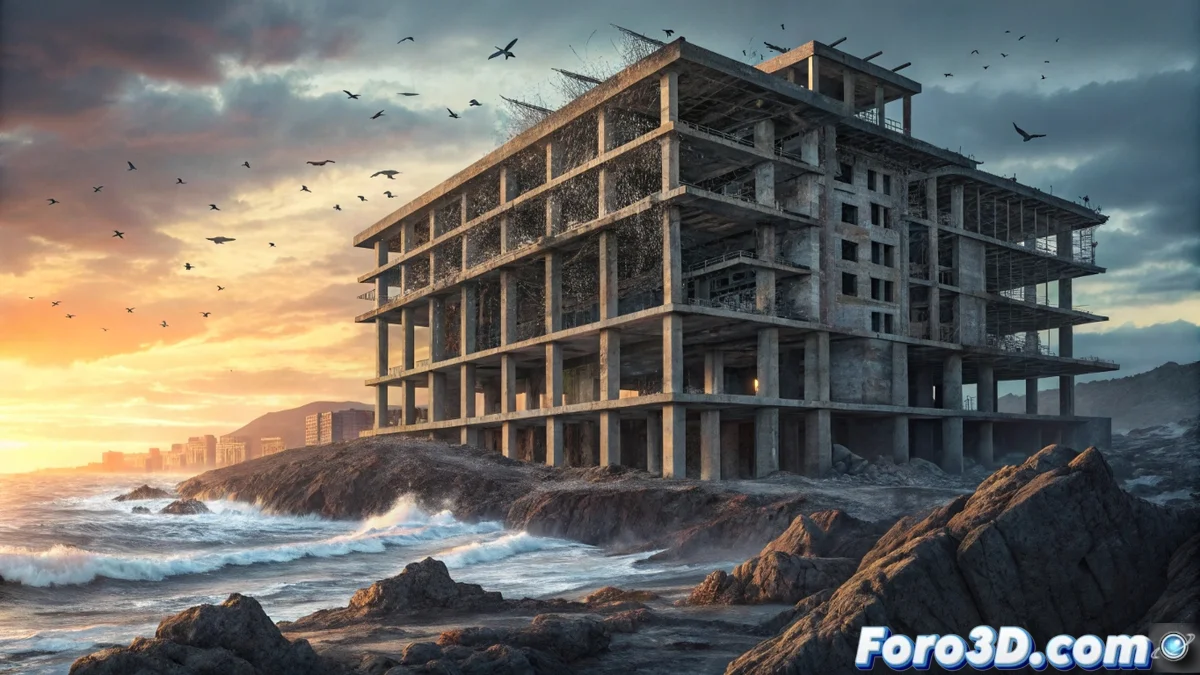
The Skeleton of Costa Teguise: a ghost hotel facing the sea
On the east coast of Lanzarote, a concrete silhouette interrupts the marine horizon. It is the shell of a hotel complex that never saw its completion, a project that they began to build without the necessary permits and which the authorities stopped. The work has been halted for decades, becoming a symbol of how poor planning can occur in the Canary Islands 🏗️.
A project that started without authorization
The promoting company decided to build the hotel without first obtaining the municipal building license in Teguise. When the town hall services discovered the infraction, the main structure was already in place. The council ordered the works to stop immediately and initiated a file to sanction. From that moment, the judicial process drags on and the construction exists in a legal vacuum, awaiting a final decision.
Key details of the case:- The promoter built without the required permit from the town hall.
- The infraction was detected when the work already had its main skeleton erected.
- The sanctioning file and the halt are immediate, but the legal resolution drags on indefinitely.
"It's the hotel with the best views and the worst service," some neighbors comment, "it never housed a guest, only seagulls and rust."
The footprint on the landscape and the regulations
The empty mass of cement imposes its presence on the coastline and provokes discussions on how to act with these ghost constructions. Meanwhile, the owners try to normalize their situation, a path that is intricate and expensive. This example shows the tension between the impetus to build and the need to plan in areas of high tourist value.
Consequences and prospects:- The visual impact on the coast is permanent and generates public debate.
- Regularizing the building implies a complex process with high costs for the owners.
- For many residents, the structure represents an era with less control over urban planning.
An uncertain future between legality and demolition
The future of this urban skeleton now depends on resolving its administrative irregularity. The final alternative, if it is not regularized, could be that a court ruling orders it to be demolished. This case remains open, reminding us of the importance of respecting urban planning regulations to protect the territory 🏝️.