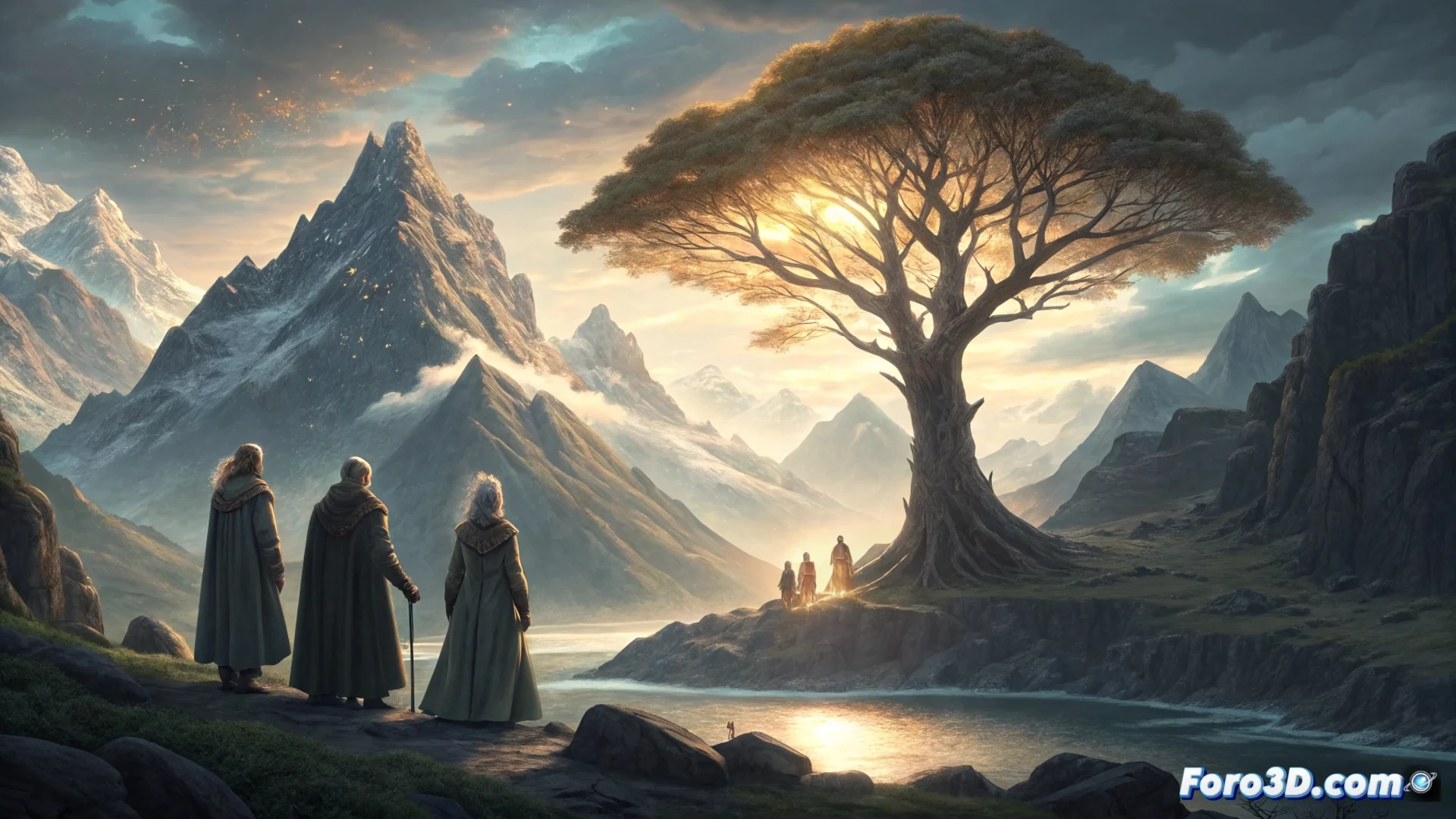
The Silmarillion: the foundational text of Middle-earth
J.R.R. Tolkien conceived The Silmarillion as the cornerstone of his legendarium, an epic tale that narrates the origins of the universe in which his most famous works take place. This book is not a conventional novel, but a compilation of mythological texts that explain how the world was forged and the forces that inhabit it from its beginning. 🏔️
The architects of the world and their conflicts
The plot begins with the Valar, beings of immense power who arrive in an empty world to give it shape and order. Together with their servants, the Maiar, they interact with the first conscious races: the Elves and Men. Their mission is overshadowed by the rebellion of Morgoth, the first Dark Lord, whose desire to dominate everything unleashes an eternal conflict. The ignition point is the theft of the Silmarils, three perfect jewels created by the elf Fëanor, which contain the primordial light.
Key elements of the cosmogony:- The Valar and Maiar: Angelic beings who shape the physical world and guide its inhabitants.
- The Awakening of the Children of Ilúvatar: The moment when Elves (Firstborn) and Men (Followers) appear in Middle-earth.
- Morgoth's Corruption: His envy and malice pervert creatures and sow hatred, creating races like orcs and corrupting Balrogs.
“And they came to Middle-earth, and there they made their abode, and worked in it, and ordered it, and filled it with things that grew and lived.” - Ainulindalë, on the arrival of the Valar.
The tragedy of the Noldor and the legacy for future ages
The main story follows the Noldor, a clan of elves led by Fëanor, who, consumed by the oath to recover the Silmarils, rebel against the Valar and abandon the blessed realm of Valinor. This decision leads them to a ruthless and merciless war against Morgoth in the First Age of Middle-earth. The narrative is rife with heroism, but also betrayal, pride, and loss, establishing a tragic and epic tone.
Consequences and connections with the legendarium:- War of Wrath: The final conflict that ends the First Age and imprisons Morgoth, devastating vast regions.
- Origins of antagonists: Sauron appears here as a Maiar loyal to Morgoth, laying the foundations for his later rise as Dark Lord.
- Creation of icons: The appearance of dragons, Balrogs, and other powerful creatures that reappear in The Lord of the Rings is explained.
A mythology with a literary purpose
Although the structure, where superior beings intervene in a primitive world, may evoke theories of ancient astronauts, Tolkien approached this framework from a purely literary and mythopoetic perspective. His goal was not to explain history, but to build a coherent mythology for England, endowing it with legendary depth comparable to that of Norse or Greek myths. The book serves as the essential backstory that gives weight, meaning, and tragedy to every event in later Middle-earth. 📜