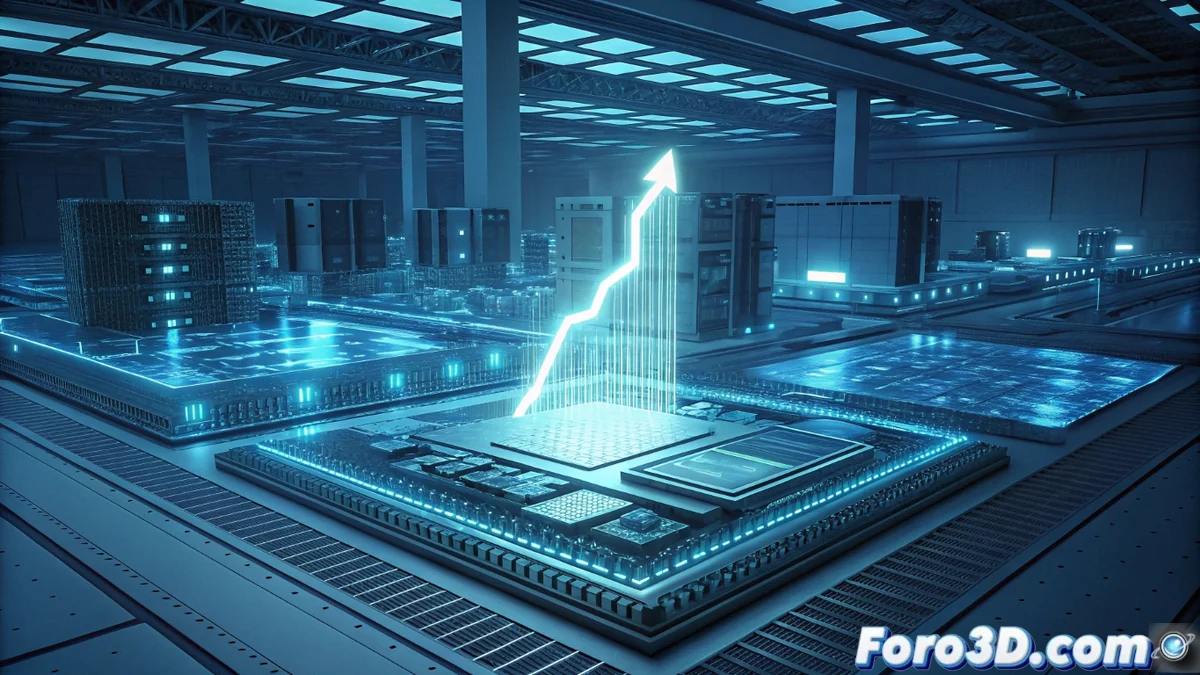
The Semiconductor Industry Expands with Artificial Intelligence
The semiconductor sector maintains a steady growth pace, a movement directly fueled by the global need for artificial intelligence systems. Recent data from the Semiconductor Industry Association confirms that worldwide revenues rose 4.7% in a single month, approaching 70 billion dollars. This trajectory suggests that the total market value could soon exceed one trillion dollars. The activity is not concentrated in one area but drives new product categories, exerting constant pressure on costs. 🚀
The Evolution of Hardware Beyond Classic Components
The competition to create and manufacture AI hardware no longer revolves solely around GPUs or CPUs. Currently, it includes a wider variety of elements, such as AI accelerators and memory chips with very high bandwidth. This shift shows how the urgency to handle AI tasks efficiently extends throughout the supply chain. Manufacturers are adjusting their operations and plans to capture a share of this growing market, helping sector revenues continue to rise.
New Players in the Chip Ecosystem:- Dedicated AI Accelerators: Components specifically designed to execute machine learning algorithms with greater energy efficiency.
- High Bandwidth Memory (HBM): A type of memory crucial for feeding AI processors with the data they need at high speed.
- Tensor Processing Units (TPUs): Specialized chips that optimize matrix operations, the core of AI calculations.
The current dynamism is not limited to a single segment but drags new product categories along, where constant pressure on prices is observed.
Prospects for a Future with Steady Growth
Forecasts for next year indicate that this trend will consolidate. Analysts agree that continued investment in data center infrastructure and the launch of AI applications at the network edge will continue to fuel demand. This landscape presents both opportunities and challenges for the industry, which must manage production capacity, raw materials logistics, and geopolitical factors to maintain the expected pace.
Key Factors Shaping the Next Year:- Investment in Data Centers: The construction and upgrading of server farms to host larger and more complex AI models.
- AI in Edge Computing: Bringing artificial intelligence processing power to local devices, from phones to industrial sensors.
- Supply Chain Management: Navigating the availability of critical materials and the complexity of global manufacturing.
A Horizon Full of Potential and Debate
While experts analyze whether this growth can be sustained in the long term, popular culture is already imagining everyday uses. Some users speculate that their next personal computer might include a chip just for generating memes, arguing that it is an equally vital AI task. This reflects how specialized semiconductor technology could seep into unexpected applications, further democratizing artificial intelligence capabilities. The path to one trillion dollars is paved with constant innovation and demand that shows no signs of slowing. 💡