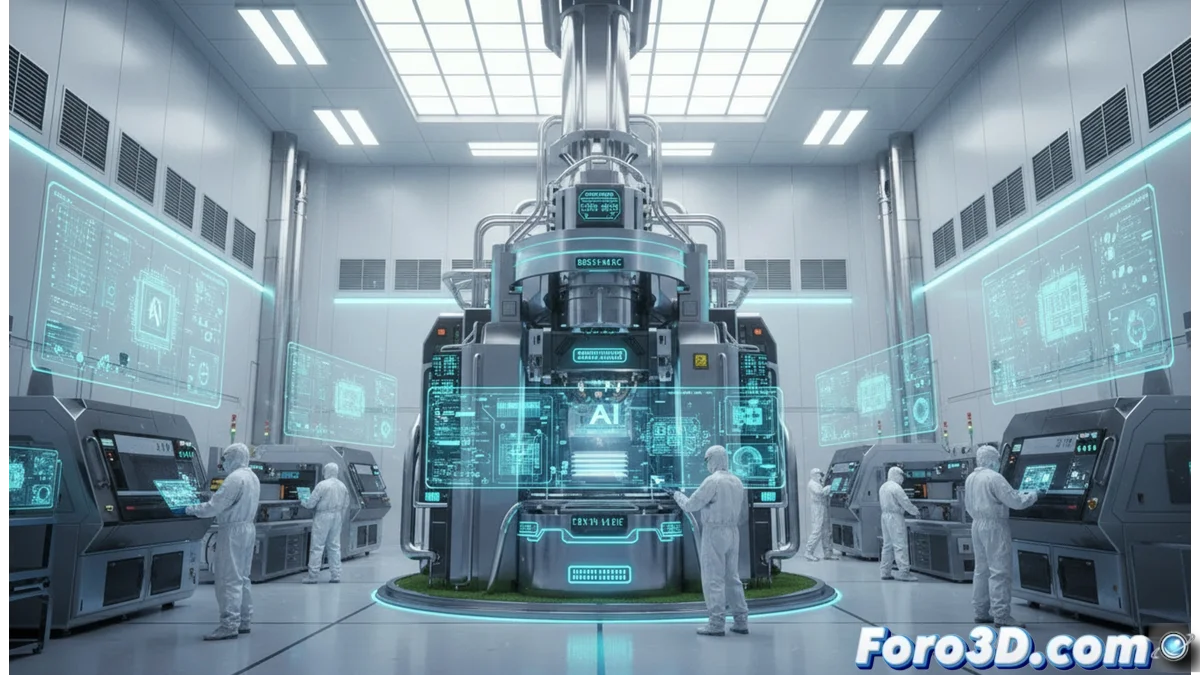
The Semiconductor Equipment Market Grows 13.7% This Year
The industry that builds machines for chip manufacturing is in an unprecedented expansion cycle. According to the latest report from the analysis firm SEMI, the global business volume is expected to increase by 13.7% during the current fiscal year, raising total revenue to the record figure of 133 billion dollars. 🚀
An Upward Trend Extending Until 2027
This rebound is not an isolated phenomenon, but the start of a phase of sustained growth. Analysts anticipate that the sector will maintain its momentum in the coming years. Specific estimates point to revenues scaling up to 145 billion in 2026 and reaching approximately 156 billion dollars by 2027. These figures reflect solid confidence in future manufacturing capacity demand.
The Two Main Drivers of Growth:- Hardware for Artificial Intelligence: The need to develop and run more powerful AI systems requires producing chips with extremely complex designs, which demands state-of-the-art manufacturing equipment.
- Advanced Packaging Techniques: The industry is massively adopting methods like 3D integration, which allows joining multiple silicon components into a single system. This improves performance and optimizes energy consumption, but requires specialized production tools.
- Manufacturers' Investment Cycle: The leading semiconductor companies and foundries are increasing their global production capacity, translating into massive orders for new equipment.
This capital spending cycle usually anticipates periods of greater supply of electronic components in the market.
Investment in Key Technology for the Smallest Nodes
To manufacture the chips demanded by modern applications, producers allocate large sums to acquire cutting-edge equipment. This investment focuses on critical areas such as advanced lithography (essential for defining increasingly tiny circuits), tools for deposition of atomic layers, and sophisticated inspection and measurement systems. Without this technology, it would be impossible to realize the smallest process nodes and innovative designs.
Equipment Areas with the Highest Demand:- EUV (Extreme Ultraviolet) lithography systems.
- Equipment for chemical and physical vapor deposition.
- High-precision plasma etching tools.
- Metrology and inspection systems for quality control.
The Perspective from the Production Floor
While macroeconomic reports project investments in billions, in the daily operational reality of a manufacturing plant, priorities are concrete. Success is measured by the constant reliability of each machine. As a frequently ironic tone in the sector notes, the main goal is simple: avoid having the new alignment machine fail right on Friday at five in the afternoon. This anecdote underscores that, behind the big numbers, there is the precise and continuous work of keeping complex and expensive equipment operational. 🔧