History and Mystery
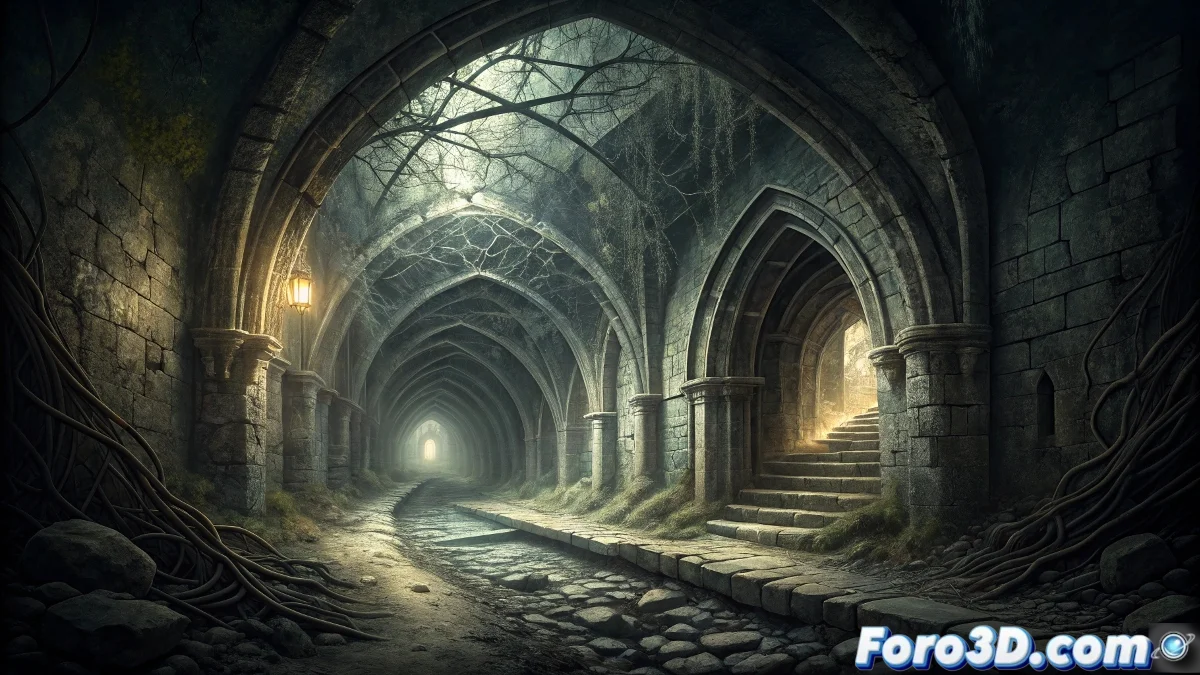
Beneath the imposing walls of León Cathedral lies a hidden network that has fueled legends for centuries. 🕯?Medieval chronicles mention secret chambers and passages under the cloister and presbytery, designed with camouflaged entrances and reinforced walls that suggest purposes beyond mere functionality. Local traditions speak of monks who disappeared without a trace in these underground labyrinths and doors that seem to operate by their own will. This aura of mystery has persisted to this day, as large sectors of this network remain unexplored due to access difficulties and structural risks.
Archaeological Features
The known sections of these tunnels reveal sophisticated medieval engineering. Semicircular vaults and perfectly carved masonry arches demonstrate a design intended to support the weight of the upper structure while allowing discreet passage of people and valuable objects. The system includes carefully planned drains and connections to minor crypts and auxiliary chambers, suggesting multiple functions across different historical periods. The solidity of the construction explains why these spaces have survived eight centuries, preserving their secrets beneath the modern city.
Some local legends speak of monks who mysteriously disappeared in these passages
Unity Recreation
For developers and digital artists, these tunnels represent the perfect opportunity to explore techniques for creating immersive atmospheres and environmental storytelling. Unity offers the ideal tools to reconstruct not only the physical architecture of these spaces but also that sense of mystery and discovery that defines them. The creative challenge lies in conveying the thrill of exploring the unknown while maintaining the historical authenticity of the environment.
Project Setup and Base Structure
Creating a convincing underground environment requires careful planning from the earliest stages of development. Project organization will determine the efficiency of the creative workflow.
- Render template: Set up a 3D project with URP or HDRP for advanced lighting and material management
- Modular geometry: Build reusable tunnel sections using primitives and ProBuilder for rapid iteration
- Coordinate system: Establish a realistic scale that conveys the monumentality of the architectural space
- Asset organization: Structure the scene hierarchy with clear logic for efficient navigation
Tunnel Modeling and Texturing
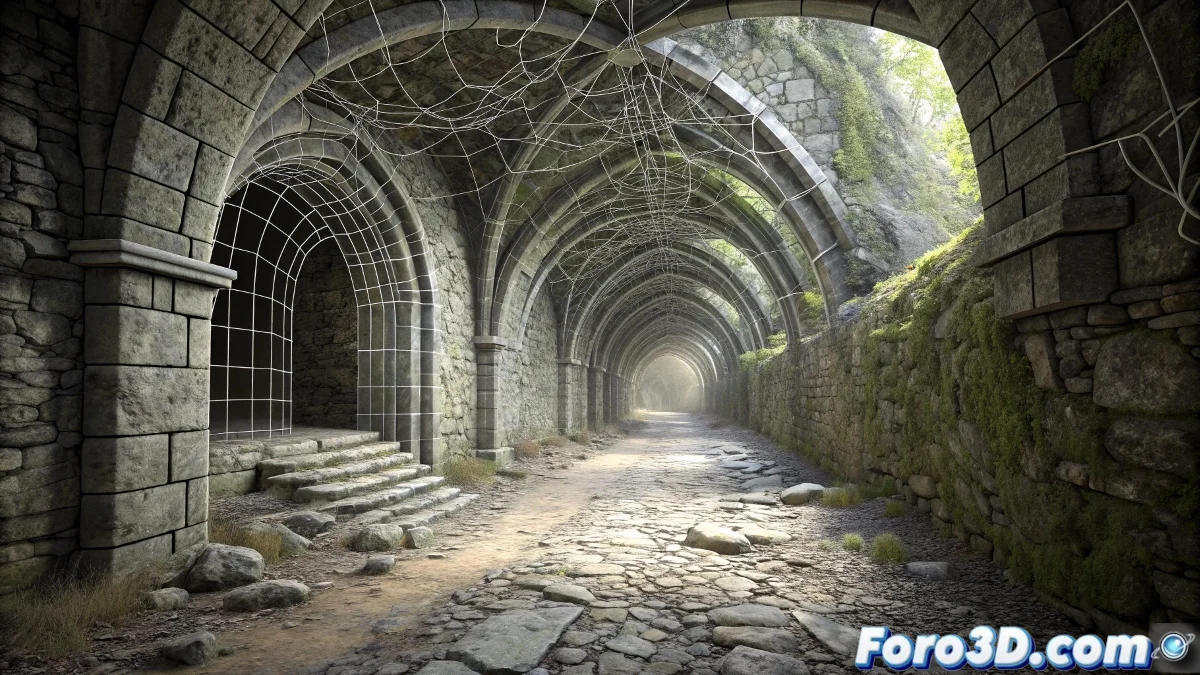
The visual authenticity of the environment depends on attention to detail in geometry and materials. Every element must contribute to the sense of antiquity and mystery.
- Sculpting of eroded stone and surface wear using procedural modeling tools
- PBR materials with normal maps that simulate eight centuries of deterioration and humidity
- Decal system for cracks, water seepage, and medieval tool marks
- Textural variation between different sections to avoid evident repetitions
Lighting and Atmospheric Effects
The lighting setup is fundamental to establishing the appropriate emotional tone. The interaction between light and darkness defines the explorer's experience.
- Strategic point lights simulating torches with subtle flickering and warm temperature
- Volumetric fog creating atmospheric density and visible light beams in open spaces
- Baked lighting in static areas combined with realtime lighting for dynamic elements
- Global lighting system that cohesively unites all visual elements
Interactivity and Narrative Elements
True immersion arises from the user's ability to interact with the environment and discover its secrets progressively.
- First-person controller with realistic physics that conveys the weight and scale of the space
- Trigger and event system that activates narrative elements when exploring specific areas
- Spatialized ambient sounds that react to the player's position and movements
- Interactive elements like secret doors and hidden mechanisms that reward exploration
At the end of the process, the developer will not only have recreated a physical space but will have captured the essence of a historical mystery that has been waiting centuries to be solved. 🗝?Because, let's be honest, what could be more exciting than finding a secret door that no one has opened in eight hundred years?