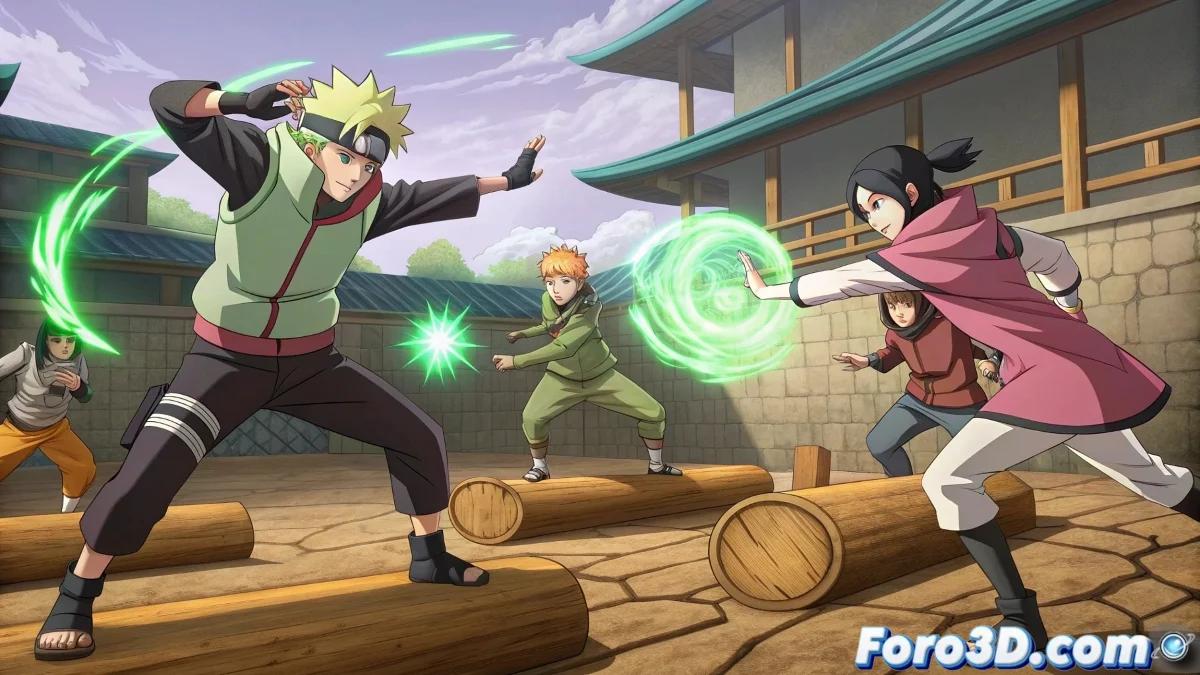
Boruto Surpasses Naruto in Supporting Character Development
The Boruto: Two Blue Vortex franchise is demonstrating significant evolution in its treatment of supporting characters, surpassing the limitations that affected the original Naruto series. While the previous generation often relegated its supporting characters to decorative roles, Boruto builds parallel narratives that maintain constant relevance in the shinobi universe. 🎯
Organic Evolution of Clans and Inherited Techniques
The series systematically explores the ramifications of inherited abilities in the modern era, allowing each character to develop their unique identity without being trapped in the shadow of their predecessors. This approach creates a vibrant character ecosystem where every shinobi actively contributes to the story's development.
Examples of Specialized Development:- Metal Lee faces his father's stage fright but with contemporary solutions and modern psychological support
- Sarada Uchiha redefines the Hokage leadership concept by fusing Uchiha tradition with medical innovation
- Shikadai Nara evolves his family's shadow techniques by integrating computerized tactical analysis
- Chocho Akimichi develops body expansion variations with enhanced density control
In the contemporary ninja world, even the most secondary character deserves their own development, not just to be a supporting act for the protagonist of the moment.
Unforced Narrative Interconnections and Character Autonomy
The relationships between supporting characters are woven through natural interactions at the Ninja Academy and joint missions, creating an organic support network that functions independently of the protagonist. This autonomy allows for crucial moments without constantly depending on Boruto.
Developed Independent Dynamics:- Inojin Yamanaka and Shikadai develop their own team dynamic that reflects but does not copy their parents'
- Mitsuki has complete arcs exploring his artificial nature and relationship with Orochimaru without protagonist intervention
- The new generations of the Hyuga, Aburame, and Inuzuka clans receive equitable attention in development scenes
- Genin teams maintain relevance beyond their initial arcs with contributions to the main plot
Substantial Contributions to the Main Plot
Unlike Naruto, where many supporting characters became narratively obsolete after the initial arcs, Boruto keeps its entire cast actively involved in the central conflicts, granting them genuine moments to shine. 🌟
Highlighted Moments for Supporting Characters:- Sarada Uchiha activating the Mangekyo Sharingan at critical moments with independent emotional development
- Mitsuki making crucial decisions about his programming and loyalties in moral tension arcs
- Kawaki developing complex relationships with multiple characters beyond his connection with Boruto
- Team 10 members contributing strategic intelligence in battles against Otsutsuki threats
Conclusion: The Maturation of Shonen Storytelling
The approach of Boruto: Two Blue Vortex towards supporting characters represents a natural evolution of the shonen genre, demonstrating that it is possible to create a cohesive universe where every element has intrinsic narrative value. This approach not only enriches the viewer's experience but honors the complexity of the ninja world that Masashi Kishimoto originally created. 🍥