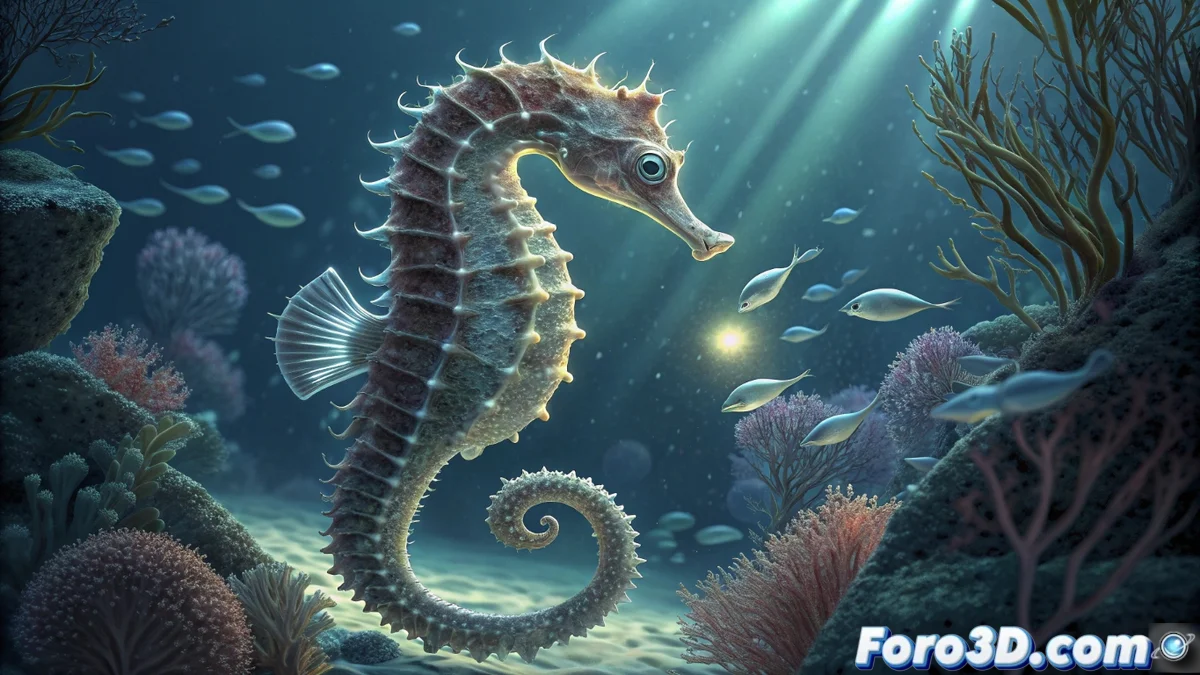
The Seahorse's Incubating Pouch: Genes That Redefine Motherhood
Marine science has found in the humble seahorse an extraordinary biological model. Recent studies focus on the specific genes that govern the development of its incubating pouch, an evolutionary adaptation that allows males to carry out gestation. This discovery is not only a zoological curiosity but also draws a direct bridge to revolutionary advances in reproduction, suggesting that motherhood mechanisms could be transferable beyond the limits of traditional biological gender. 🧬
Deciphering the Genetic Code of Gestating Fatherhood
To unravel this mystery, research teams have employed next-generation genomic sequencing techniques. The goal was to map the seahorse DNA, with special attention to regulatory markers and variations that make the pouch's function possible, an organ analogous in purpose to a uterus. This methodology integrates deep molecular analyses with behavioral and physiological observations in a controlled environment.
Key Methodologies Employed in the Study:- RNA Sequencing to identify active genes during different phases of gestation within the pouch.
- Comparative Genome Analysis with other fish species to isolate unique sequences responsible for this adaptation.
- Gene Expression Modeling to understand how processes that enable embryo nutrition and protection are regulated and activated.
Male gestation in seahorses is not merely a trick of nature, but a complex and genetically regulated biological system that we are now beginning to understand.
Transformative Implications Beyond the Ocean
The implications of these findings are profound and multifaceted. First, they conceptually challenge the notion that motherhood is an exclusive function of one sex. On the applied level, the derived knowledge could inspire new avenues in reproductive medicine, such as the development of therapies or artificial supports that enable gestation in people who biologically cannot do so, expanding family formation possibilities.
Potentially Impacted Fields:- Reproductive Medicine: Design of interventions that simulate gestation conditions in diverse biological contexts.
- Species Conservation: Application of knowledge to aid reproduction in endangered species with complex reproductive biology.
- Tissue Bioengineering: Creation of artificial structures inspired by the incubating pouch for embryonic development studies.
A Future of Possibilities and Ethical Reflections
As human society debates family models and parental roles, nature offers, in seahorses, a resolved example of gestating fatherhood. The irony is palpable: a little fish has "solved" a dilemma that for humans involves enormous social and technological complexities. This scientific path inevitably leads us to a necessary ethical debate on the redefinition of parenthood, the limits of genetic intervention, and how to integrate these advances responsibly. The future may hold scenarios where biology does not define the parental role, inspiring us with lessons from the reef. 🌊