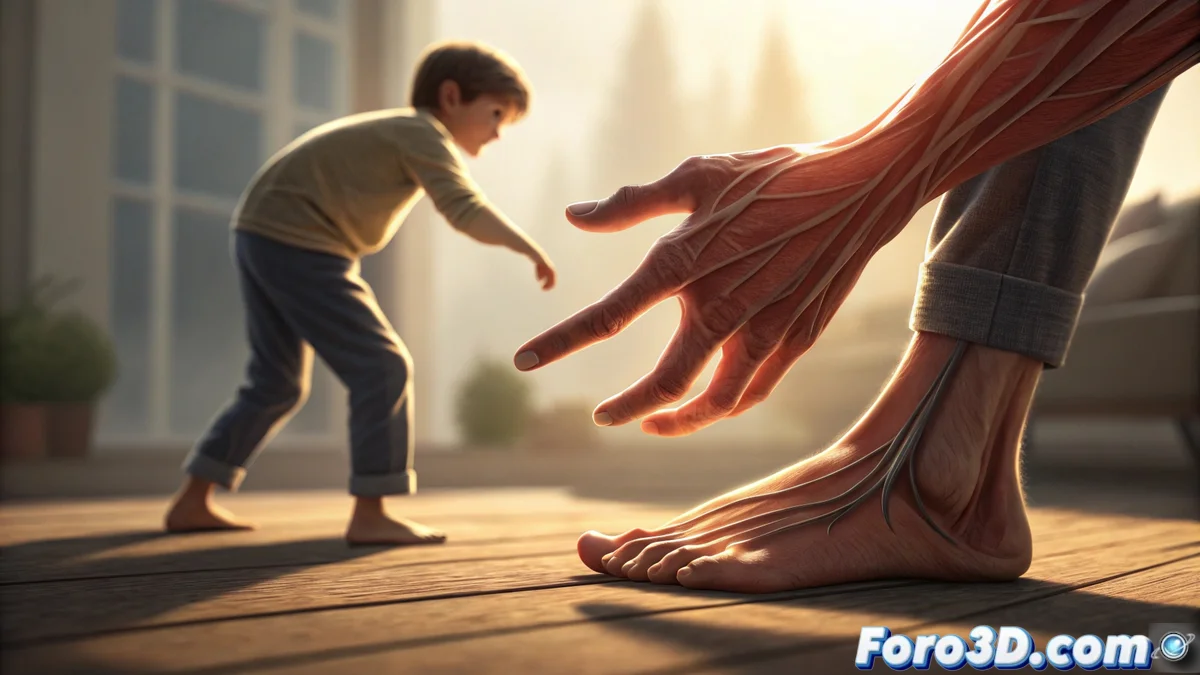
The Science Behind Tickling and Its Brain Connection
Exploring the phenomenon of tickling goes beyond a simple physical reaction. This reflex, which we share with other animals, serves as a powerful tool to unravel how our brain processes touch, emotion, and relationships. Research with robots and brain scanners is mapping the neural circuits that turn a light touch into laughter and connection 🤖.
An Evolutionary Link Between Species
Observing bonobos playing or rats emitting joyful sounds when tickled points to an ancient evolutionary origin. This common behavior suggests that the brain mechanisms for perceiving a pleasant touch and responding with laughter developed long before humans. It is a trait that fosters bonding and helps learn to interact safely, demonstrating a deep biological connection 🐒.
Key evidence of shared behavior:- Bonobos use tickling as a crucial part of social play and to strengthen bonds.
- Rats produce ultrasonic vocalizations, analogous to laughter, when tickled, indicating a positive experience.
- This common pattern in different species points to conserved neural circuits throughout evolution.
Perhaps the final irony is that an act so associated with pleasure and connection essentially depends on a slight sensation of threat or surprise that the brain decides to interpret as fun.
Mapping Laughter in the Human Brain
Neuroscience uses neuroimaging techniques to observe the brain during tickling. Not only is the somatosensory cortex activated, which processes touch, but also regions linked to reward and processing the unexpected, such as the hypothalamus. This finding explains a key mystery: why we can't tickle ourselves 🧠.
Main neuroscientific findings:- The brain predicts and cancels the sensation when we are the source of the movement, a fundamental mechanism for distinguishing self from external.
- The response to tickling is not merely physical; it involves an emotional state and expectation.
- Studies with robots that simulate tickling allow isolating and studying these neural circuits with precision.
From Surprise to Social Bonding
Essentially, tickling represents a neurological paradox. The brain interprets a stimulus that it could perceive as a slight threat or surprise and channels it into an experience of fun and connection. This process underscores the complexity of how we integrate tactile sensation, emotion, and social interaction in a single instant, revealing deep layers about our own nature 😄.