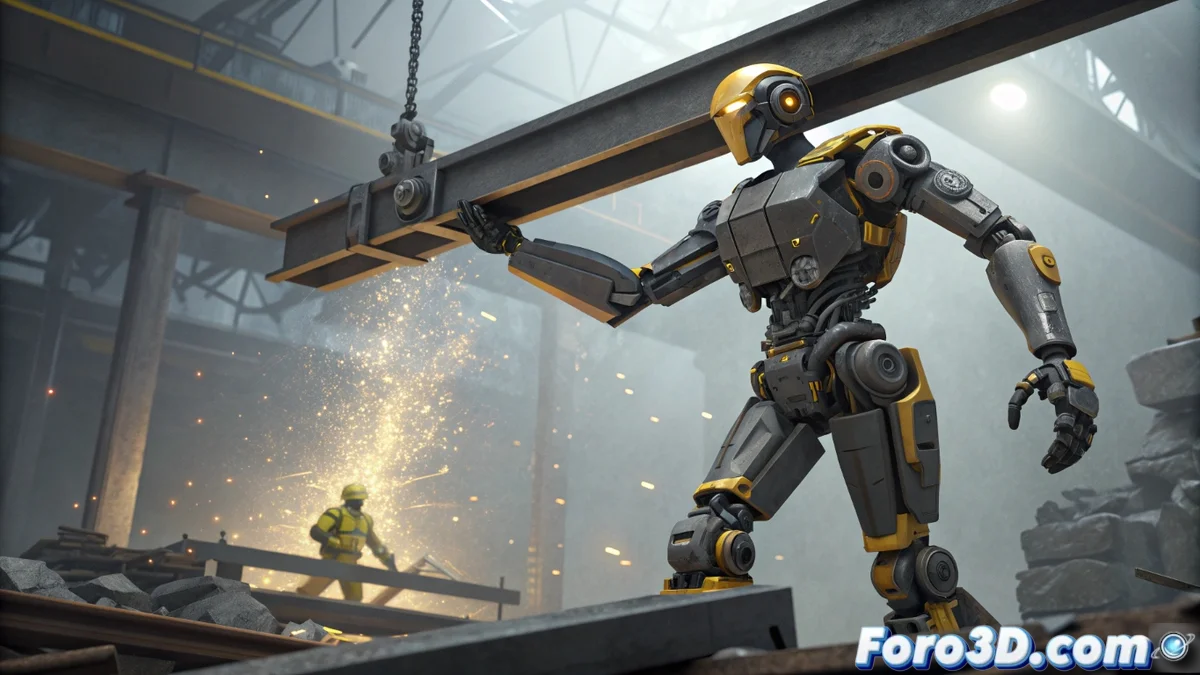
The Sarcos Guardian XT: Amplified Force Robotics for Extreme Environments
The boundary between human and machine blurs with systems like the Sarcos Guardian XT, a robotic colossus designed to be a physical extension of the operator in scenarios where risk is unacceptable. This system is not autonomous; its power lies in real-time teleoperation, allowing a human controller to direct from safety a robot with superhuman capabilities to manipulate massive objects and perform delicate tasks in places like nuclear plants or disaster zones. 🤖
The Core of Control: Intuition and Haptic Feedback
The magic of the Guardian XT is not only in its brute strength, but in its sophisticated haptic control system. The operator wears a master exoskeleton or uses an interface that captures every one of their movements with extreme fidelity. A simple hand gesture, wrist twist, or finger pressure translates instantly into an identical action by the robot. The revolutionary aspect is the force feedback: the operator can literally feel the weight, resistance, and even the texture of the object the robot is holding, achieving an unprecedented level of dexterity and tactile control in industrial robotics of this scale. The base platform, equipped with tracks or all-terrain wheels, provides the necessary mobility to operate in complex terrains.
Key features of its operation system:- Real-time motion transmission: Synchronized replication without perceptible latency of human gestures.
- Bidirectional force feedback: Allows "feeling" the manipulated environment, crucial for precision tasks.
- Adaptable interface: Can be operated via a full exoskeleton or more compact master control stations.
The true innovation is not making a strong robot, but enabling a human to wield that strength with the delicacy of their own hands, but from a kilometer away.
Fields of Application: Where Humans Cannot (Nor Should) Be
The raison d'être of the Guardian XT is high-risk environments. Its robust design and remote operation make it the ideal candidate for industries where human exposure is a danger. In the energy sector, it can perform maintenance on reactors or high-voltage lines. For defense and explosive ordnance disposal, it offers millimeter precision without risking human lives. In heavy logistics and construction, it facilitates the handling and positioning of beams or machinery with agility impossible for traditional cranes. It is, essentially, a guardian that assumes extreme physical dangers.
Main sectors benefited:- Energy and utilities: Maintenance in radioactive or high-voltage environments.
- Emergency response: Debris removal and search in collapsed or unstable structures.
- Heavy industry and construction: Manipulation and assembly of large-tonnage components.
A Development with Inherent Irony
Behind this engineering marvel that protects the operator from physical dangers lies a curious paradox: its creation required legions of engineers to face their own "risk environments" in offices, dealing with aggressive deadlines, changing specifications, and epic amounts of coffee. However, the final result is a tool that eliminates physical fatigue and immediate danger, redefining what is possible in critical operations. The Guardian XT symbolizes how technology can amplify the best of human capabilities—our dexterity and judgment—while mitigating our greatest physical vulnerabilities. 💡