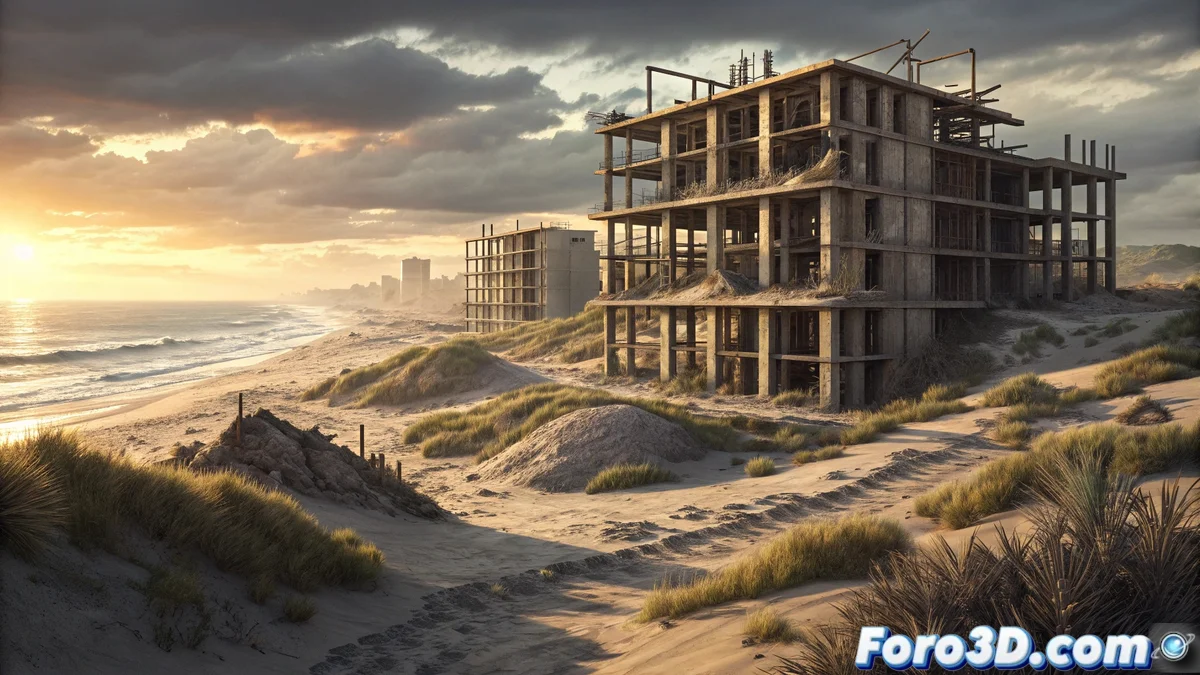
The Sand Prison: Concrete Skeletons Testifying to Spain's Real Estate Bubble
The Spanish coastline presents a dystopian landscape where incomplete cement structures emerge among dune systems and pristine beaches, constituting an architectural testimony to the 2008 financial collapse 🏗️. These ghost developments, popularly known as "the sand prison," comprise thousands of houses, villas, and residential complexes halted mid-construction, their bare skeletons remaining exposed to the coastal elements.
Genesis and Characteristics of the Abandoned Developments
The origin of these speculative projects lies in the period of economic expansion, when developers launched large-scale residential operations in coastal areas anticipating high tourist demand. The implosion of the real estate market cut these plans short, leaving works condemned to perpetual abandonment. Their particularities include visible concrete frameworks, a complete absence of enclosures, and unpaved road networks winding among deteriorated construction materials.
Distinctive Elements of the Halted Constructions:- Load-bearing cement structures exposed to the elements without protective cladding
- Complete lack of basic installations like windows, doors, or electrical systems
- Peripheral developments with laid-out but unpaved streets among accumulated debris
These architectural skeletons have paradoxically become the most affordable accommodation on the coast, offering sea views but lacking a roof and basic services
Ecological and Socioeconomic Repercussions of the Abandonment
The state of indefinite paralysis generates severe environmental damages such as accelerated erosive processes, pollution from construction waste, and alteration of dune ecosystems. From a social perspective, they represent an unsustainable burden for municipalities without resources for demolition or reactivation, while investors and property owners confront multi-million dollar asset losses.
Consequences of the Urban Planning Limbo:- Degradation of coastal natural spaces due to decomposing materials and uncontrolled dumping
- Financial burden for local administrations unable to assume management costs
- Massive depreciation of real estate assets and legal conflicts between involved parties
Uncertain Future Between Rehabilitation and Demolition
Some administrations are evaluating intervention plans ranging from sustainable rehabilitation to controlled demolition, although complex legal procedures and high economic costs slow down any definitive solution 🌊. This urban phenomenon reflects the persistent scars of a crisis that metamorphosed the coastline into a cemetery of failed aspirations, where concrete progressively merges with the sand under the corrosive action of the sun and sea salinity.