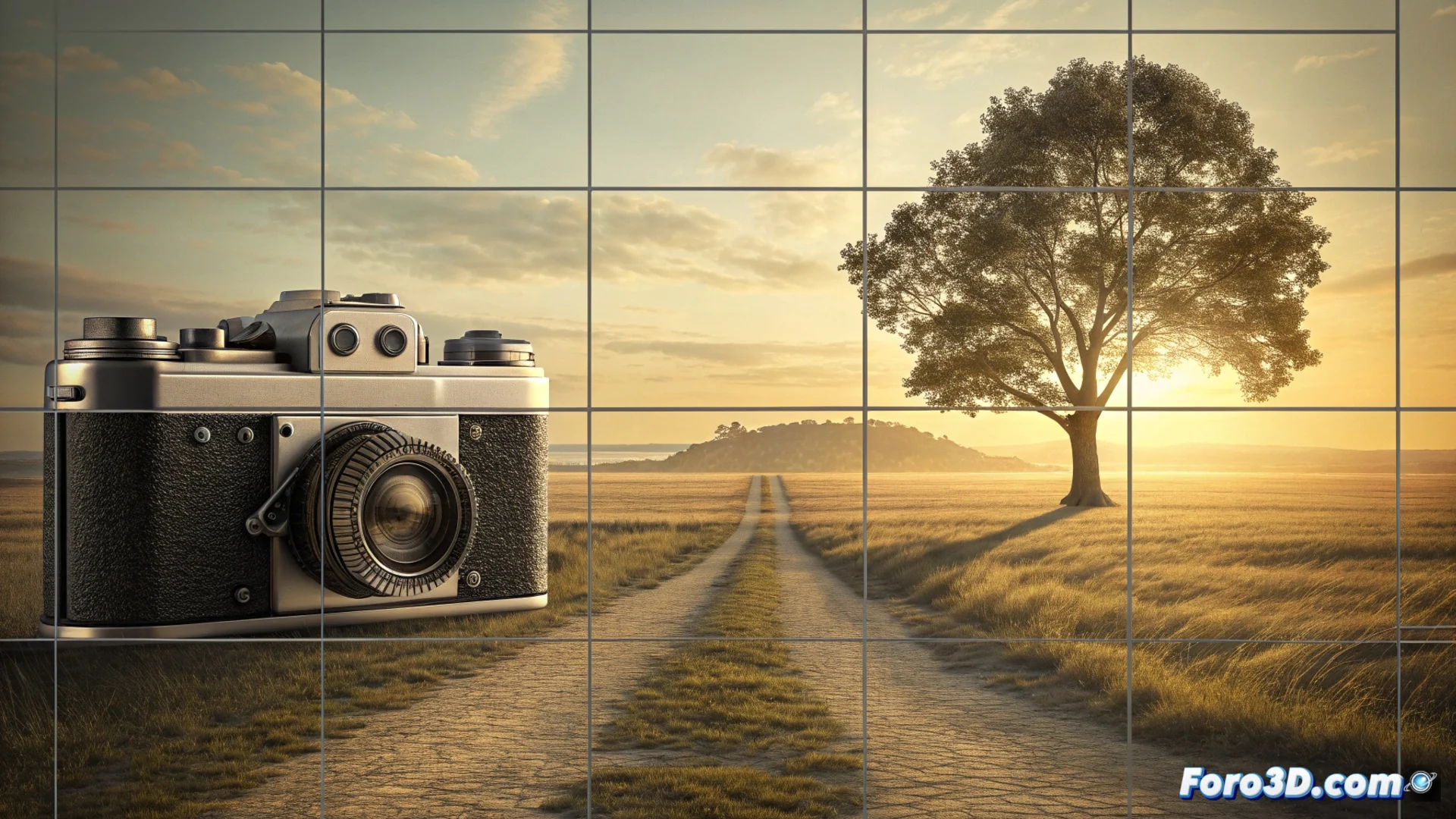
The Rule of Thirds for Organizing Visual Composition
The rule of thirds is an essential principle for structuring any image effectively. This method divides the visual area into a grid of nine equal segments using two horizontal and two vertical lines. The points where these lines intersect and the lines themselves serve as power areas for placing elements. By following this guide, a dynamic balance is achieved that attracts more attention than a centered composition. 🎯
How to Apply This Rule to Improve Your Images?
To use the rule of thirds, activate the grid on your camera screen or editing software. In landscapes, align the horizon with one of the horizontal lines: use the upper one to give weight to the ground or the lower one to highlight the sky. Place faces or main objects at the intersection points; this directs the viewer's gaze and adds visual tension. In portraits, positioning the eyes near the upper horizontal line usually creates a more intense connection. 📸
Key Steps to Implement the Rule:- Visualize the grid: Overlay the grid mentally or digitally on your scene.
- Position the horizon: Decide whether you want to emphasize the sky or the ground by aligning it with the guide lines.
- Place the point of interest: Position the main subject at one of the four strong points of the grid.
The rule of thirds trains your eye to perceive the image space in a more dynamic and deliberate way.
Flexibility and When to Break the Rules
This guide is a starting point, not an unbreakable law. Ignoring it consciously can produce powerful results when seeking absolute symmetry, a sense of instability, or a specific impact. Many cameras and editing programs include the option to overlay this grid, making it easier to frame during capture or crop afterward. 🛠️
Considerations When Using the Grid:- Assistance tools: Take advantage of the built-in composition guides in your camera or software.
- Breaking the rule: Do it intentionally to achieve different compositional effects, like a very marked point of attention.
- Avoid common mistakes: Pay attention to background elements that may distract, like a pole that seems to emerge from a character's head.
Integrate the Principle into Your Workflow
The ultimate goal of the rule of thirds is to develop your compositional intuition. By practicing it, you will start to organize visual elements almost automatically, seeking that balance that makes an image resonate. Remember that it is a tool for learning to see, allowing you to create more attractive compositions with a clear purpose, whether in photography, illustration, or 2D graphics. ✅