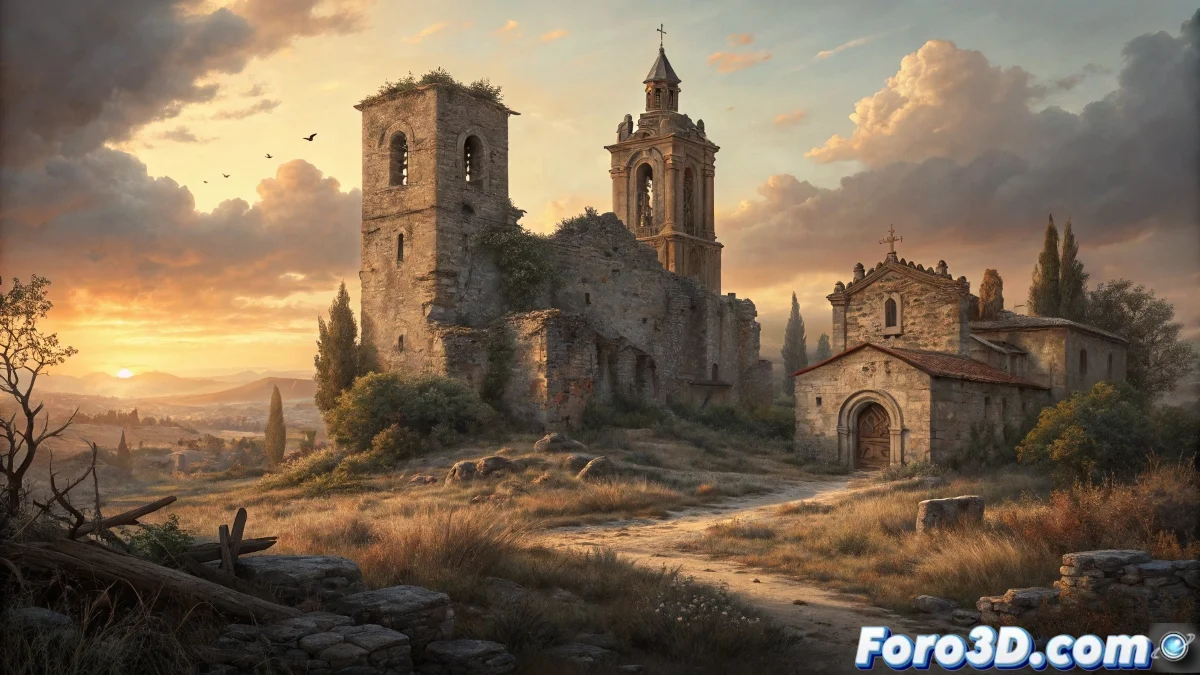
When 3D Software Rescues the Memory of Rural Abandonment
The ruins of Caudilla emerge from Toledo's oblivion to find new life in the digital universe of Cinema 4D. Recreating this silent testimony of rural exodus involves capturing not only the architectural forms but the layers of history and emotions contained in its stones. Every crumbling wall and every collapsed arch must convey the weight of decades of abandonment and the stories of those who had to leave seeking a future far from their land.
The true artistic challenge lies in balancing archaeological precision with the emotional expression of deterioration. The vegetation climbing the walls is not just a decorative element, but a visual metaphor for how nature reclaims what humans abandon. The light filtering through the cracks illuminates not only the geometry, but the nostalgia impregnated in every stone. 🏚️
Modeling ruins is not recreating the collapse, but preserving the dignity of what was once complete
Advanced Techniques to Capture the Passage of Time
The recreation of deterioration requires mastering effects that simulate decades of exposure to the elements. Authenticity lies in the cumulative details.
- Cloner systems to distribute debris and vegetation organically
- Procedural shaders that generate realistic erosion and weathering patterns
- Sculpting tools to create believable deformations and structural collapses
- Material layers that show different eras of construction and repair
The use of vertex maps to control the distribution of moss, lichens, and damp areas adds that layer of verisimilitude that transforms a 3D model into a temporal testimony.
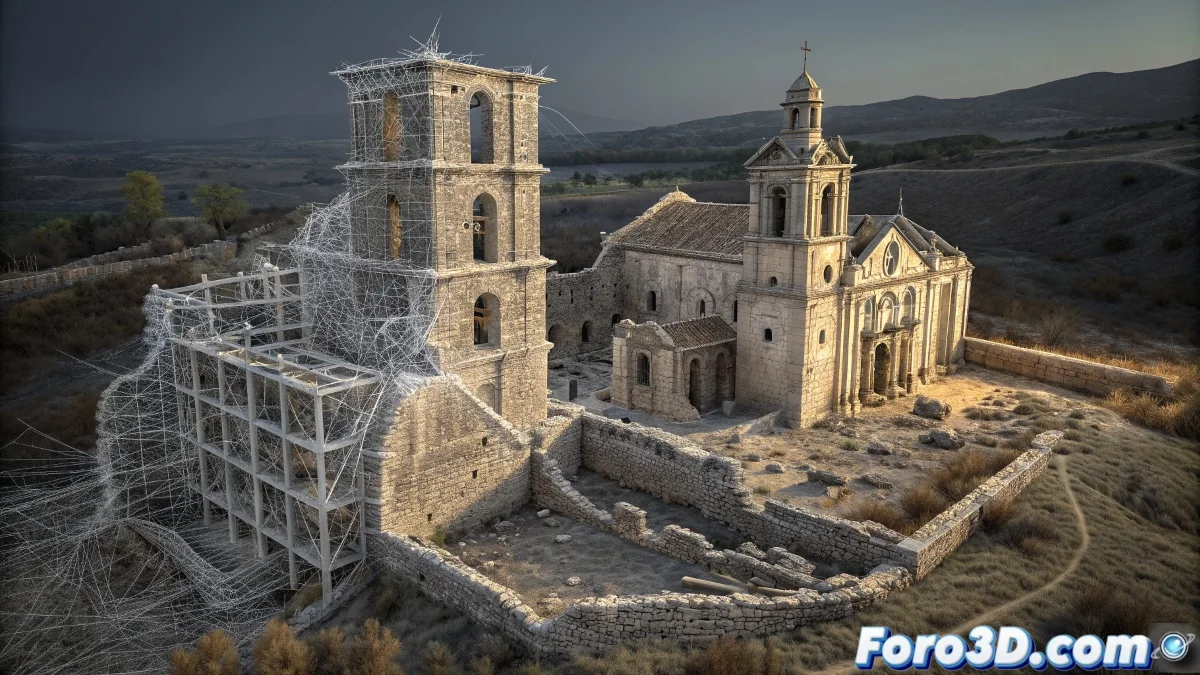
Workflow for Deteriorated Heritage
The methodology in Cinema 4D must progressively build the layers of history and abandonment. Starting with the original structure and adding successive layers of deterioration.
- Reconstruction of the original architectural volume based on documentation
- Application of specific structural damage according to real deterioration patterns
- Inclusion of invasive vegetation that follows real growth patterns
- Integration of contextual elements from the Toledo rural landscape
The camera animation must be designed as a contemplative tour that allows appreciating both the monumental scale and the intimate details of the deterioration, creating a narrative rhythm that invites reflection.
The Result: Rural Memory Turned into Visual Experience
This recreation transcends the technical exercise to become an emotional document of depopulated Spain. Caudilla's physical ruins continue their slow dialogue with time, but their digital version preserves a moment of their transformation process.
The final value lies in creating an experience that allows understanding not only how these buildings were, but what they represented for the community that inhabited them and why their abandonment still hurts in the collective memory. 3D technology thus becomes a tool for cultural preservation. 🌄
And if the render conveys as much melancholy as the real ruins, perhaps it's because in Cinema 4D even abandonment has its own modifiers and tags... although the former inhabitants probably preferred to see their buildings complete rather than perfectly deteriorated 😉