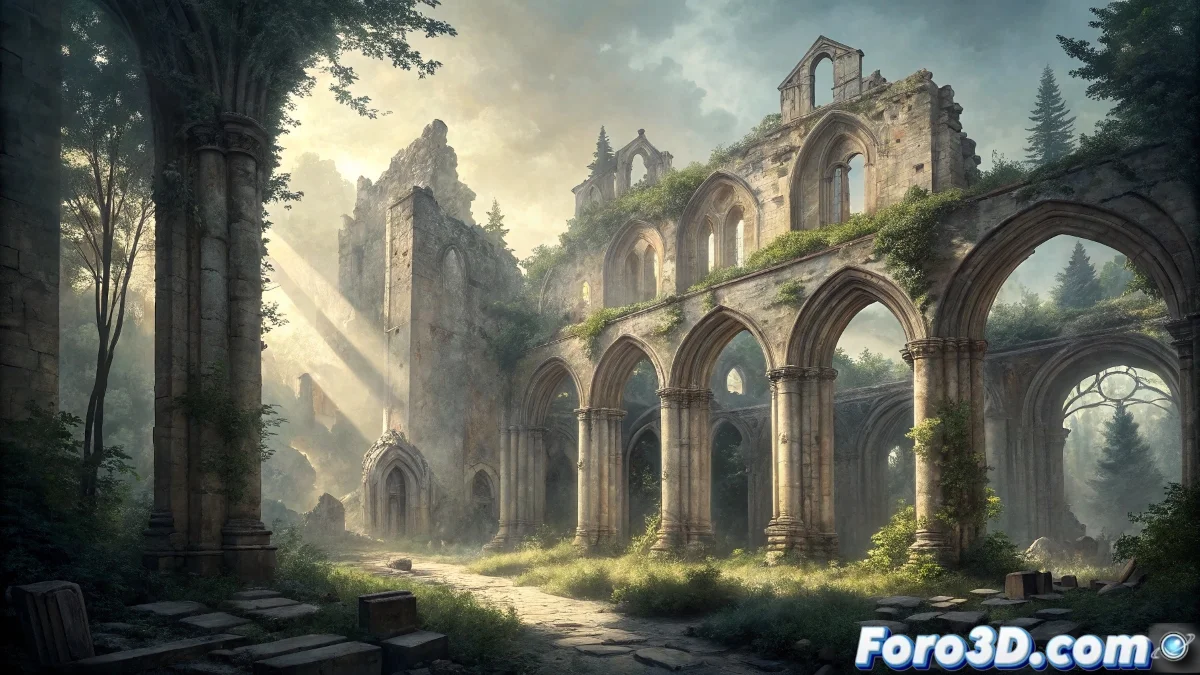
When Unity Brings Monastic Ghosts to Interactive Life
The Monastery of Santa María de Rioseco emerges from Burgalese oblivion to find new existence in the Unity engine. Recreating these Cistercian ruins involves building not only a visual space, but a complete sensory experience. Every GameObject, every shader, and every particle system must work in real-time to transport users to a world where the boundary between the monastic past and the abandoned present blurs in an unsettling way.
The true technical challenge lies in making the spectral effects work smoothly in real-time while maintaining their evocative power. The ghostly monks are not simple translucent sprites, but the result of complex lighting calculations and particle systems that dynamically respond to the player's presence. The ambient sounds are not mere audio files, but networks of spatialized Audio Sources that create a believable supernatural cacophony. ⛪
In Unity, even the oldest ghosts must obey the laws of real-time performance
Development Techniques for Interactive Ghosts
Implementing the monastic presences requires an approach that balances immersion and computational efficiency. The magic is in intelligent optimization.
- Custom shaders that simulate spectral transparencies without excessive performance cost
- GPU particle systems for fog and high-performance atmospheric effects
- Intelligent triggers that activate appearances based on player behavior
- Procedural animations that give organic movement to spectral entities
The use of SRP (Scriptable Render Pipeline) allows creating volumetric lighting effects that would be impossible with the standard render pipeline, adding that layer of visual mysticism that characterizes paranormal encounters.
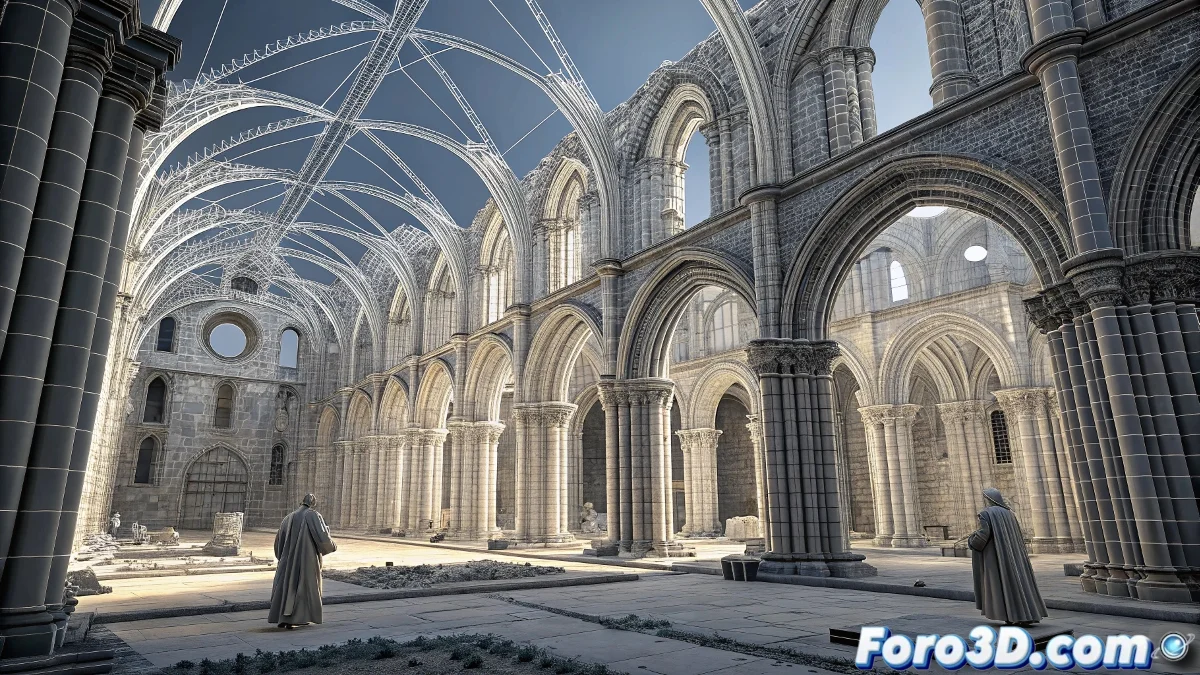
Workflow for Interactive Heritage
The methodology in Unity must prioritize scalability and performance from the very first moment. Every technical decision affects the final experience.
- Optimized import of 3D assets with automatic LODs and proper compression
- Implementation of culling systems that efficiently manage the complex Gothic geometry
- Configuration of light baking for static lighting that preserves the gloomy atmosphere
- Development of scripts that control the emergent narrative of the apparitions
The integration of Unity's navigation system allows the monastic ghosts to move credibly through the space, avoiding obstacles and following routes that reflect their ancient daily activities.
The Result: Historical Heritage as a Playable Experience
This recreation demonstrates how game engines can serve as innovative cultural preservation tools. The physical monastery continues its deterioration, but its interactive version preserves not only its form, but the essence of its history and legends.
The ultimate value lies in creating an experience that allows users not only to see the ruins, but to temporarily inhabit them, feeling firsthand the weight of centuries of monastic history and the echoes of those who inhabited them. Unity thus becomes a digital time machine. 🕯️
And if the experience is as immersive as visiting the real ruins, perhaps it's because in Unity even Cistercian ghosts have their own GameObjects and components... though they probably prefer to pray in Latin rather than execute C# scripts 😉