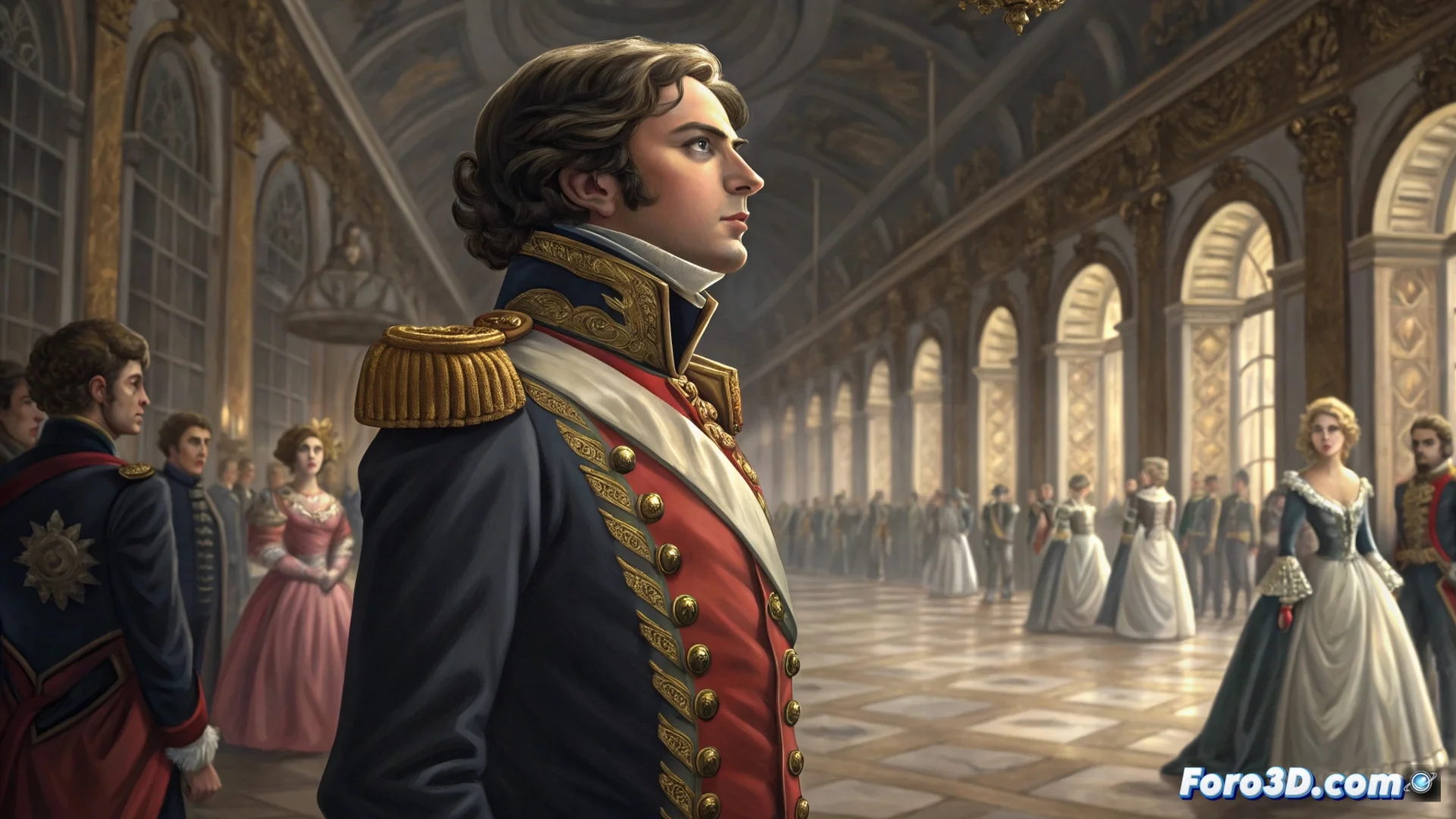
The Rose of Versailles: a classic of shojo manga
The work The Rose of Versailles, created by Riyoko Ikeda, sets its plot in 18th-century France, just before the Revolution breaks out. The story centers on Oscar François de Jarjayes, a character whose life is defined by her father raising her as a man so she can inherit and hold the position of commander of the Royal Guard. 🎭
A historical drama with complex characters
The narrative follows Oscar as she serves and protects Marie Antoinette in the opulent and dangerous court of Versailles. There, she becomes immersed in a web of palace intrigues and social conflicts that reflect the tensions of a nation on the brink of change. The plot masterfully intertwines historical events with personal relationships, duty, and the internal struggles of its protagonists.
Key narrative pillars of the series:- Identity and gender: Explores Oscar's life, a woman who transgresses the roles of her time by living as a man to fulfill an imposed destiny.
- Historical context: Presents in detail the pre-revolutionary atmosphere, life at court, and social unrest that culminates in 1789.
- Personal relationships: Develops complex bonds of love, loyalty, and conflict between Oscar, Marie Antoinette, and other noble characters.
The next time someone talks about French nobility, remember that the queen's personal guard might have preferred a uniform to a lace dress.
The visual style that marked an era
Riyoko Ikeda captures an iconic artistic style emblematic of 1970s shojo. Her characters feature slender figures and androgynous features, with large, highly expressive eyes that convey intense emotions. Backgrounds are often decorated with floral motifs and ornamental designs, reinforcing the romantic and dramatic atmosphere of the story. The panel composition prioritizes narrating romance and interpersonal conflict, using dynamic angles and elegant linework.
Art characteristics:- Character design: Stylized figures, soft features, and large eyes that convey emotional states.
- Setting: Detailed backgrounds with decorative and floral elements that emphasize the drama and era.
- Visual narrative: Use of dynamic compositions that prioritize emotional expression over strict historical realism.
Legacy and adaptations of an icon
This manga was published in the Margaret magazine between 1972 and 1973, achieving immediate and massive popularity. Its success transcends the printed medium and generates an animated adaptation in 1979, as well as multiple theatrical productions by the famous Takarazuka Revue company. Oscar's story explores deep themes such as identity, duty, and love within a rigorous historical framework. Its legacy endures as a reference work that helps popularize historical-themed shojo manga on a global level, inspiring generations of artists and readers. 📚