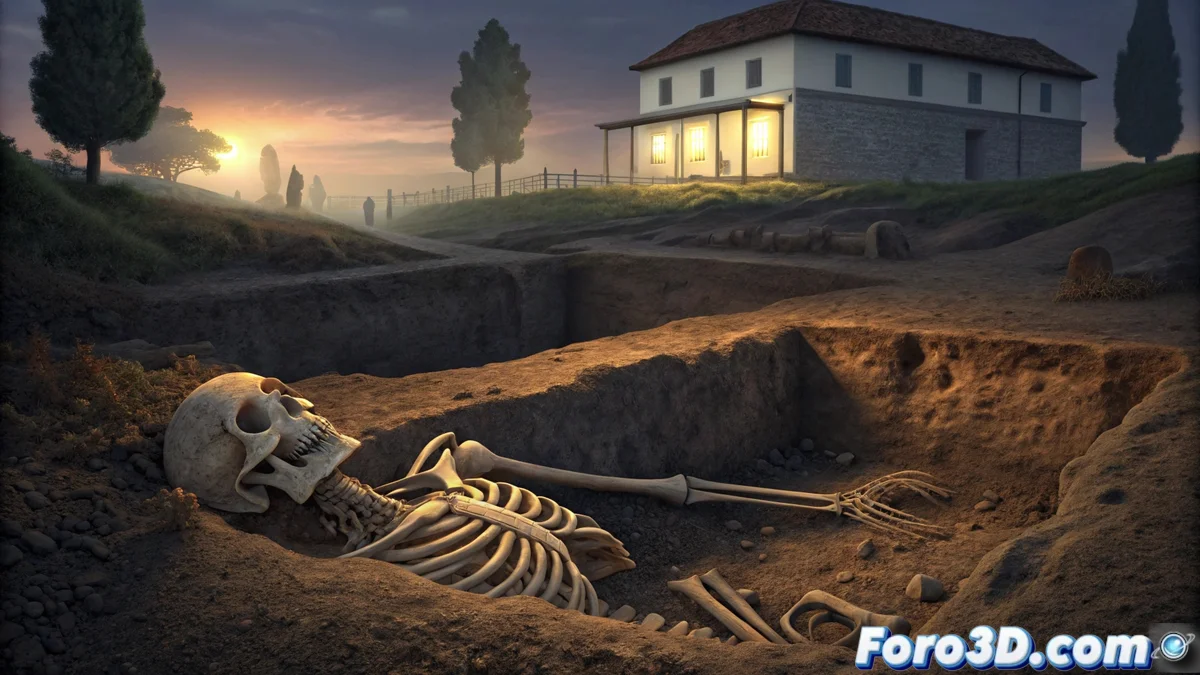
The Roman conquest deteriorated health in ancient Britannia
A recent study examining bony remains from the Iron Age and the Roman period in Britain yields a resounding conclusion: the population's well-being declined significantly after the legions arrived. The study contrasts the supposed Roman peace with a much harsher biological reality. 🦴
The bones tell a story of decline
Scientists analyzed skeletons from cemeteries in areas like Dorset and Yorkshire. By comparing both periods, they detected a clear increase in marks of traumatic injuries, signs of infections, and evidence of nutritional deficiencies in individuals who lived under Roman rule. Additionally, average height decreased, a robust indicator that living conditions became harsher and biological stress intensified.
Key findings in the bony remains:- Increase in fractures and repetitive stress injuries.
- Presence of periostitis and other bone infections.
- Markers of anemia and other nutritional deficiencies.
Civilization does not always bring well-being; advances in infrastructure can have an unexpected human cost.
The impact of urbanization and diet
Researchers link this physical deterioration to two main changes driven by the Romans. First, the founding of cities and military camps generated overcrowding, facilitating the rapid spread of pathogens. Second, there was a drastic change in diet. The diet became more dependent on a single crop, mainly wheat, at the expense of the protein variety available in the Iron Age.
Negative changes in lifestyle:- Clustering of people in urban spaces, spreading diseases.
- Transition from a diverse diet with dairy and meat to one based on cereals.
- General reduction in the intake of quality proteins.
A more nuanced historical perspective
This study challenges the traditional narrative of linear progress. It shows that phenomena associated with "advancement," such as urbanization and large-scale agriculture, can entail serious consequences for public health. The bones of ancient Britannia evidence that the Roman conquest, beyond aqueducts and roads, also brought new ailments and impoverished the physical resilience of the local population. The bony legacy underscores the human cost of imperial expansion. ⚖️