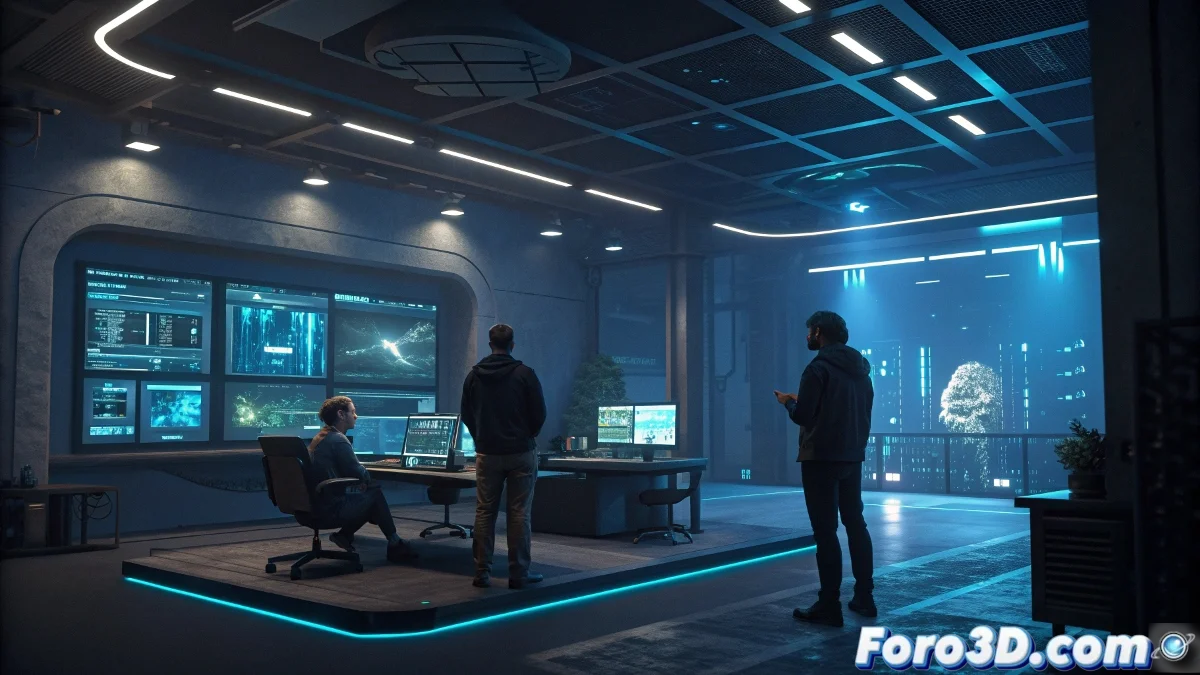
When the Artist Becomes the Creative Director
Artificial intelligence is fundamentally redefining what it means to be a 3D artist, transforming the role from technical executor to architect of creative systems. This evolution is not about replacement, but about emancipation - freeing creators from repetitive tasks that consumed most of their time to allow them to focus on what really matters: the artistic vision, visual narrative, and creative direction. Where before an artist might spend days modeling secondary vegetation or texturing environmental assets, now they can dedicate that time to refining the emotional palette of a scene or developing more ambitious and personal concepts.
What makes this transition particularly significant is how it is elevating the value of purely human skills. Aesthetic sensitivity, narrative understanding, the ability to evoke emotions and tell stories visually - all these qualities that distinguish an exceptional artist become even more crucial when technical tasks can be automated. In this new ecosystem, the trained eye and creative intuition become the most valuable assets, as they are precisely what AI systems cannot authentically replicate.
The Evolution of Creative Responsibilities
- From direct manipulator to supervisor of generative systems
- From technical executor to curator of artistic results
- From tool specialist to architect of creative visions
- From technical problem solver to definer of aesthetic standards
The Art of Directing Artificial Intelligences
Far from becoming obsolete, artists are acquiring a new set of superpowered skills. The ability to effectively communicate creative visions to AI systems, to design prompts that capture emotional and stylistic nuances, and to curate and refine generative outputs is becoming the new digital literacy of the 3D artist. This shift represents a natural evolution similar to when traditional artists adopted digital tools - they did not lose their creative essence, but gained new ways to express it.
The artist of the future does not compete with AI, but directs a chorus of artificial intelligences
Specialization is undergoing a fascinating transformation toward more strategic roles. While some highly technical positions may evolve or consolidate, new opportunities are emerging in areas such as creative systems design, intelligent pipeline architecture, and generative art direction. Artists who can navigate this new landscape - combining creative sensitivity with technical understanding of these tools - will find themselves in an extraordinarily valuable position, acting as essential bridges between human vision and artificial execution.
Emerging New Professional Opportunities
- Generative Art Director and Creative Systems
- Designer of Immersive Experiences and Narratives
- Architect of Virtual Worlds and Digital Ecosystems
- Specialist in Creative Ethics and Artistic Style
For the creative community, this transition represents both a challenge and an unprecedented opportunity. Artists who embrace this change and develop skills in creative direction, systems thinking, and visual communication will find they have more creative power than ever. Instead of being replaced, they are being elevated to roles where their vision and human sensitivity become the most valuable component of the creative process. The real magic will happen when we learn to see these tools not as competition, but as extensions of our own creativity. 🎨
And so, between creative prompts and artistic curation, we discover that the future of the 3D artist is not about doing less, but imagining more - though we'll probably still need to explain to the client that "make it more blue, but not too much" is just as challenging for AI as it is for us. 🌟