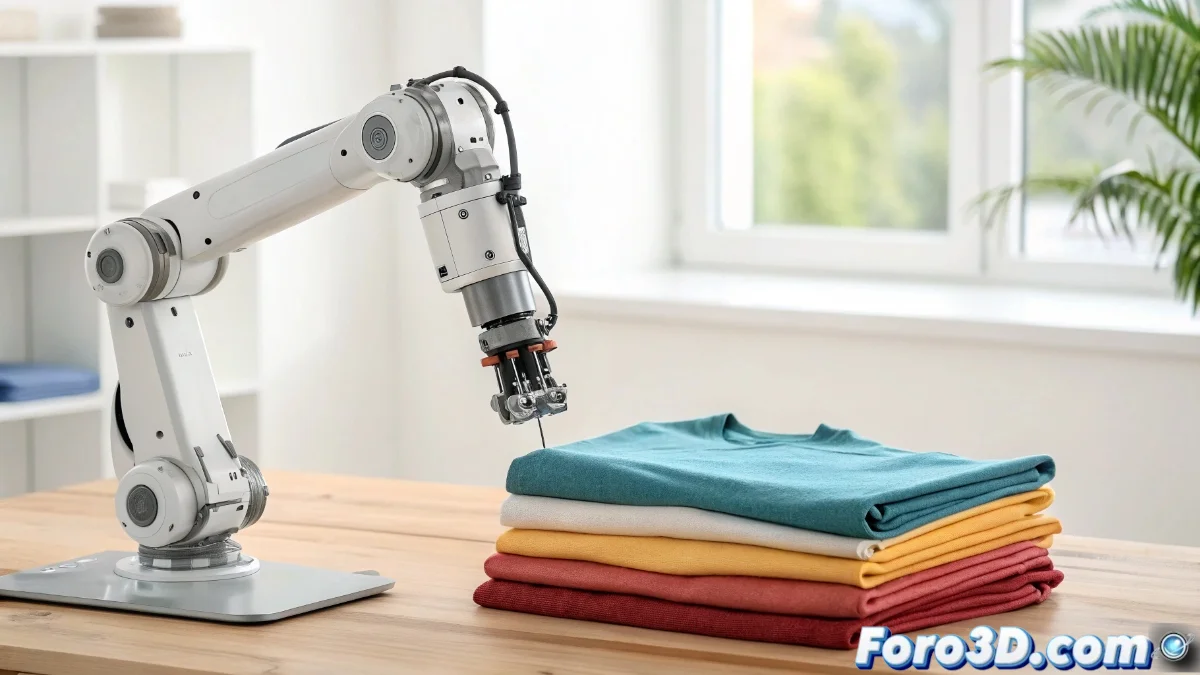
The Robotic Revolution in Clothing Folding
Home automation is revolutionizing one of the most repetitive household tasks: folding clothes. This technology frees up valuable time that people can dedicate to more meaningful activities, while advances in computer vision allow robotic arms to handle different types of fabrics with surprising accuracy. 🤖
Technical Challenges in Textile Robotics
Automated systems face complex obstacles such as texture identification and shapes through advanced AI algorithms. The ability to manipulate delicate fabrics without causing damage requires precision motor control and continuous adaptability, demonstrating progress in areas like machine learning and artificial perception.
Key Technological Advances:- Tactile sensors that detect different thicknesses and textile materials
- Computer vision algorithms to recognize clothing patterns and shapes
- Reinforcement learning systems that improve with each iteration
These robots not only solve everyday problems but also serve as a testing platform for more complex artificial intelligence technologies.
Visual Appeal and Commercial Opportunities
The smooth execution of a home robot folding clothes generates a fascinating visual impact, ideal for technology exhibitions and viral digital content. This media charm combines with the growing demand for smart home solutions, creating largely unexplored market niches.
Commercial Success Factors:- Visually satisfying demonstrations at fairs and social media
- Integration with home automation ecosystems and connected homes
- Collaboration between startups and tech giants for accessible development
Reflections on the Domestic Future
Although these automated machines promise to free us from monotonous tasks, the philosophical question arises about whether in the future we will have assistants that fold socks perfectly but still don't understand where to store them. This technological paradox reflects the pending challenge of combining mechanical precision with human contextual understanding. 🧦