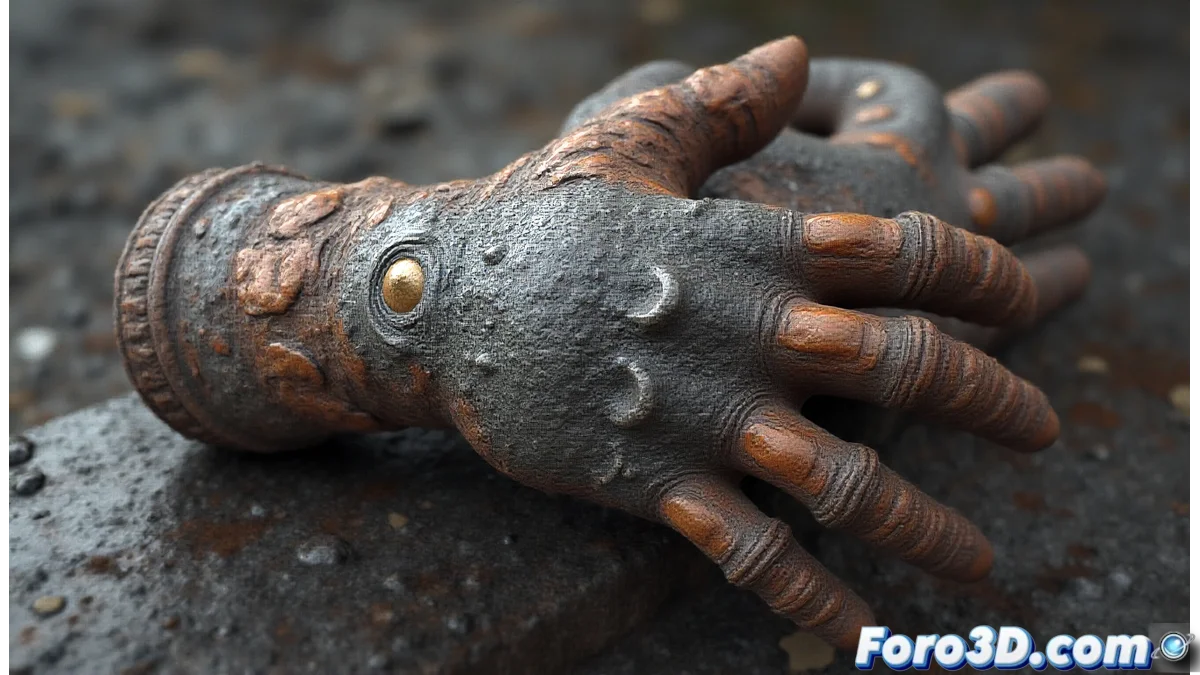
The revolution of tactile 3D modeling and its multisensory impact
Tactile 3D modeling is radically transforming the way we perceive and manipulate digital objects, going beyond the purely visual to incorporate physical qualities that can be felt through advanced interfaces. This evolution allows designers and artists to create immersive experiences where users perceive textures such as the roughness of stone or the softness of delicate fabrics through synchronized haptic and visual representations. 🖐️
Advanced tools for realistic texture simulation
Professionals use specialized software like Substance Painter and ZBrush, combined with rendering engines that support displacement and normal maps to generate convincing surfaces. The implementation of custom shaders reproduces specific optical behaviors of diverse materials, from polished metals to aged woods, where every micro-detail contributes to a believable tactile illusion. Particle systems and physical simulations add layers of realism, making virtual objects not only appear solid but also exhibit the appropriate weight and inertia for their material composition.
Key techniques in texture simulation:- Use of displacement and normal maps to generate detailed surface reliefs
- Implementation of custom shaders that replicate specific material optical properties
- Integration of particle systems and physical simulations for realistic behaviors
Virtual materiality is gaining fundamental importance in applications ranging from virtual reality to industrial prototyping, where precision in tactile representation can make a difference in the user experience.
Integration with haptic devices for complete experiences
The connection between visually rich models and tactile feedback devices creates complete multisensory experiences, where users receive physical stimuli synchronized with their visual interactions. Controllers with variable vibration, haptic gloves, and high-precision tactile surfaces transmit sensations of roughness, temperature, and even resistance when pressing, thus closing the perceptual cycle between the digital and the physical.
Most used haptic devices:- Controllers with variable vibration that adjust intensity according to the simulated texture
- Haptic gloves that provide force and temperature feedback
- High-precision tactile surfaces for detailed interactions with virtual objects
Applications and future of tactile modeling
This synergy between the visual and the physical is driving innovative applications in virtual medicine, e-commerce, and interactive entertainment, where accurate product or environment evaluation requires an authentic material appreciation. The ongoing evolution of these technologies suggests that we may soon be closer to touching imaginary objects than to finding lost files in our systems, marking a milestone in the history of human-computer interaction. 💫