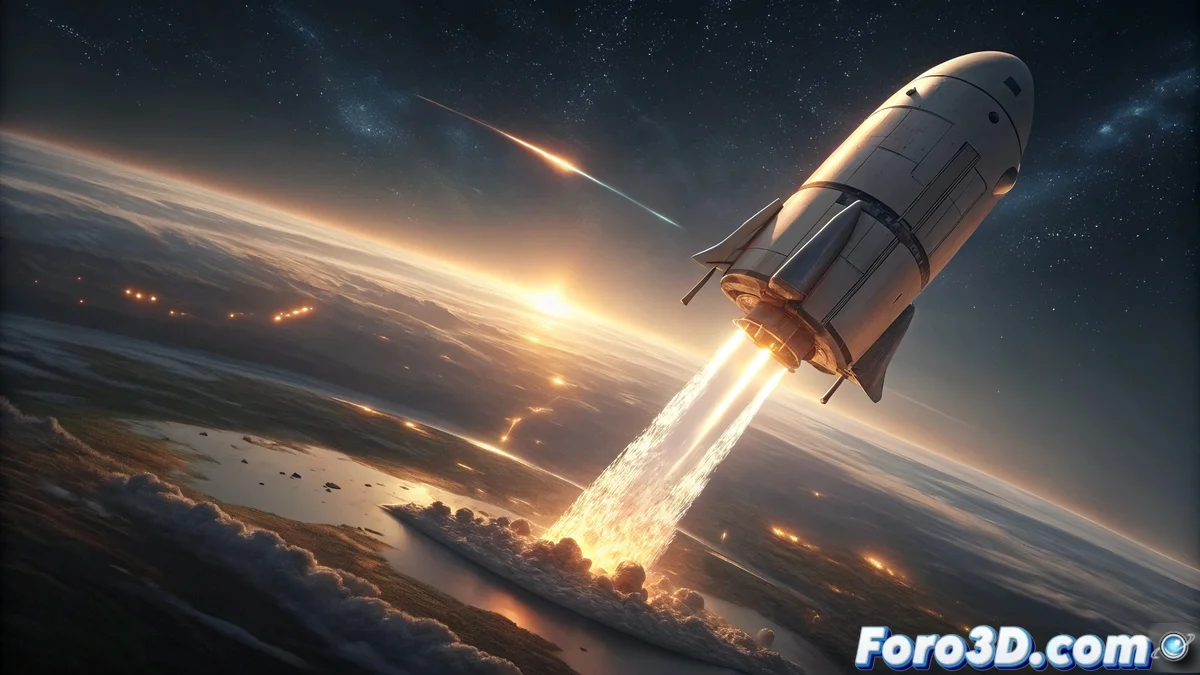
The Revolution of Reusable Rockets in Space Exploration
Space technology is undergoing a radical transformation with the implementation of reusable rocket systems, allowing main stages to return to Earth in a controlled manner and perform precise vertical landings. This fundamental technical advance enables detailed inspection, systematic refurbishment, and multiple reuse of critical components, generating drastic reductions in operating costs and significantly increasing the frequency of space missions 🚀.
Economic and Operational Transformation
The adoption of reusable vehicles has created a paradigm shift in the space economy, reducing launch costs by 30-40% compared to traditional expendable rockets. This budgetary reduction has democratized orbital access, allowing more private companies, academic institutions, and emerging nations to develop competitive space programs. The ability to reuse main components numerous times not only optimizes financial resources but also accelerates preparation cycles between consecutive missions.
Key operational advantages:- Reduction in launch costs by approximately 40%
- Shortening of times between successive missions
- Greater flexibility in launch scheduling
Reusable rockets have turned what was once science fiction into operational reality, permanently changing the space economy.
Practical Applications and Future Development
The implications of this innovative technology extend to multiple space domains, including the massive deployment of satellite constellations, advanced scientific missions, and the development of commercial space tourism. Systematic reuse is driving parallel innovations in advanced materials, ultra-precise guidance systems, and accelerated maintenance methodologies. As a direct result, we are witnessing an unprecedented acceleration in space exploration.
Main areas of impact:- Massive satellite constellations for communications
- Advanced interplanetary scientific missions
- Development of permanent orbital infrastructure
Space Industry Perspectives
Engineers can now focus on designing spacecraft that return like orbital boomerangs, while finance departments celebrate substantial savings, although the technology still does not allow returning defective satellites for refunds. This technical evolution is facilitating increasingly ambitious projects toward the Moon, Mars, and destinations beyond the solar system, initiatives that previously seemed economically prohibitive but are now viable thanks to systematic reuse 🌌.