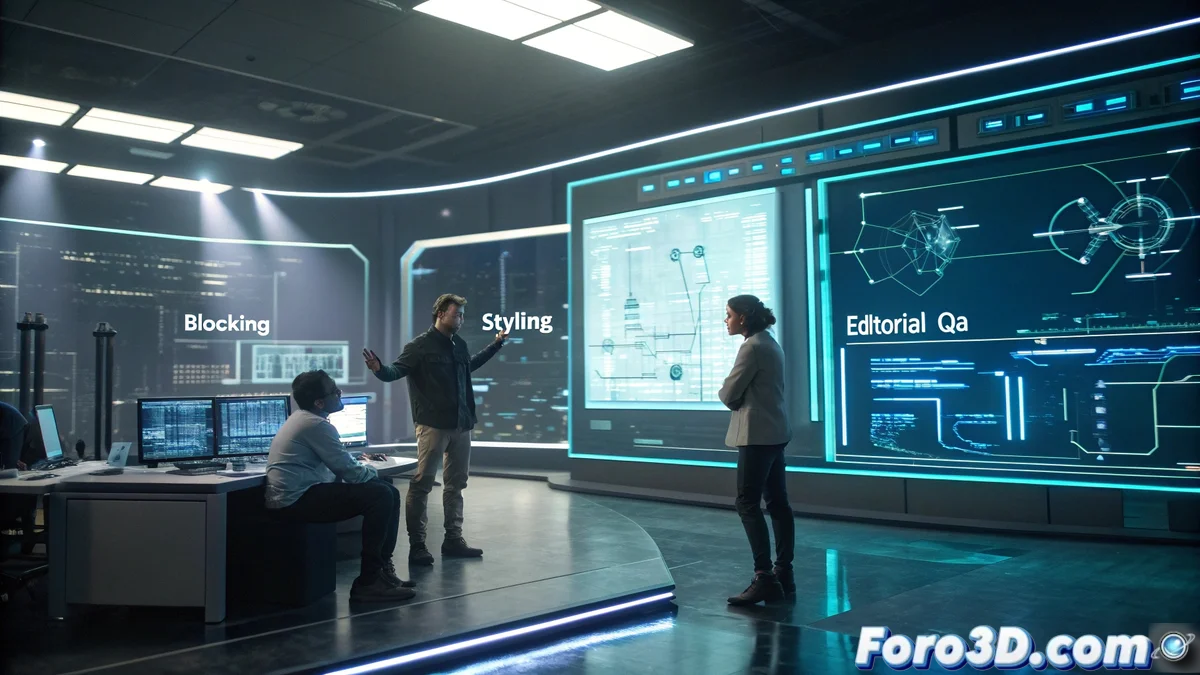
The Revolution of Artificial Intelligence in Animation Studios
The animation landscape is undergoing a radical transformation where artificial intelligence has gone from being a curious experiment to becoming a fundamental production tool 🚀. What previously required weeks of trial and error can now be iterated in a matter of hours, from the previsualization phase to the definition of the final aesthetic. This change is breaking traditional workflows and allowing small teams to achieve results that once seemed exclusive to large studios with million-dollar budgets. The democratization of visual quality is underway, though not without interesting creative debates.
AI does not replace creativity, but radically redefines how we execute it.
Accelerating Processes Without Sacrificing Quality
AI tools are revolutionizing the most tedious stages of the animation pipeline. Tasks like rotoscoping, plate cleanup, or background generation are dramatically sped up, freeing artists to focus on what really matters: creativity and storytelling. Additionally, these technologies ensure remarkable visual coherence in color, textures, and style throughout the entire project. What was once a technical headache is now resolved with algorithms that learn from the project's style and apply it consistently. 🎨
The Rise of the Small Powerful Studio
One of the most significant changes is how teams of five people can produce in hours what previously required months. AI favors an extremely efficient iterative process where weak ideas are discarded quickly and progress is made toward solutions that actually work. This approach not only saves time and resources but also creates an environment where creative experimentation is less costly and more accessible. Small studios now compete in quality with industry giants, redefining the global animation ecosystem.
The Human Criterion as Creative Director
No matter how advanced the technology is, the human factor remains irreplaceable in animation. Complex sequences still require classic techniques and expert art direction. The true skill lies in knowing what to automate and what to animate manually, always maintaining narrative control and the project's original vision. AI is the tool, but the artist remains the architect who decides how, when, and why to use it to serve the story they want to tell. 👨🎨
So while we celebrate that AI saves us weeks of tedious work, we're still waiting for them to invent an algorithm that handles clients who request changes at the last minute… that technology seems light years away from development. 😉