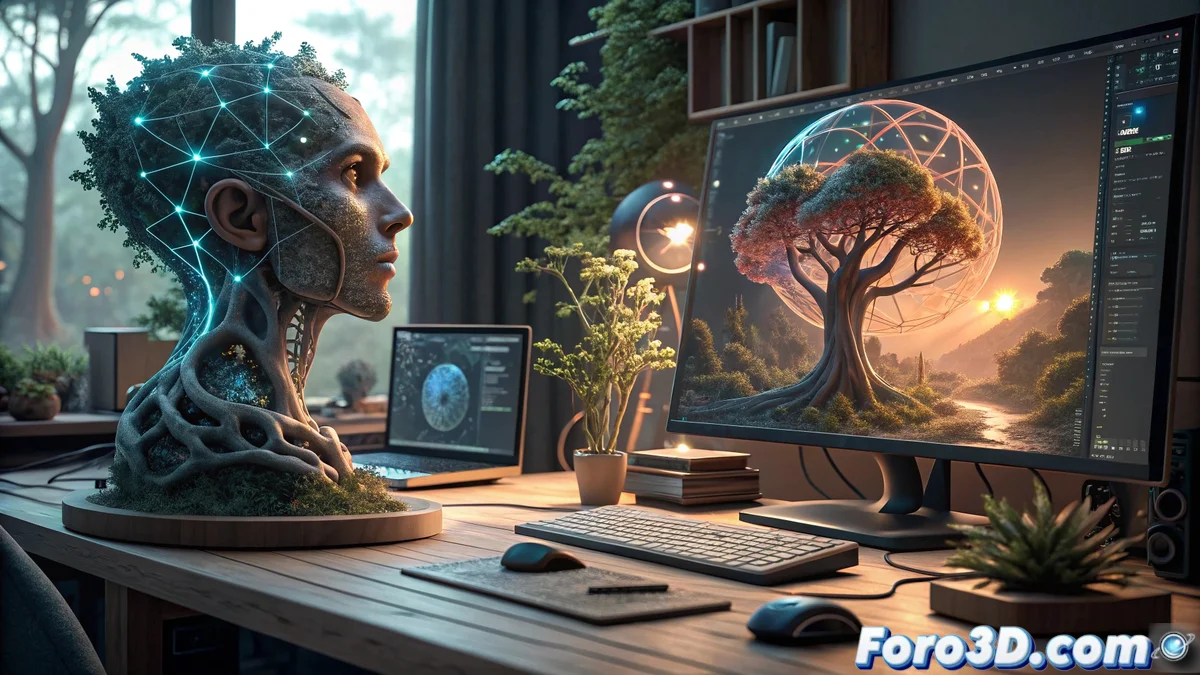
The Revolution of Artificial Intelligence in 3D Modeling
For decades, three-dimensional modeling relied on manual techniques where each vertex and surface required direct intervention from the artist. The emergence of artificial intelligence is altering this paradigm, allowing the generation of complex concepts in minutes through advanced algorithms. This symbiosis between human creativity and computational power expands the frontiers of digital design 🚀.
Integration of AI in 3D Design Tools
Platforms like Blender and ZBrush have incorporated plugins that interpret natural language commands to automatically create base models. Rendering engines employ neural networks to optimize lighting and visual effects in real time, improving quality without increasing production times.
Key functionalities enabled by AI:- Procedural generation of textures based on textual descriptions
- Automatic optimization of polygonal meshes while maintaining structural details
- Composition of complete scenes through algorithmic design assistants
AI does not replace the artist, but amplifies their ability to materialize ideas with unprecedented efficiency
The Dilemma Between Automation and Creative Authorship
While intelligent systems take on repetitive technical tasks, creators can focus on narrative and aesthetic aspects. However, debates arise about originality when algorithms generate substantial content. The community is establishing ethical protocols to use AI as a collaborator, preserving the human touch in every project.
Critical considerations in AI adoption:- Maintenance of artistic control over generated results
- Definition of attribution standards for algorithmic content
- Ultimate responsibility for verifying parameters and results
The Future of AI-Assisted 3D Creation
The evolution toward hybrid workflows combines human intuition with algorithmic precision. While we can now attribute errors to AI, the ultimate responsibility remains with the artists who supervise and adjust the processes. This synergistic collaboration is redefining what is achievable in the universe of three-dimensional design 🌟.