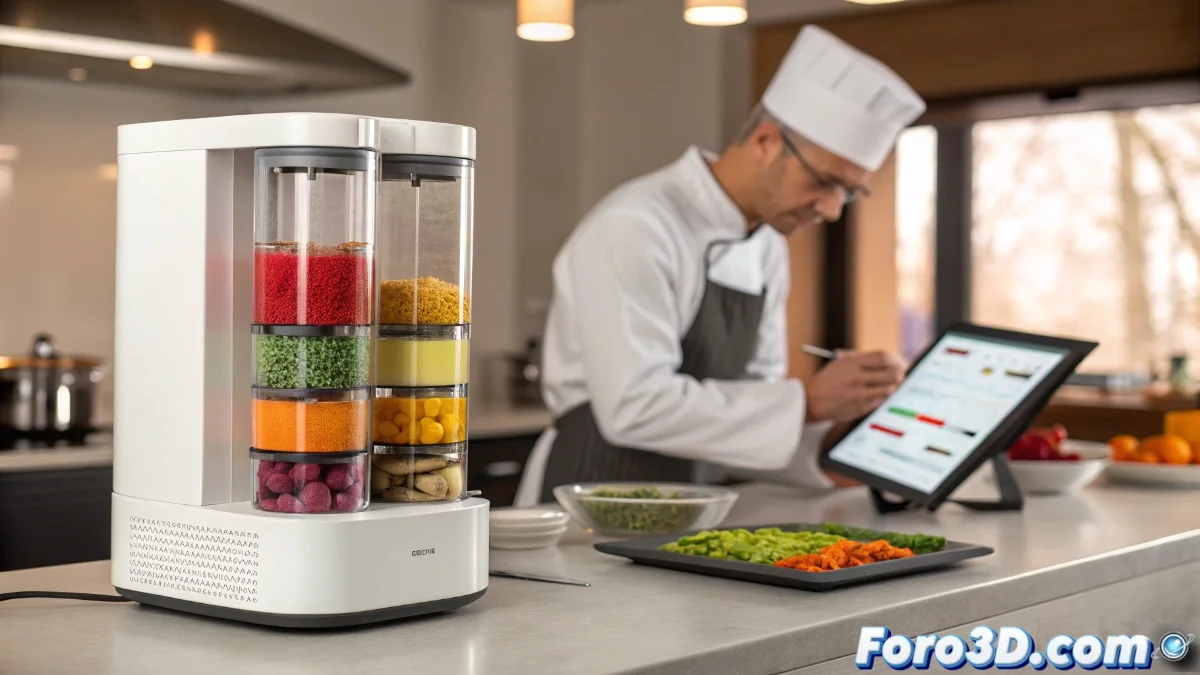
The 3D Printing Revolution in Modern Gastronomy
The food 3D printing technology is completely redefining the paradigms of the gastronomic industry, enabling the creation of fully personalized meals that adapt to the specific needs of each individual. This innovation uses edible raw materials in special formats that are deposited with millimeter precision to achieve compositions impossible to obtain through conventional methods 🍽️.
Advanced Technologies in Food Printing
3D printing systems for edibles operate mainly through pneumatic extrusion or piston mechanisms, manipulating ingredients like melted chocolates, fruit purees, protein pastes, and special doughs. Developers are implementing print heads with advanced thermal control that allow processing foods requiring cooking during the same deposition, while multi-extruder systems facilitate the combination of different ingredients into a single edible structure.
Main technical features:- Compressed air extrusion systems that ensure uniform and controlled deposition
- Print heads with temperature regulation for working with heat-sensitive ingredients
- Ability to integrate multiple edible materials in a single print with varied textures
Food 3D printing represents the perfect convergence between digital technology and culinary art, opening infinite possibilities for nutritional and aesthetic personalization.
Practical Applications and Nutritional Personalization
The true disruptive value of this technology lies in its ability to modify nutritional profiles during the digital design phase, where specialized software calculates exact proportions of nutrients according to individual requirements. This precision allows creating everything from low-sodium foods to meals enriched with specific vitamins, revolutionizing sectors like hospital nutrition and high-performance sports.
Current fields of application:- Hospital centers developing meals for patients with chewing or swallowing difficulties
- High-end restaurants experimenting with architectural forms impossible to achieve manually
- Personalized sports nutrition with exact proportions of macronutrients according to training type
Future and Development Prospects
The horizon of food 3D printing points towards domestic integration and automation of everyday preparations, although there are still technical challenges to overcome. The vision of printing breakfast while performing other morning activities is getting closer, although as with any emerging technology, it presents curious challenges like possible clogging with coffee-like liquids that would act as "food ink" 🚀.