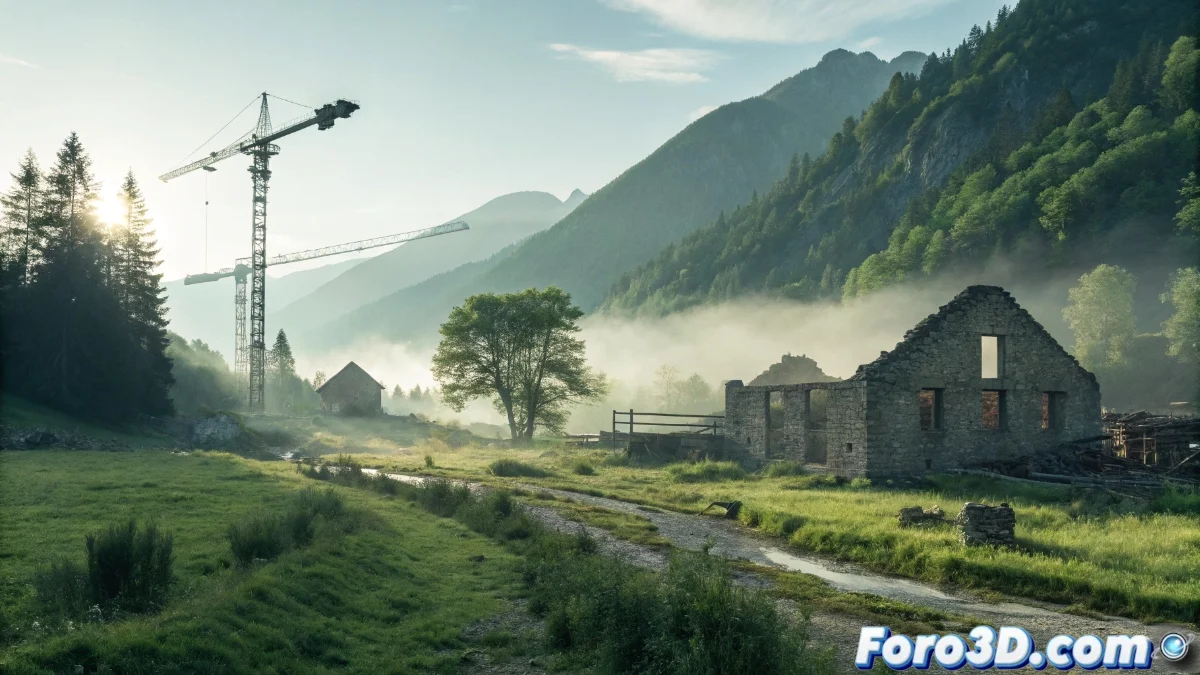
The Renaissance of Jánovas: From Expropriation to Collective Reconstruction
In the mountains of the Huesca Pyrenees, the locality of Jánovas is writing an extraordinary chapter of community resilience that defies the passage of time. During the 1960s, the government coercively expropriated all residents of this and other neighboring villages to build a mega-dam intended for irrigation and electricity generation. The homes were systematically demolished and the families uprooted from their homes, but the hydraulic project was never realized, condemning the territory to a prolonged state of deterioration and oblivion. Years later, the technical and economic unfeasibility of the reservoir led to its definitive cancellation, creating a historic opportunity for those who kept the flame of their origins alive. 🏔️
Rebuilding on the Ashes of the Past
Today, former inhabitants and their descendants are leading an unprecedented reconstruction movement, erecting new dwellings and rehabilitating essential infrastructure on the same foundations that bear witness to their family history. This collective initiative is not only reviving the pulse in the streets but also constitutes a symbolic triumph of collective memory against policies of oblivion. The administrations have been progressively regularizing the legal situation, enabling families to regain ownership of their properties and reactivate the agricultural, livestock, and tourism activities that traditionally characterized the region.
Key Factors of the Resurgence:- Unyielding commitment of the generations linked to the territory despite forced exile
- Administrative recognition of property rights after decades of litigation
- Recovery of traditional economic activities adapted to the current context
The renaissance of Jánovas not only rebuilds stones, but reweaves the social fabric that was torn apart decades ago, demonstrating that some stones have more memory than some official archives.
A Historic Precedent in the Reversal of Expropriations
The Jánovas case constitutes an exceptional milestone in the Spanish landscape, representing one of the few examples where a large-scale hydraulic project was abandoned and the lands restored to their legitimate owners. This model process is serving as a legal and social reference for other communities affected by forced expropriations, evidencing that collective tenacity can reverse decisions made from positions of power.
Aspects that Make It a Reference:- Establishes a legal precedent for the recovery of expropriated territories
- Demonstrates the strength of community organization against mega-projects
- Shapes a resilience model applicable to other similar contexts
Lessons from an Announced Renaissance
The Jánovas experience teaches that, at times, the path to the future requires looking back to the past to rebuild what others tried to obliterate. This renaissance process transcends mere physical reconstruction to become an act of historical justice and identity affirmation. The village thus stands as a living testimony that community perseverance can write alternative endings even for the most tragic stories, demonstrating that the bond with the land endures beyond decrees and demolitions. 🏘️