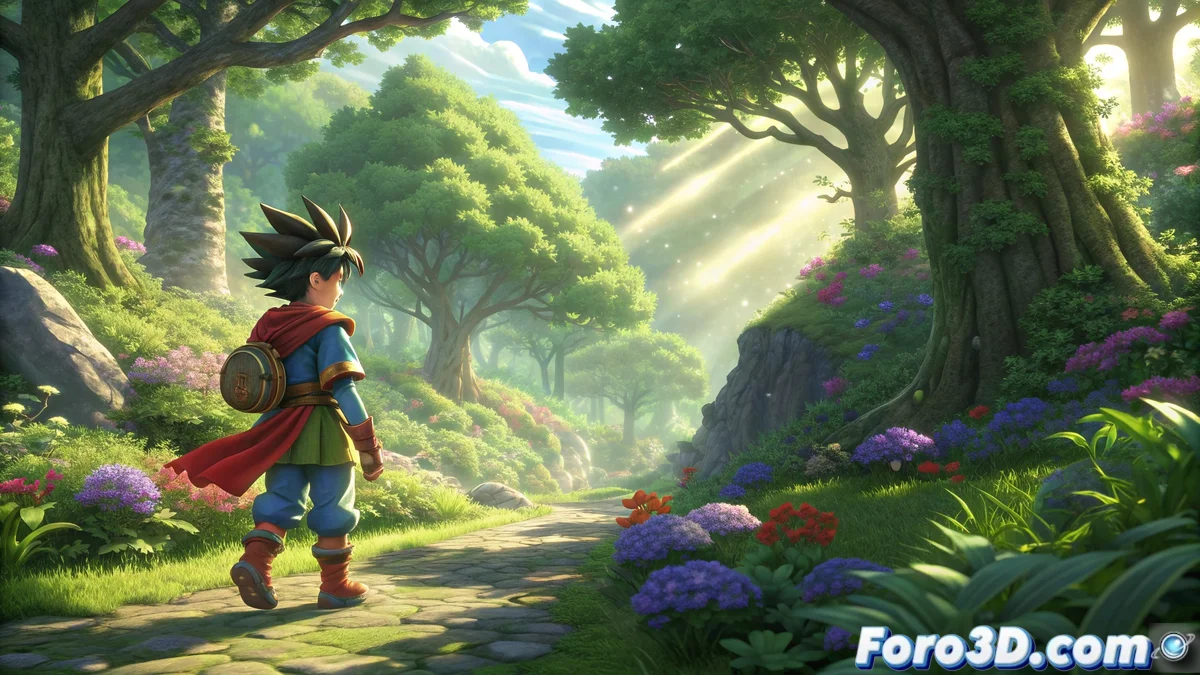
Dragon Quest I & II Remake Adopts the HD-2D Visual Style
The new version of these Square Enix classics implements the HD-2D technique, a visual approach that masterfully combines 2D and 3D elements to offer an experience that respects the original essence while incorporating contemporary technology 🎮.
Technical Features of the HD-2D Style
This method preserves pixel art sprites in two dimensions for characters and enemies, while building complete scenarios in three-dimensional environments. Although there is no official confirmation, everything indicates that it will use Unreal Engine, just like other similar projects such as Octopath Traveler. Dynamic lighting, real-time shadows, and particle effects contribute to creating that characteristic diorama effect that evokes 16- and 32-bit JRPGs with a quality impossible in their time.
Key Visual Elements:- Traditional 2D sprites with pixelated textures to maintain the retro charm
- Detailed 3D scenarios that add depth and perspective
- Advanced lighting system that enhances colors and atmospheres
The HD-2D philosophy demonstrates that modernizing without losing essence requires more technical effort than creating from scratch
Development Process and Tools Used
Creating games with this style involves a fusion of artistic disciplines, where Unreal Engine acts as the core to integrate all visual elements and game logic. Modelers use software like Maya or Blender for 3D environments, while pixel art artists work with specialized tools like Aseprite or Photoshop to create characters and enemies frame by frame.
Essential Workflow:- 3D modeling of scenarios and architectural structures
- Manual creation of sprites and pixelated animations
- Integration and optimization of modern visual effects
Impact and Artistic Significance
The HD-2D approach represents an artistic alternative to dominant photorealism, using effects like depth of field and particles for spells that enhance immersion without sacrificing the original visual identity. The result is a world that looks like a living diorama, where every visual element contributes to a cohesive experience that connects with nostalgia while surprising with its modern technical execution.