When the Creative Curriculum Needs an Urgent Update
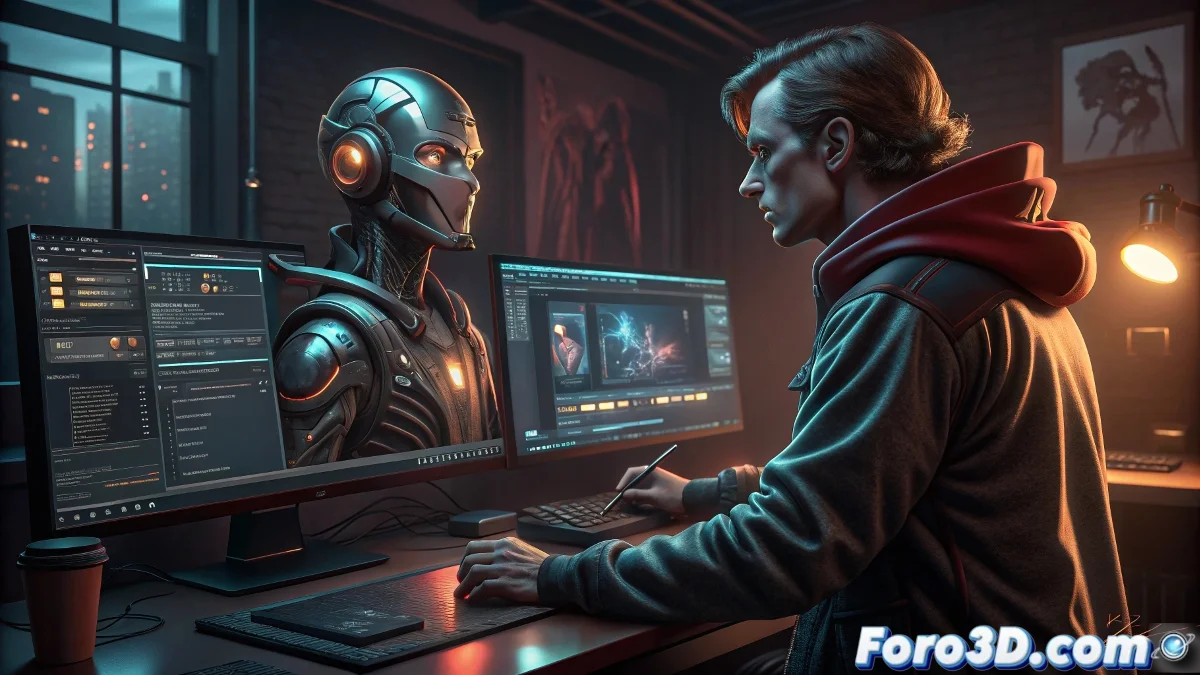
The massive integration of artificial intelligence into creative software is forcing 3D professionals to fundamentally rethink what skills they need to remain relevant in the industry. Where before mastery of tools like Blender, Maya, or Unreal Engine was sufficient, now the need emerges to develop entirely new competencies centered on directing and managing intelligent systems. This transition is not optional - the major software suites are already incorporating AI capabilities natively, transforming the traditional workflow into a constant dialogue between human intuition and algorithmic execution.
What makes this adaptation particularly urgent is the exponential speed at which these tools are evolving. While learning traditional software could extend over months or even years, AI capabilities are advancing so rapidly that professionals need to develop a mindset of continuous learning and permanent adaptation. The most valuable skill is no longer mastering a specific tool, but the ability to quickly learn new interfaces and work paradigms that will emerge in the coming months and years.
The New Essential Competencies of the 3D Artist
- Effective communication with AI systems through prompts and parameters
- Critical evaluation and curation of automatically generated results
- Design of hybrid human-AI workflows
- Management of generative systems and adjustment of creative parameters
From Manual Control to Strategic Direction
This evolution represents a profound shift in the very nature of creative work. Artists are moving from being direct operators who control every aspect of creation to becoming creative directors who oversee intelligent systems. This transition requires developing systems thinking skills, where the focus shifts from meticulous technical execution to defining creative objectives, quality parameters, and aesthetic criteria that guide AI tools toward the desired results.
The artist of the future will not be the one who best uses the tools, but the one who best knows what to ask of them
Integration into established software creates a unique landscape of opportunities and challenges. On one hand, professionals do not need to learn completely new systems from scratch, as AI integrates into familiar interfaces. On the other, they must unlearn deeply ingrained habits and adopt entirely new mindsets about how to approach creative problems. This transition process can be as challenging as it is exciting, requiring both humility to recognize that traditional methods may become obsolete, and confidence that human creativity will remain the most valuable component of the process.
Strategies for Professional Adaptation
- Focus on fundamental principles rather than specific tools
- Development of critical evaluation skills and creative decision-making
- Continuous learning through professional communities and online resources
- Specialization in areas where human judgment remains irreplaceable
For professionals at foro3d.com, this transformation represents both an opportunity and a responsibility. The opportunity to free themselves from repetitive tasks and focus on what really matters - creative vision, narrative, and artistic quality. And the responsibility to remain relevant in an industry that is changing faster than ever. Artists who embrace this change not as a threat, but as a natural evolution of their creative toolkit, will discover they have more power than ever to materialize their most ambitious visions. 📚
And so, between familiar interfaces and new intelligent capabilities, we discover that the perfect curriculum for the 3D artist of the future is not a list of mastered software, but the ability to learn, adapt, and direct - though we'll probably still need to explain to the client that AI can't read minds, no matter how smart it is. 🎯