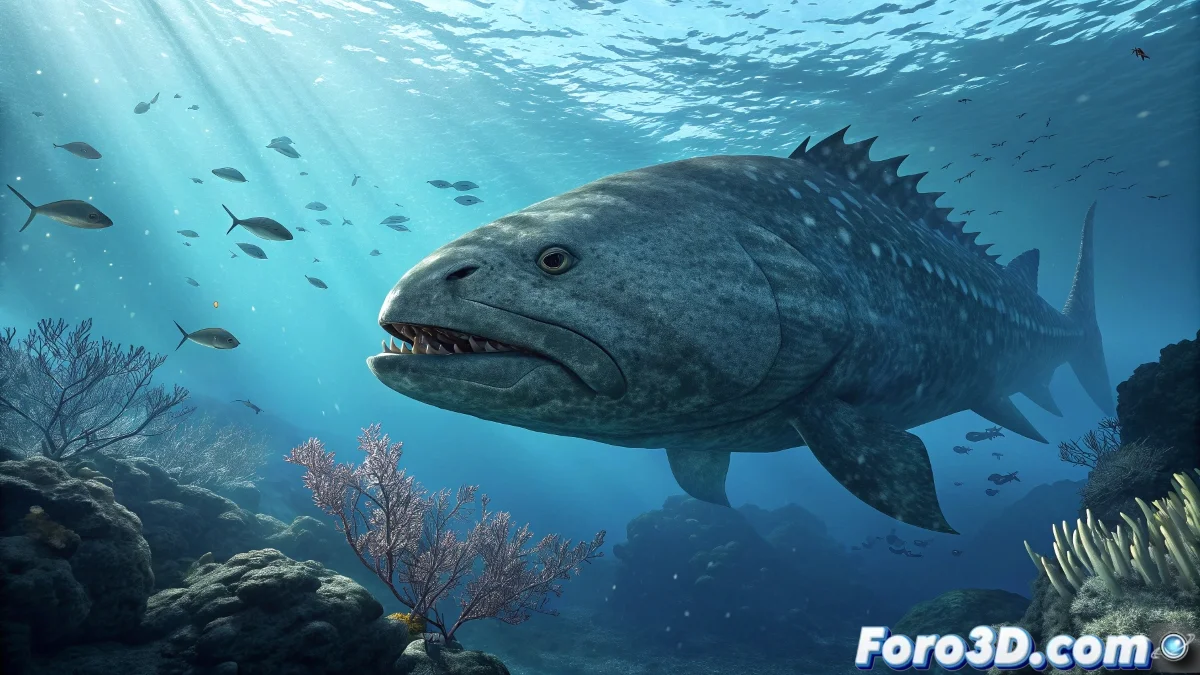
A Giant from the Depths Returns from Oblivion
The scientific community is revolutionized after the discovery of a colossal marine creature, a species that was considered extinct and has reappeared in the dark ocean depths. 🌊 This discovery not only excites biologists but also represents an incredible source of inspiration for artists and digital creators. The animal, with its imposing presence, confirms that the oceans still hold mysteries that challenge everything we know, offering a powerful visual narrative to be brought to 3D.
Bringing the Oceanic Colossus to Digital Life
Recreating this being in Autodesk Maya is a fascinating project that begins with organic modeling. Using the Sculpting and Quad Draw tools, the unique complexity of the creature can be sculpted, defining its massive silhouette and adding meticulous details such as skin texture, fins, and other distinctive features. 🐋 A clean mesh is crucial for the subsequent stages. The rigging, with a well-structured skeleton, must allow animations that convey the grace and monumental weight of the animal in its aquatic environment.
- Sculpt the shape: Use of Sculpting Tools to define the base volumetry.
- Precise retopology: Create an optimized mesh with Quad Draw.
- Bone system: Rigging for smooth and realistic animations.
Creating the Mysterious Underwater World
The atmosphere is as important as the character. Simulating the deep oceanic environment requires the use of Bifrost Fluids to generate the sensation of water and volumetric fog to recreate the suspended particles floating in the depths. 💡 Lighting plays a key role; dim spotlights that simulate rays of light filtering from the surface, combined with volumetric scattering, build an immersive and believable scene. To add more life, schools of fish can be distributed with MASH Instancer, fleeing at the passage of the giant.
The magic of a good underwater simulation lies in the imperceptible details: the light that diffuses and the particles that give scale and depth.
The Final Touch with Arnold
For rendering, Arnold is the perfect ally. Applying materials with subsurface scattering is essential to achieve that wet, gelatinous, and translucent appearance characteristic of abyssal creatures. 🎥 A final composition with slow motion and a slight camera oscillation, as if operated by a submersible, adds that BBC documentary cinematic feel that elevates the project's realism.
When Nature Imitates Art (Or Almost)
It is a divine irony that this legendary beast decides to reappear just when you were about to delete that Maya project for the umpteenth time that was lagging the viewport. 😂 Nature has a spectacular sense of timing, reminding us that sometimes patience (and not giving up on autosave) has its rewards. Perhaps that is the true unsolved mystery.