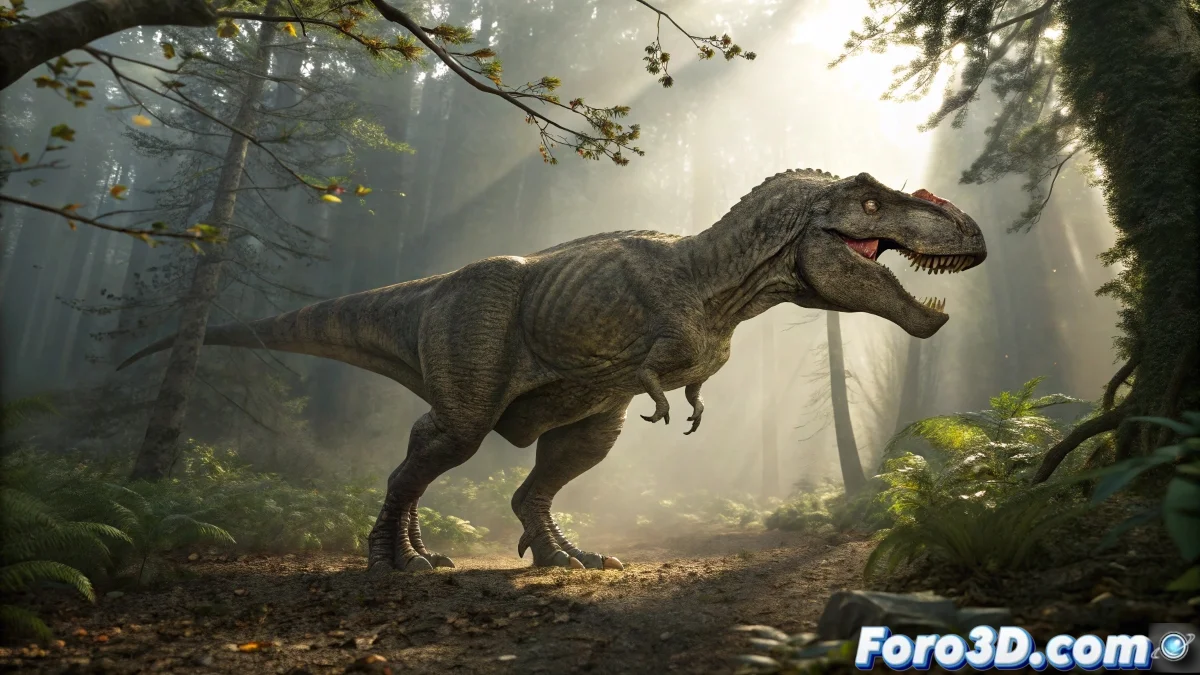
When Paleontology Meets Its Photoshop
In the IMAX documentary T. REX, Mathematic Studio didn't create visual effects - they resurrected a species. Every roar, every trembling muscle, and every drop of saliva on this 12-meter Tyrannosaurus rex is a technical miracle that erases 66 million years of extinction. 🦖💥
"We didn't animate a dinosaur, we dissected a breathing animal" - Mathematic Digital Paleoartist
Anatomy of a Digital Monster
The scientific-artistic pipeline included:
- Modeling in Maya with 347 individual muscle controls
- 4K Scans of reptile skins for ZBrush textures
- Feather Systems based on protoplume fossils
- IMAX Rendering with 16K resolution for giant screens
The Science Behind the Roar
Details that would make a paleontologist cry:
- Jaw movement recalculated from cranial fossils
- Breathing pattern based on modern birds
- Subcutaneous fat distribution according to Cretaceous climate
- Eye reflections that change with the sun's position
As an animator joked: "We know more about T. Rex sweating than our own thermoregulation". 🌡️
Photographing an Extinct Species
The team solved unique challenges:
- Lighting that shows volume without losing scientific details
- Integration into real environments with atmospheric shadows
- Documented but never filmed behaviors
- Scales that work both in IMAX and on television
When CGI Has Prehistoric DNA
The true achievement was making:
- Kids ask "how did they film a live dinosaur?"
- Scientists approve every movement
- The audience forget they were watching pixels
- Every frame teach while entertaining
As the director aptly summarized: "If Jurassic Park made us dream, our T. Rex makes us learn". Because in this production, millions of years of evolution are compressed into terabytes of digital art, proving that when science and cinema join hands, even extinction is reversible. 🎥🦴