The Reality of ESP: A Physicist Tests Psychic Abilities
The physicist Russell Targ, who helped create the remote viewing program at the Stanford Research Institute for the CIA, presents a scientific case in favor of extrasensory perception (ESP). His work, developed during the Cold War, seeks to apply these human capabilities in the field of intelligence, challenging conventional physical models. 🧠
Rigorous Methodology in the Laboratory
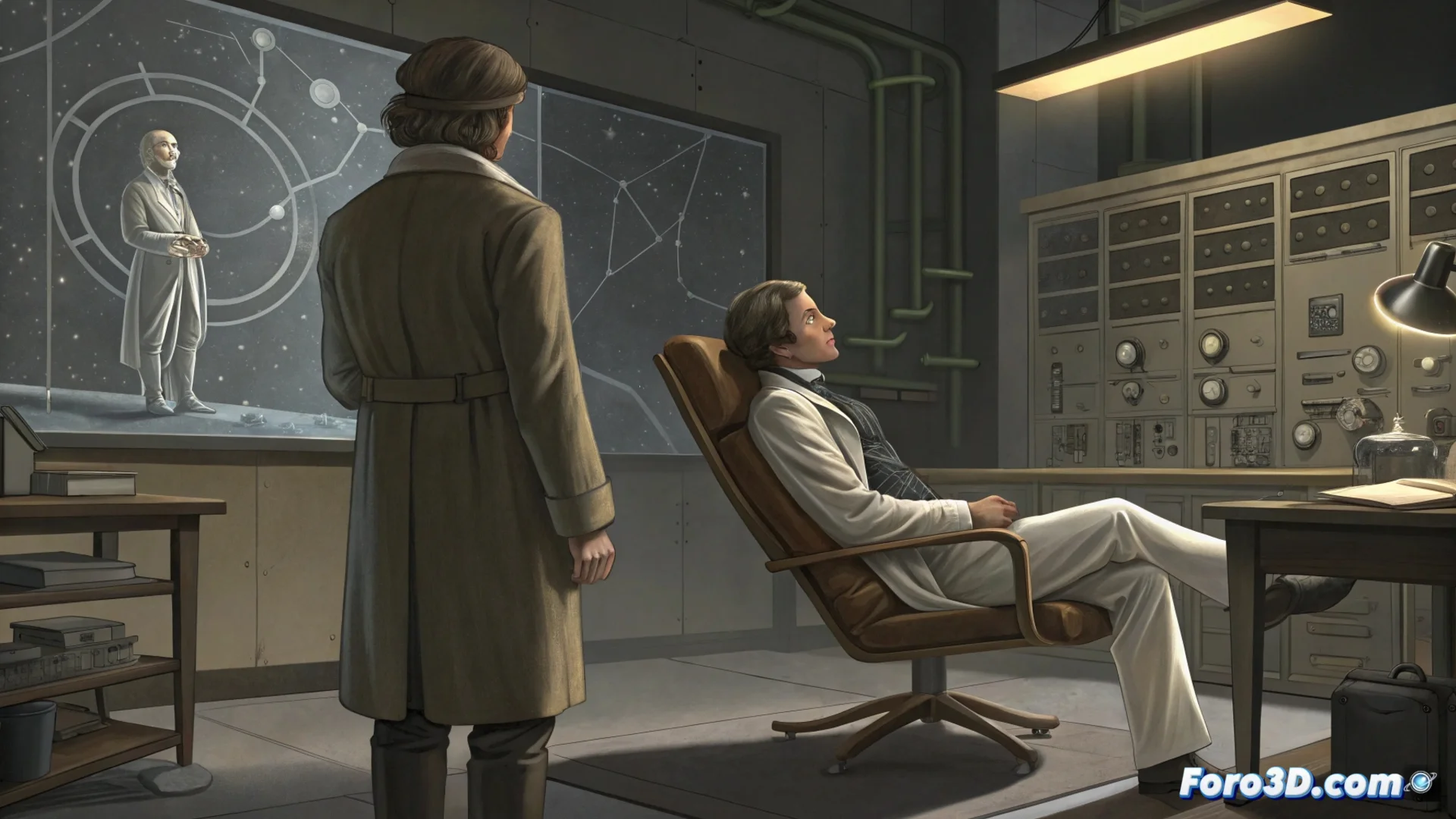
Targ describes experimental protocols where a sender travels to a random location. Meanwhile, a receiver, isolated in a laboratory, attempts to perceive and draw that distant environment. The data, which includes transcripts and statistical analysis, indicate that the results far exceeded chance expectations. The author proposes that consciousness can function beyond the normal limits of space and time.
Key Elements of the Experiments:- Double-blind: Neither the receiver nor often the experimenter knew the target until the session was completed.
- Varied Targets: Geographic locations, objects, and even temporal events were used as targets to perceive.
- Statistical Evaluation: Hits were measured by independent judges who compared the descriptions with the actual sites.
The evidence suggests that we can obtain information not limited by the barriers of space or time. - Russell Targ
Historical Context and Legacy of the Program
This research was funded in a climate of rivalry between intelligence services, where the possibility of spying without conventional technology was very attractive. Although the official program concluded, Targ maintains that the accumulated evidence is solid and offers a unique insider perspective on how science can study parapsychological phenomena.
Points about the SRI Program:- Military Origin: It was born from the CIA's need to explore any potential advantage over the Soviet Union.
- Institutional Backing: It was carried out at a prestigious institution like the SRI, with government funding.
- Extensive Documentation: It generated thousands of pages of reports and data that remain as a historical archive.
Relevance Beyond the Paranormal
The book does not directly address UFOs, but its conceptual framework on the limits of consciousness connects with theories in ufology that speculate about a conscious dimension in anomalous phenomena. It serves as a crucial document for understanding how far certain agencies went in exploring the frontiers of the human mind. The next time you lose something, perhaps the method of remotely visualizing its location is not so far-fetched. 🔍