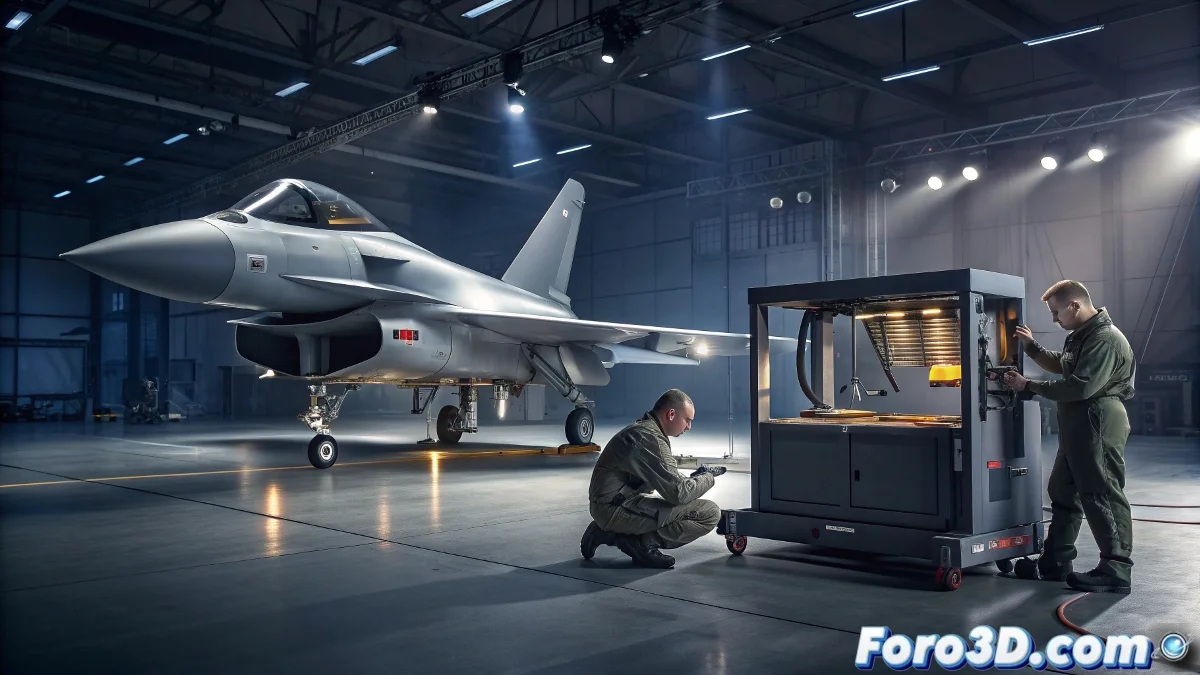
When 3D Printing Takes Off in Military Aviation
The Royal Air Force has just made history by installing the first 3D-printed component on an operational Typhoon fighter jet ✈️🖨️. Because in the 21st century, even fighter jets deserve their "home-made" upgrades (though with a bit more precision than our last duct tape repair).
From Printer to Sky: Logistics 4.0
This innovation allows the RAF to manufacture spare parts on demand directly on base, reducing wait times from months to hours. Imagine: "Boss, we need this part" - "Print it while I have a tea" ☕. Military bureaucracy was never so agile (and we're talking about the inventors of 5 o'clock tea).
This completely changes the rules of the game. We can respond to operational needs in record time without depending on external suppliers — explains an RAF engineer, probably next to a 3D printer the size of a refrigerator.
Why This Is a Missile to the Traditional Industry
- Stratospheric Savings: Costs reduced by up to 70% on certain components
- Tactical Agility: On-site production during critical missions
- Design Freedom: Geometries impossible with traditional manufacturing
- Digital Stock: Blueprints travel over the network, not physical parts
The installed component is just the first step in a revolution that could extend to more complex structures. Next stop: a fully 3D-printed Typhoon? Well, let's not get too excited... yet 🚀.
So now you know: the next time you see a British fighter jet, it might carry "printer-made" parts. Because in war as in 3D design, whoever has an STL file... has a treasure 💾✈️.