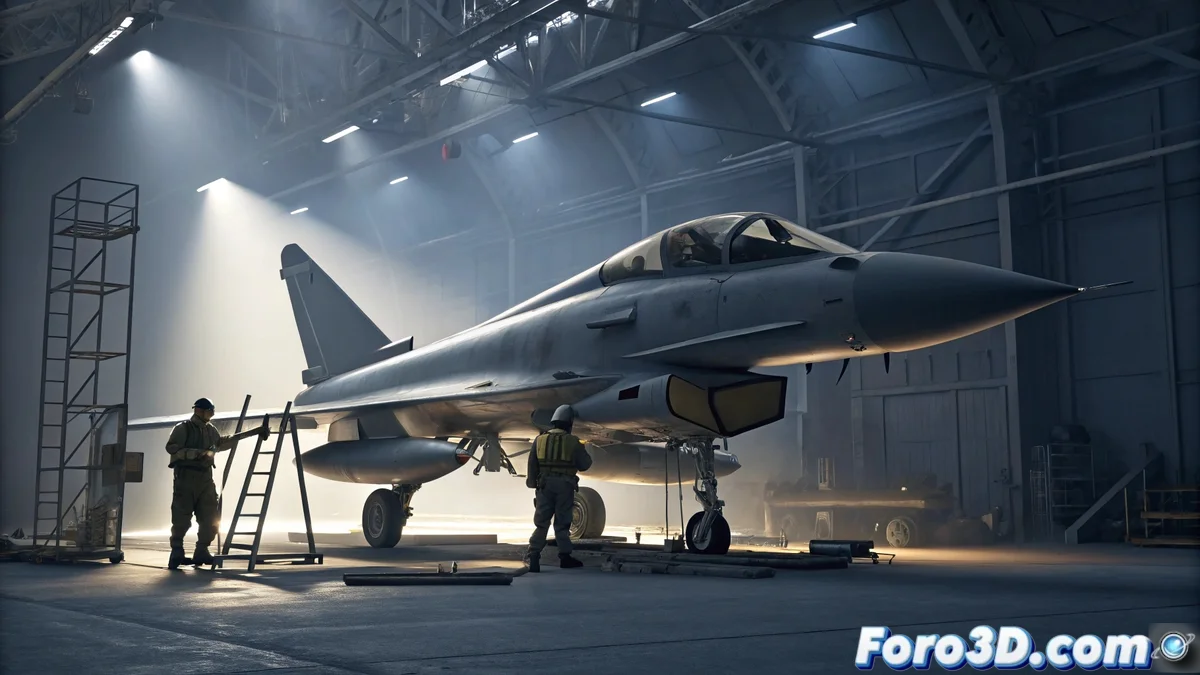
The RAF Installs the First In-House 3D Component on an Operational Typhoon
The Royal Air Force has set a historic precedent in military aviation by implementing the first element manufactured using 3D printing developed entirely in-house, successfully installed on an active-service Typhoon fighter jet. This innovation represents a radical transformation in the air force's sustainment and supply capabilities, enabling agile production of essential components directly at operational bases 🚀.
Revolution in Aeronautical Maintenance
Additive manufacturing allows the RAF to drastically reduce waiting times for spare parts, which conventionally extended for several months when relying exclusively on external suppliers. This localized production capability not only optimizes the operational availability of the Typhoon fleet but also generates significant savings in logistics and storage costs. Engineers can now manufacture parts on demand with customized specifications, adapting to specific requirements without depending on complex global supply chains.
Implemented Strategic Advantages:- Reduction of waiting times from months to days or weeks for critical components
- Significant savings in storage and logistical transportation costs
- Immediate customization capability according to specific operational needs
"This milestone demonstrates that additive manufacturing can meet the rigorous quality standards required in military aviation, opening new possibilities for fleet maintenance" - Project Chief Engineer
Expansion to Complex Components
The initial success with the cockpit protective cover, which has passed all required quality controls and certifications for military aircraft, lays the foundation for extending the use of 3D printing technology to more sophisticated and mission-critical elements. The RAF is already evaluating the possibility of manufacturing structural parts and weapons system components using this technique, which would fundamentally alter traditional aeronautical maintenance paradigms.
Future Applications in Development:- Manufacturing of primary and secondary structural components
- Production of weapons system and avionics elements
- Replacement of obsolete parts whose original molds no longer exist
Transformation of the Logistical Paradigm
The technology demonstrates exceptional value for discontinued components whose original manufacturing molds have disappeared, resolving one of the greatest challenges in sustaining military platforms with decades of service. This innovative approach starkly contrasts with traditional bureaucratic procedures, demonstrating that in some cases it is more efficient to print a spare part than to complete the administrative documentation to request it. The successful implementation on the Typhoon sets a precedent for the entire global defense industry 🛩️.