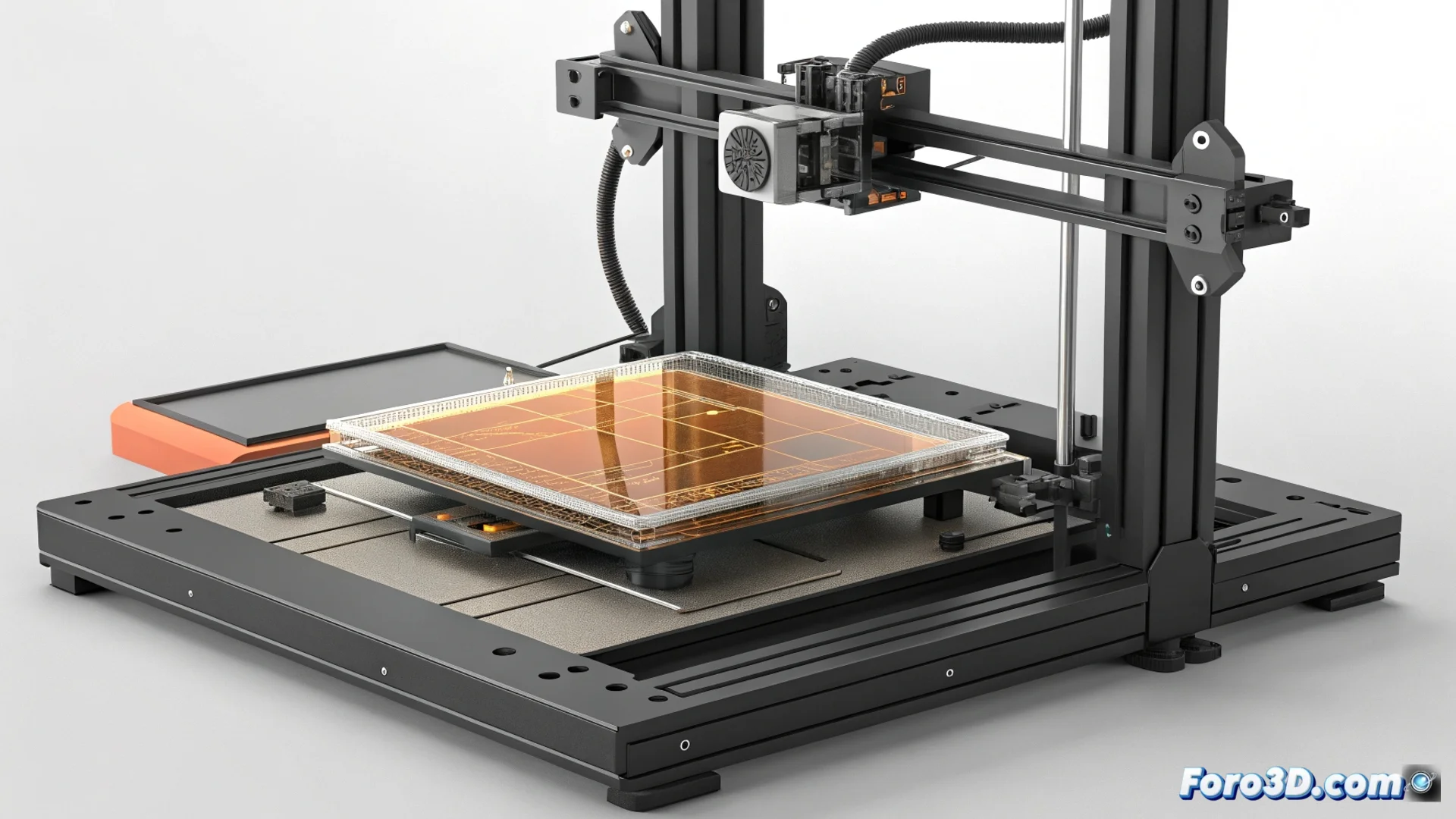
The Prusa SL1S Speed Miscalibrates the Tank and Fails
The core of the Prusa SL1S Speed system is a mechanism that tilts the resin tank to detach each layer quickly. This movement is fundamental for the process to work correctly. If the system controlling the tilt loses precision, the detachment angle deviates. This deviation can cause the build platform to impact against the FEP film or for successive layers not to bond accurately. The result is parts with deformed layers or that adhere strongly to the bottom of the tank, ruining the work. 🛠️
Verify and Correct Tank Calibration
To resolve this issue, the first step is to run the calibration procedure included in the printer's service menu. This process measures the precise position of the film and defines the limits of the tilt movement. It is crucial to confirm that the tank is installed correctly and that there are no remnants of solidified resin on the edges or over the optical sensor. After calibrating, it is advisable to do a test with a diagnostic file to verify that the layer detachment is uniform across the entire surface.
Key Steps to Adjust:- Run the calibration routine from the machine's service menu.
- Visually inspect the tank and clean any hardened resin residue.
- Perform a test print to evaluate detachment uniformity.
An incorrect tilt angle is not a minor detail; it is the main cause of catastrophic failures in SLA printing.
Preventively Maintain the Tilt Mechanism
The tank tilting system contains moving components that require periodic attention. Following the manufacturer's instructions for cleaning and lubricating the linear guides and bearings is essential. It is also necessary to check that all mounting screws are tight and that there are no play in the mechanical couplings. If the problem persists after calibrating and performing this maintenance, it could indicate a failure in components such as the stepper motor or the position sensor, cases that would require contacting official technical support.
Essential Maintenance Actions:- Regularly clean and lubricate linear guides and bearings.
- Tighten all mechanism mounting screws.
- Check couplings for play and eliminate it.
Conclusion on Mechanical Precision
The reliability of the Prusa SL1S Speed depends directly on the precision of its tilt mechanism. Incorrect calibration or wear on moving parts are common sources of problems. Implementing a verification and preventive maintenance protocol not only solves immediate failures but also extends the printer's lifespan and ensures consistent part quality. When the machine seems to "dance" instead of printing, the root is almost always in this critical system. ✅