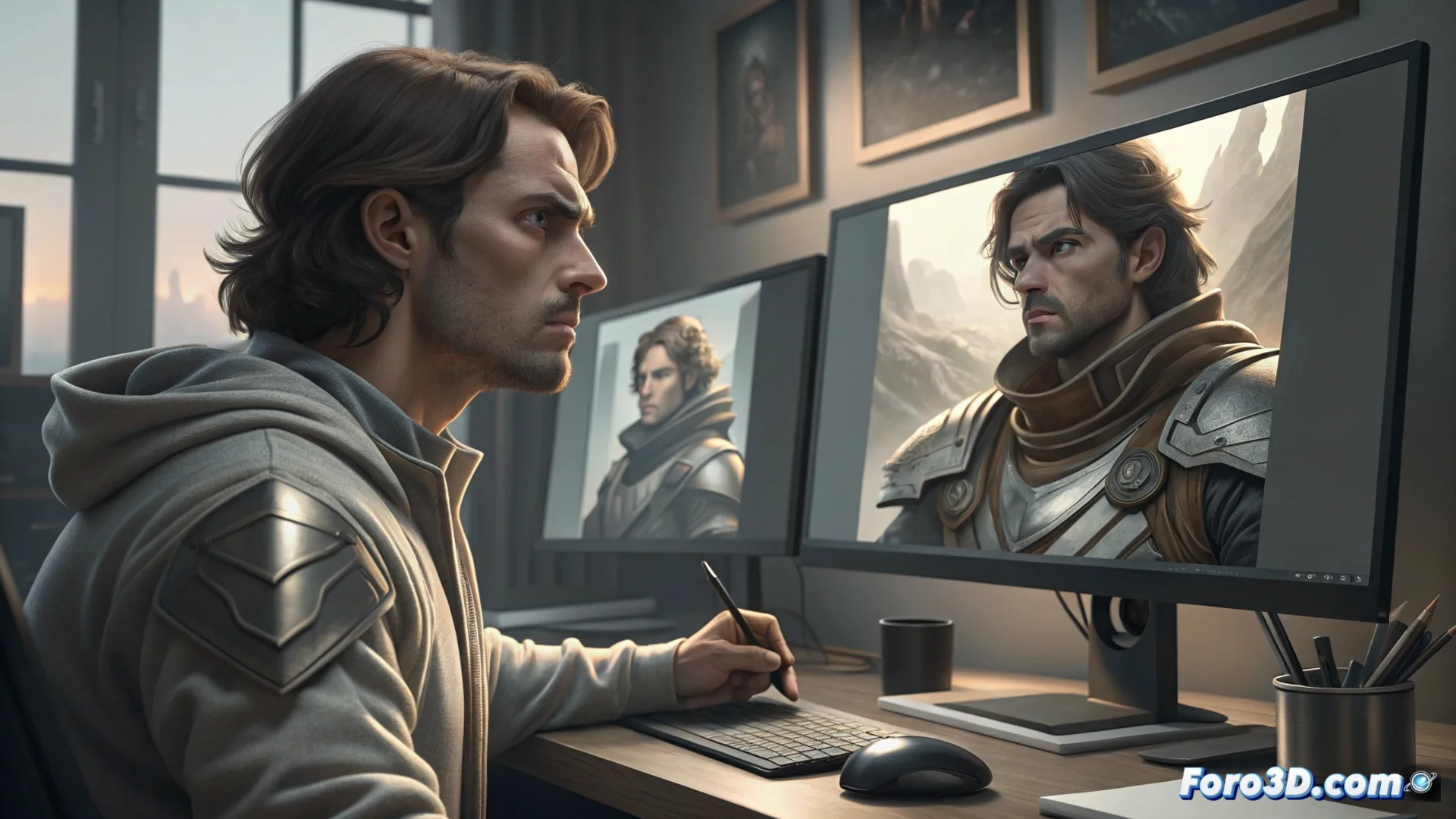
The Professional Artist's Frustration with Generative AI and the Path to Precise Control
A recurring challenge arises in digital studios and workshops: many generative AI tools do not allow adjusting details in isolation. The artist may be close to the desired result, but modifying a single element, such as the pose or a color, often forces the entire image to be regenerated. This process breaks the natural iteration of creative work and makes the user feel they are losing authority over their own work. 🎨
The Bottleneck in the Creative Workflow
The core problem lies in how these systems process the image. By treating it as a single block, it is complex to isolate and edit specific components without altering the whole. What was promised as an accelerator becomes a cycle of trial and error where each minor change can distort already validated parts. Asking the AI to only alter a character's eye color and ending up with three arms is a clear example of this lack of directional control.
Direct consequences for the artist:- The natural cadence of progressively refining and adjusting concepts is interrupted.
- The sense of authorship is diluted, as the final result seems more like a product of algorithmic chance than the creator's intention.
- The promised efficiency is counteracted by the need for constant regenerations to correct details.
"When the artist can direct the process more directly, AI stops being an obstacle and becomes a powerful extension of their creativity."
Designing the Next Generation: The Artist's Experience as a Priority
The future of these tools is not just about generating more impressive images, but about returning comprehensible control to the user. This involves creating intuitive interfaces that allow isolating and manipulating semantic elements—such as a material's texture, a scene's lighting, or a character's anatomy—without affecting the rest of the composition. The goal is for AI to act as a collaborator, not as an inscrutable black box.
Emerging methods for granular control:- Implement advanced masking and semantic layer-based editing.
- Use sketches, depth maps, and other visual guides to direct generation with greater precision.
- Develop systems that maintain coherence in the parts of the image the artist has already validated.