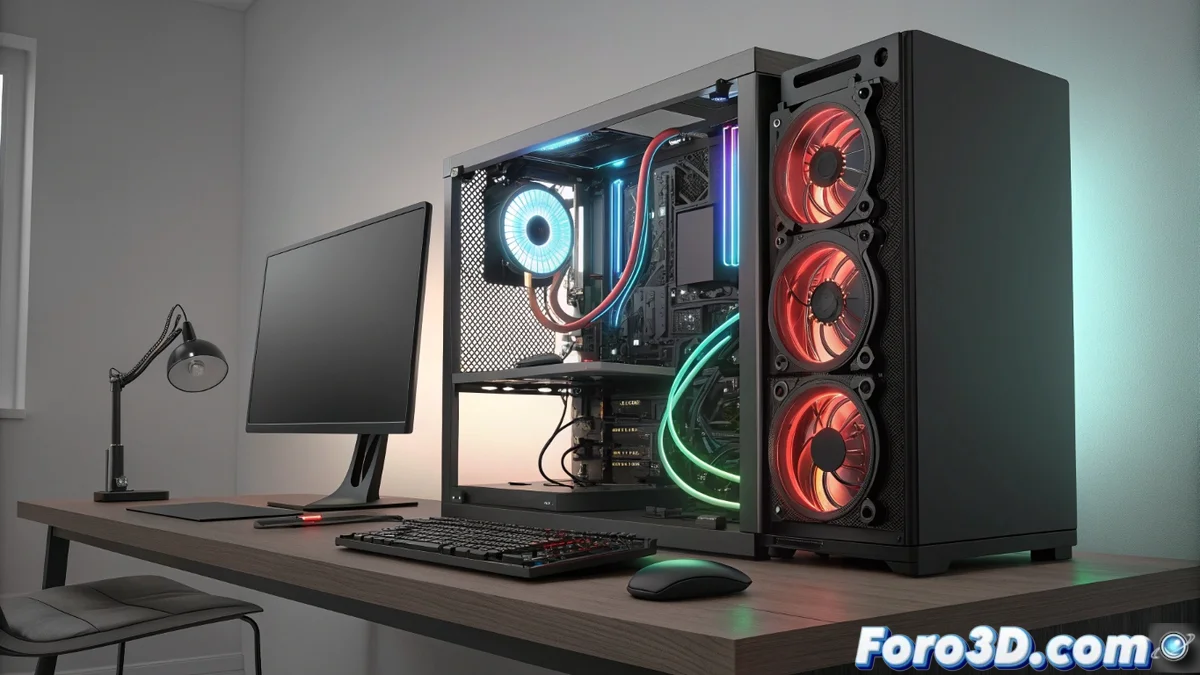
The Fragmentation Problem in RGB Lighting for PCs
Aesthetic customization through RGB lights has become a standard in PC hardware. However, this trend has created a divided landscape where each manufacturer imposes its own closed control ecosystem, greatly complicating the creation of harmonious setups. 🎮
Compatibility Barriers Between Brands
Leading brands like Asus, Corsair, or Gigabyte develop connectors and software applications that are not interoperable. A fan from one brand does not communicate with the motherboard from another, resulting in mismatched sequences and tones. This lack of a common protocol forces users to research exhaustively or limit their choices to a single product line to achieve visual coherence.
Direct Consequences for the User:- Extra time investment in researching compatibilities before each purchase.
- Limitation of configuration freedom, restricting the mixing of components from different manufacturers.
- Frustration from not being able to achieve the desired unified lighting effect, despite the investment.
Ending up with a PC that looks like a festival of incoherent lights is like decorating a house with mismatched styles.
Available Alternatives and Solutions
In response to this scenario, third-party software tools have emerged that attempt to unify control. Projects like OpenRGB allow centralized management of devices from various manufacturers, offering basic synchronization. However, these alternative solutions have their own limitations.
Compromises of Unified Solutions:- They generally do not offer the same level of customization detail as each manufacturer's official software.
- They may have irregular support for new hardware models or advanced features.
- The user must choose between the convenience of a single control panel and the loss of certain proprietary functions.
Towards a Standardized Future
The ideal scenario would involve all RGB components using a common control language, simplifying the experience. Until that happens, enthusiasts must navigate between brand loyalty, the use of bridge software with reduced capabilities, or accepting a certain degree of lighting chaos. The pursuit of perfect aesthetics in gaming PCs remains a technical challenge.