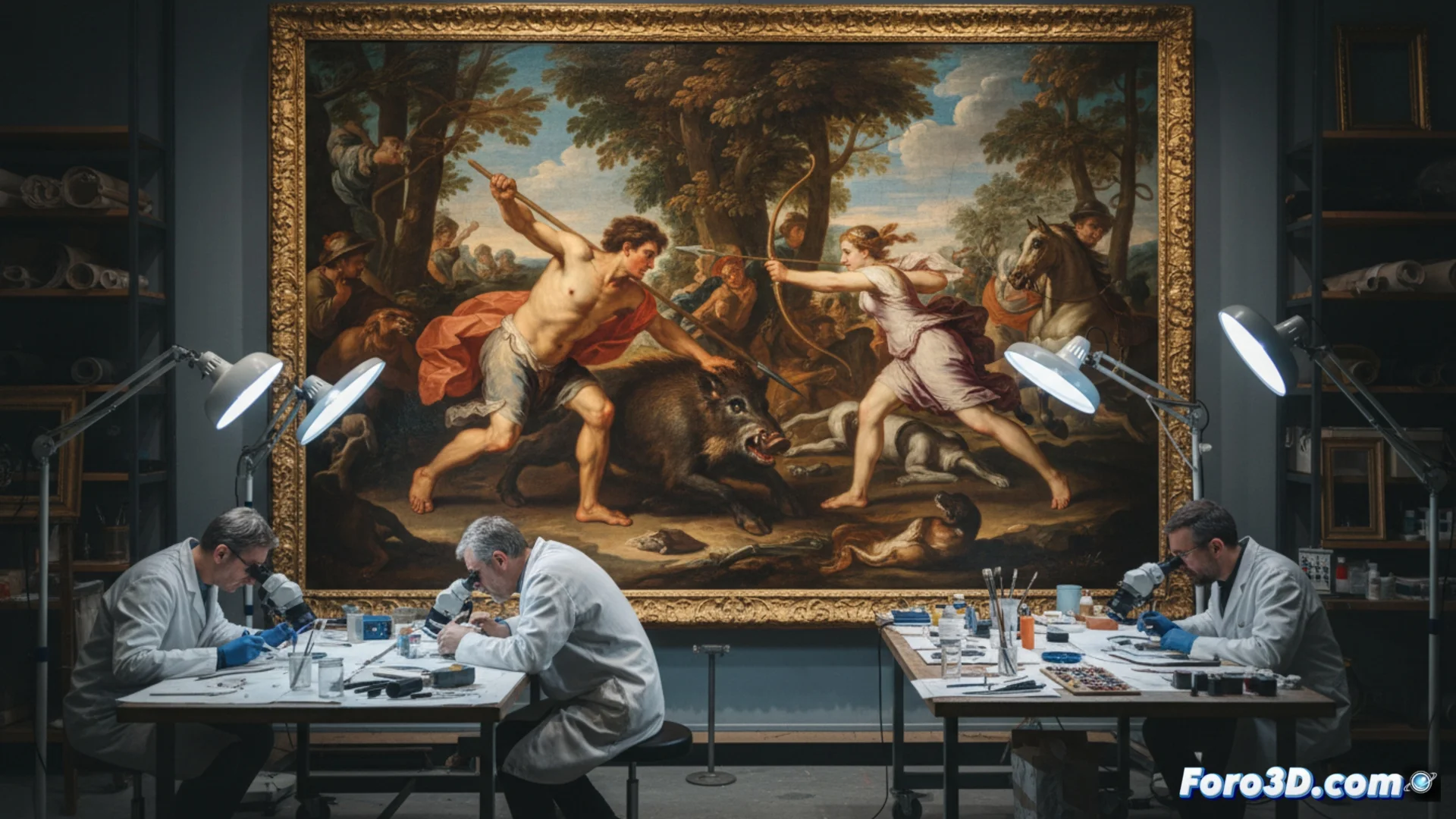
The Prado to Restore Rubens's The Calydonian Boar Hunt with TEFAF Support
The Prado Museum has announced that it will intervene on one of its most emblematic works of Flemish Baroque art. This is The Calydonian Boar Hunt, a large-format oil painting created by Peter Paul Rubens and his workshop. This conservation project, which will begin in 2026, is backed financially by the Restoration Fund for Museums promoted by the TEFAF art fair. 🎨
A Project to Deepen Understanding of Rubens's Technique
The intervention not only aims to stabilize the support and paint layers to ensure the work's longevity, but also represents a unique opportunity to analyze in detail the methods employed by the master and his collaborators. This comprehensive technical study will allow for a better understanding of how the artist's workshop was organized at the time.
Main Objectives of the Restoration:- Examine the painting technique and original materials used by Rubens.
- Consolidate the canvas structure and color strata to prevent deterioration.
- Ensure the long-term preservation of this key piece in the permanent collection.
This collaboration is essential for tackling complex projects that require highly specialized resources and expertise.
The Work: Mythology and Baroque Dynamism
The painting, created around 1615-1620, depicts an episode from Greek mythology. It represents the moment when the heroes Meleager and Atalanta fight against the beast sent by the goddess Artemis to punish the kingdom of Calydon. Rubens used this theme to explore the human anatomy in action and convey the intensity of emotions, achieving a composition of great violence and movement. 🏹
Characteristics of the Painting:- Theme: Mythological scene with high dramatic and dynamic content.
- Style: Representative example of Flemish Baroque painting.
- Location: Belongs to the Prado Museum's permanent collection.
The Key Role of the TEFAF Fund
The TEFAF Fund, established in 2022, selects a conservation project in a Spanish museum annually. Its support covers all expenses arising from restoration treatments and complementary scientific analyses. For the Prado, this external funding is crucial. The intervention will be carried out in the museum's own workshops, and guided visits have been planned so the public can observe its progress, thus bringing the meticulous work of the restorers closer to society. The next time a boar disturbs the rural peace, some might see it as an unwitting homage to Rubens's pictorial drama. 🐗