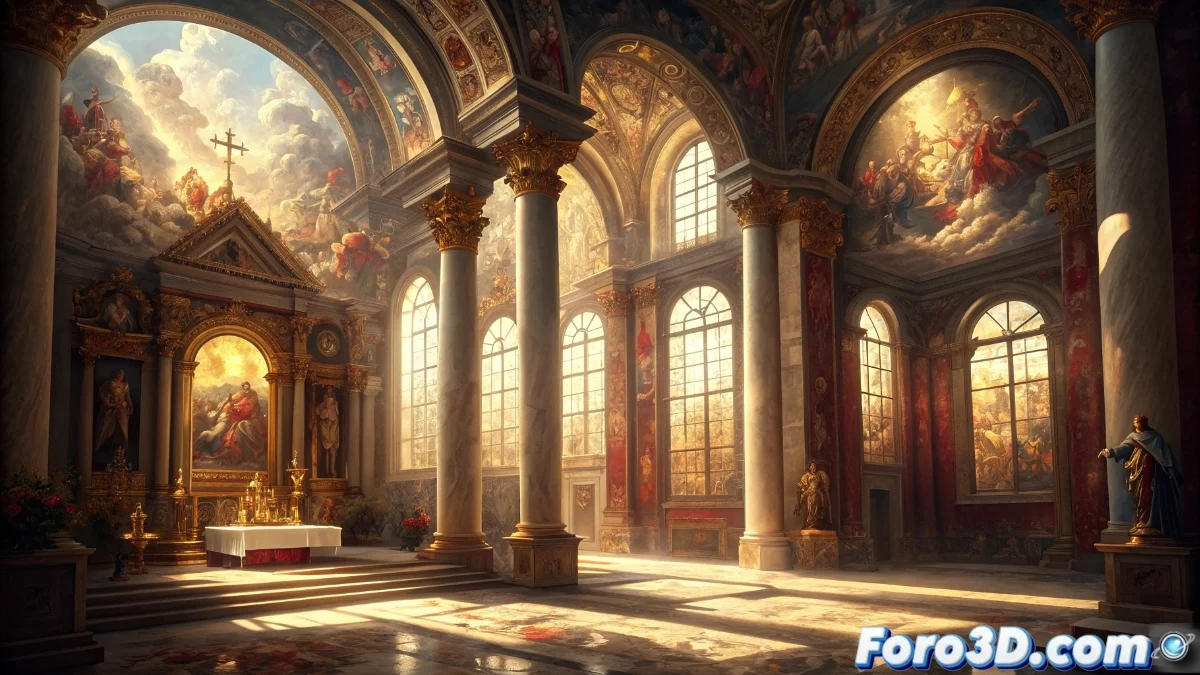
The Prado Permanently Incorporates the Herrera Chapel with Frescoes by Annibale Carracci
The Prado Museum has announced the permanent integration of the Herrera Chapel into its exhibition itinerary, presenting to the public the original frescoes created by the Baroque master Annibale Carracci. This innovative museographic reconstruction allows visitors to experience the work in its original architectural context, establishing a fascinating dialogue between the mural painting and the contemporary exhibition space 🎨.
Recovery of a Dispersed Artistic Treasure
The frescoes of the Herrera Chapel, which depict scenes from the lives of San Diego de Alcalá and San Pedro de Alcántara, constitute an extraordinary example of Italian Baroque painting. After their disassembly in the 19th century, the paintings were scattered across various collections until the Prado undertook a systematic recovery project. The meticulous restoration process has unveiled the chromatic richness and compositional dynamism characteristic of Carracci, evidencing his mastery of chiaroscuro and his decisive influence on the development of European painting.
Key Elements of the Intervention:- Scenographic recreation of the original Roman chapel where Carracci worked between 1602-1604
- Comprehensive presentation showcasing the artist's artistic maturity
- Restoration revealing original pictorial techniques and chromatic palette
The reconstruction allows the study of the spatial solutions that Carracci developed to adapt to a confined space, demonstrating his genius for integrating architecture and painting
Historical Significance and Artistic Value
This incorporation consolidates the presence of Italian Baroque in the Prado's collections and highlights the relevance of Spanish patronage in Rome during the 17th century. Juan de Herrera, chaplain to Philip III, commissioned the decoration from the Bolognese artist when he was at the peak of his professional career. The reconstruction enables the analysis of the narrative solutions that Carracci implemented to fit a limited space, showcasing his exceptional talent for fusing architecture and painting into a coherent visual unity.
Highlights of the Project:- Strengthening of the Italian Baroque collection at the Prado Museum
- Documentation of Spanish patronage in 17th-century Rome
- Study of Carracci's spatial innovations in confined spaces
Transformative Museographic Experience
Visitors can now enjoy a complete chapel without needing to travel to Rome, although some purists might point out that sensory elements like the scent of incense or the sound of Latin prayers are missing to recreate the authentic experience. This installation represents a museographic milestone that transcends mere exhibition of works to offer a unique contextual immersion in Baroque artistic heritage 🏛️.