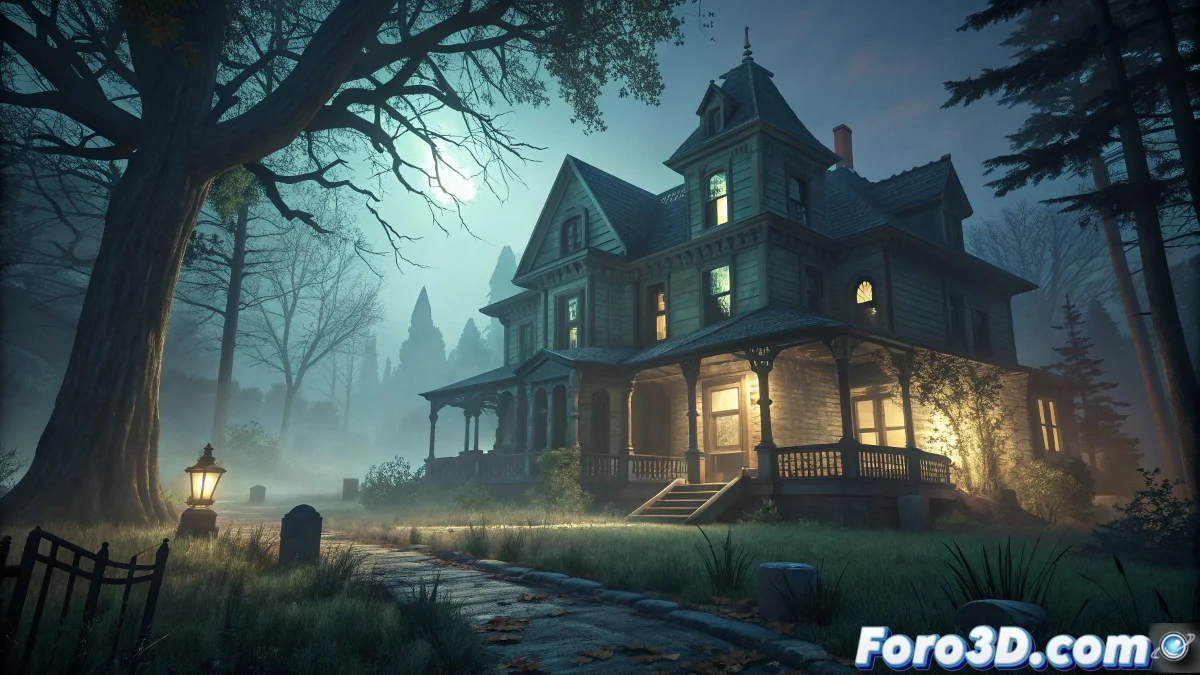
The Possessed Darkness of Tallman House in New York
The Tallman House in Chester, New York, represents one of the most intriguing cases of paranormal phenomenology, where it is not traditional ghosts but the darkness itself that seems to contain a malevolent presence. This 19th-century Victorian mansion has generated reports from visitors who experience tangible physical pressure in dark areas, unexplained object movement, and a visceral terror suggesting that evil has permeated the very physical structure of the place, particularly in its shadows. 🏚️
Tragic History and Foundation of the Phenomenon
Built in 1869 by John Tallman, the house was the scene of multiple family tragedies including sudden deaths, mental illnesses, and possible unsolved murders. What distinguishes this location is that the phenomena are not attributed to discrete entities, but the twilight itself seems to come alive, with witnesses reporting that shadows thicken until they become almost liquid, form faces and figures, and exert physical pressure on those who dare to remain in dark rooms. Paranormal investigators have documented sudden temperature drops specifically in shadowy areas.
Documented Manifestations of the Darkness:- Shadows that thicken and acquire a three-dimensional quality
- Movement of small objects from dark areas toward the light
- Sensation of physical pressure in the chest in darkened rooms
- Faces that momentarily emerge from the twilight on walls
- Sounds of multiple whispers coming from dark corners
- Photographs showing anomalies exclusively in shaded areas
In Tallman House, you don't fear what might be in the darkness; you fear the darkness itself, because in that place the shadows breathe, move, and have intentions.
Initial Document Setup in Photoshop
To recreate this living darkness, we will begin by setting up our document in Photoshop with special attention to color depth and layer management. We will establish an optimized workspace for advanced shadow manipulation and sinister lighting effects. 🎨
Photoshop Document Preparation:- Create new document 4000x3000 pixels at 300 ppi resolution
- Set color mode to RGB 16-bit for greater dynamic range in shadows
- Set medium gray background (#808080) as neutral base
- Create group structure: Background_Architecture, Furniture, Lighting, Shadow_Effects, Adjustments
- Enable rulers and guides for balanced composition according to the rule of thirds
- Prepare custom brushes for texture and fade effects
Composition of Victorian Architecture
The architectural base must convey decadent elegance and psychological oppression. We will use photographic references of authentic Victorian interiors to create a composition that guides the gaze toward the areas of greatest darkness, establishing the perfect stage for our possessed twilight.
Construction of the Victorian Environment:- Import or create architectural elements: moldings, wood panels, tall doors
- Use Pen tool to create precise profiles of windows and frames
- Apply aged wood textures with Overlay blend mode and reduced opacity
- Create forced perspective that directs the view toward dark corners
- Add deterioration details: peeling wallpaper, dust on surfaces
- Incorporate period elements: oil lamps, heavy furniture, heavy curtains
Dramatic Lighting Techniques and Living Shadows
The light treatment is fundamental to create the sensation of active darkness. We will work with multiple adjustment layers and blend modes to develop shadows that seem to have their own density and physical presence, not as mere absence of light.
Creation of Atmospheric Lighting:- Set main light layer with radial gradient Screen mode
- Create shadow layers with linear gradients Multiply mode variable opacity
- Use low opacity brushes with Color Dodge mode for subtle highlights
- Apply Lighting Effects filter to simulate a single dim light source
- Create Levels adjustment layers to increase contrast in specific areas
- Implement layer masks for precise light/shadow transition control
Supernatural Effects for Possessed Darkness
The gloomy animation effects require a subtle but impactful approach. We will develop techniques to suggest movement and presence in dark areas without making it explicit, playing with the viewer's peripheral perception.
Development of Paranormal Effects:- Create abstract organic shapes with Lasso tool with feathering
- Apply Gaussian Blur and directional Motion Blur filters for ethereal effect
- Use smoke and mist brushes with Screen and Overlay blend modes
- Implement Hue/Saturation adjustment layers for cold tones in shadows
- Create smooth transition masks between normal and spectral elements
- Add Inner Shadow effect with unnatural colors for supernatural depth
Texturization and Oppressive Atmosphere Details
The texture details elevate the composition from illustration to immersive experience. We will work with texture overlays and digital painting techniques to create surfaces that convey the tragic history impregnated in the house.
Advanced Texturization Process:- Apply dust and cobweb textures with Soft Light blend mode
- Use texture brushes to create dampness and deterioration effect on walls
- Incorporate selective blur elements to direct attention
- Create noise layers with Overlay mode to add cinematic grain
- Implement Selective Color adjustments to cool tones in shadowy areas
- Add dark vignette with radial gradient Multiply mode
Atmospheric Colorization Techniques
The chromatic palette must reinforce the sinister nature of the possessed darkness. We will develop a color scheme that evolves from historical sepia tones to unnatural colors in the most paranormally compromised areas.
Emotional Color Management:- Set Color Lookup adjustment layer with ancient preset for historical base
- Use Gradient Map adjustment layers for controlled tonal transition
- Create luminosity masks to selectively adjust shadows and highlights
- Implement Channel Mixer adjustment layers for desaturated and cold tones
- Add unnatural color touches in shadows (pale greens, deep blues)
- Use Color Balance tool to progressively cool the image
Conclusion: The Art of Visualizing the Intangible
The recreation of Tallman House in Adobe Photoshop demonstrates how modern digital tools can give visual form to abstract concepts like "possessed darkness." This project exemplifies the synergy between technique and narrative, where every choice of lighting, texture, and color contributes to conveying an atmosphere of profound psychological terror. The next time you face a supernatural horror project, consider exploring less conventional phenomena that challenge not only what we see, but how we perceive reality itself through masterful manipulation of light and shadow. ✨