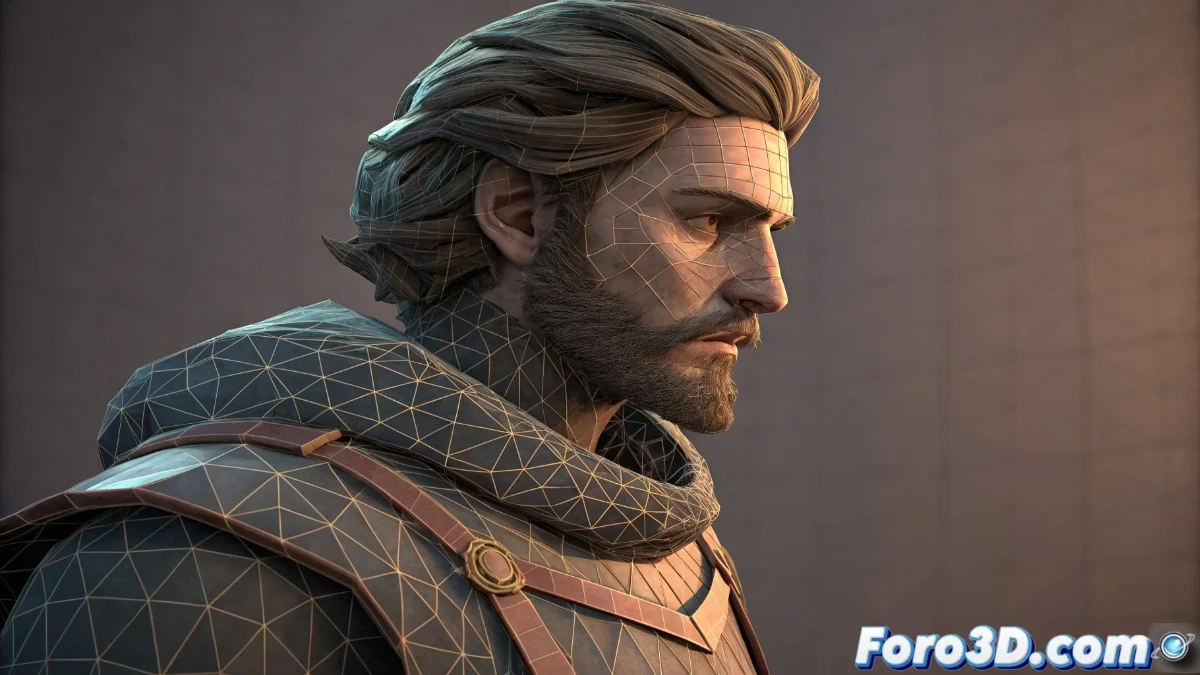
The Polygon Budget Technique in 3D Modeling
In the realm of three-dimensional design, the polygon budget technique emerges as a creative methodology where artists set deliberate limits on the amount of geometry in their models. This restriction does not stem from technical limitations, but from a conscious artistic decision that seeks to maximize visual impact through the intelligent use of sharp contours and elaborate textures. The main challenge lies in conveying the essence and personality of the model using the minimal possible geometry, which drives the creator to focus on essential forms and discard accessory elements that do not add significant value to the composition. 🎨
The Art of Strategic Simplification
When working with a limited polygon budget, every vertex and edge must prove its utility in the final model. Designers cultivate an analytical eye to discern which geometric components truly outline the distinctive silhouette of the character or object, and which can be emulated through textures or normal maps. This resource economy does not imply visual impoverishment, but rather encourages concentration on the fundamental attributes that give the model identity and memorability. The silhouette stands as the most crucial factor, being what the viewer captures first, even before appreciating the surface nuances.
Main benefits of intelligent simplification:- Encourages identification of essential shapes that define the model's appearance
- Allows more efficient distribution of available geometric resources
- Improves performance in interactive applications like video games without sacrificing visual appeal
True mastery lies not in adding more, but in knowing what to remove without losing the essence.
Textures as an Essential Complement
Strategic textures play a vital role in this technique, supplementing simplified geometry with enriched and detailed visual information. A low-poly model can evoke a notable sense of complexity when accompanied by well-executed textures that mimic surface details, roughness, and material properties. The artist learns to wisely allocate resources, dedicating more polygons to critical areas that determine the global morphology and using textures to represent secondary details. This balance between geometry and texturing enables the creation of aesthetically pleasing models that operate effectively in various environments, from gaming experiences to animated productions.
Key strategies for texture use:- Use of normal maps to simulate reliefs without increasing geometric load
- Application of diffuse and specular textures that enrich material perception
- Intelligent distribution of texture resolution according to the visual importance of each model area
The Creative Paradox of Restriction
The underlying irony in this methodology reveals that the more we restrict polygons, the more ingenious we become, demonstrating that sometimes less is more, except when specific demands require a meticulous level of detail, such as modeling each hair individually on a character barely distinguishable at a certain distance. This approach not only optimizes resources but also stimulates innovation and critical thinking in the creative process. ✨